Neuroaesthetic Interior Design: Homes That Feel as Good as They Look
Denise Jadd
The Science Behind NEUROAESTHETIC INTERIOR DESIGN
Neuroaesthetic interior design is reshaping how we think about luxury homes, blending emerging brain science with timeless beauty to create spaces that feel as good as they look. At Domaine Luxe, our approach reflects a broader shift in luxury living, one that has also earned recognition from Forbes for its focus on wellness-driven design. We see this as the natural next step for clients who value exquisite surroundings, and a home that quietly supports their wellbeing every day.
Neuroaesthetics is the study of how our brains respond to beauty and our built environments, why certain rooms instantly calm us, energize us, or make us feel at ease. Rather than treating design as purely visual, neuroaesthetic interior design considers how every element of a space interacts with our senses, our nervous system, and our emotional state.
In practice, this doesn’t mean turning your home into a laboratory. It means honoring what we intuitively know: that light, texture, color, and spatial flow can soften our stress levels, improve focus, and enhance the way we connect with others. At our firm, we design through this lens, a room is no longer just “pretty.” It becomes a carefully tuned experience one that your body and mind recognize as safe, comfortable, and deeply inviting.
Within our Palm Beach interior design residences, where the pace of life may oscillate between entertaining, travel, and retreat, this approach is especially meaningful. A neuroaesthetic perspective allows us to create homes that are both visually refined and quietly restorative, supporting the realities of modern, high-performance lifestyles.
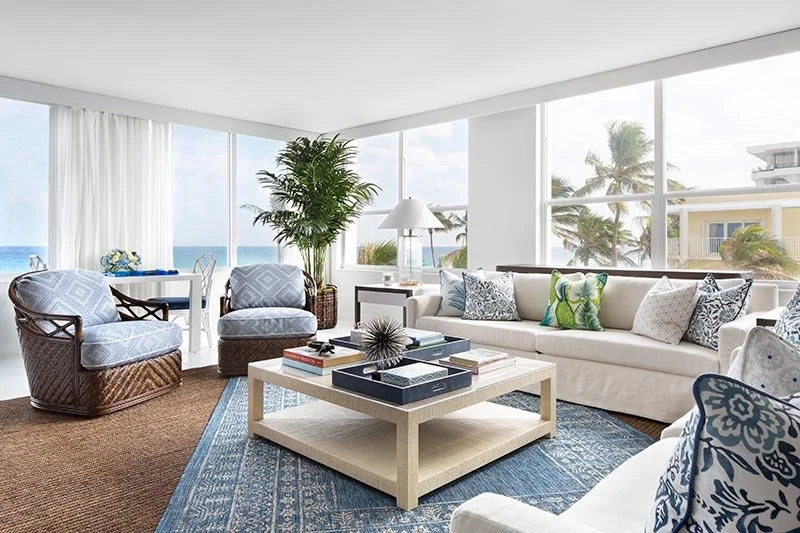
A light-filled oceanfront living room showcases large windows, comfortable white sofas, layered blue textiles, and natural rattan chair in the conversation area, grounded by a blue and white patterned rug on top of a natural jute rug, that frame sweeping Palm Beach coastline views.
Why NEUROAESTHETIC DESIGN Defines the Future of Luxury Living
For years, luxury interiors were primarily defined by rarity - rare materials, rare art, rare craftsmanship. While these elements remain important, today’s most discerning homeowners are seeking something more enduring: spaces that enhance the quality of their lives.
Neuroaesthetic interior design and wellness interior design represent the next evolution of luxury. Instead of creating rooms that impress only at first glance, we design homes that feel better the longer you live in them. The value lies in how a space supports your energy, your focus, your relationships, and your rest.
In a Palm Beach context, where many homes serve as retreats from demanding schedules, this shift is especially powerful. A residence that gently regulates light, softens acoustics, and supports healthy routines is not an indulgence, it is a form of long-term investment in wellbeing. The aesthetic is still elevated and tailored, but its true luxury is measured in how effortlessly you can exhale when you walk through the door.
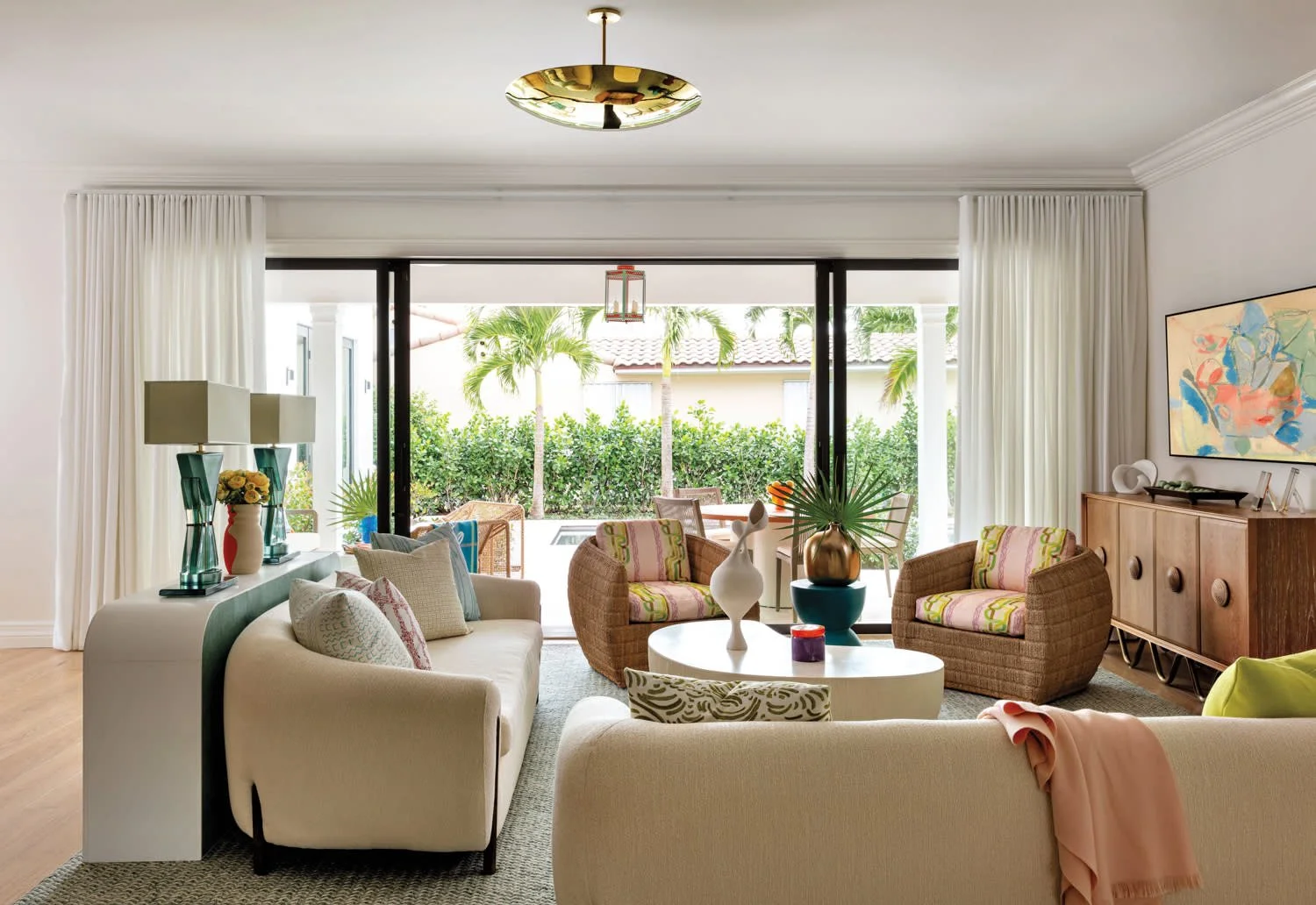
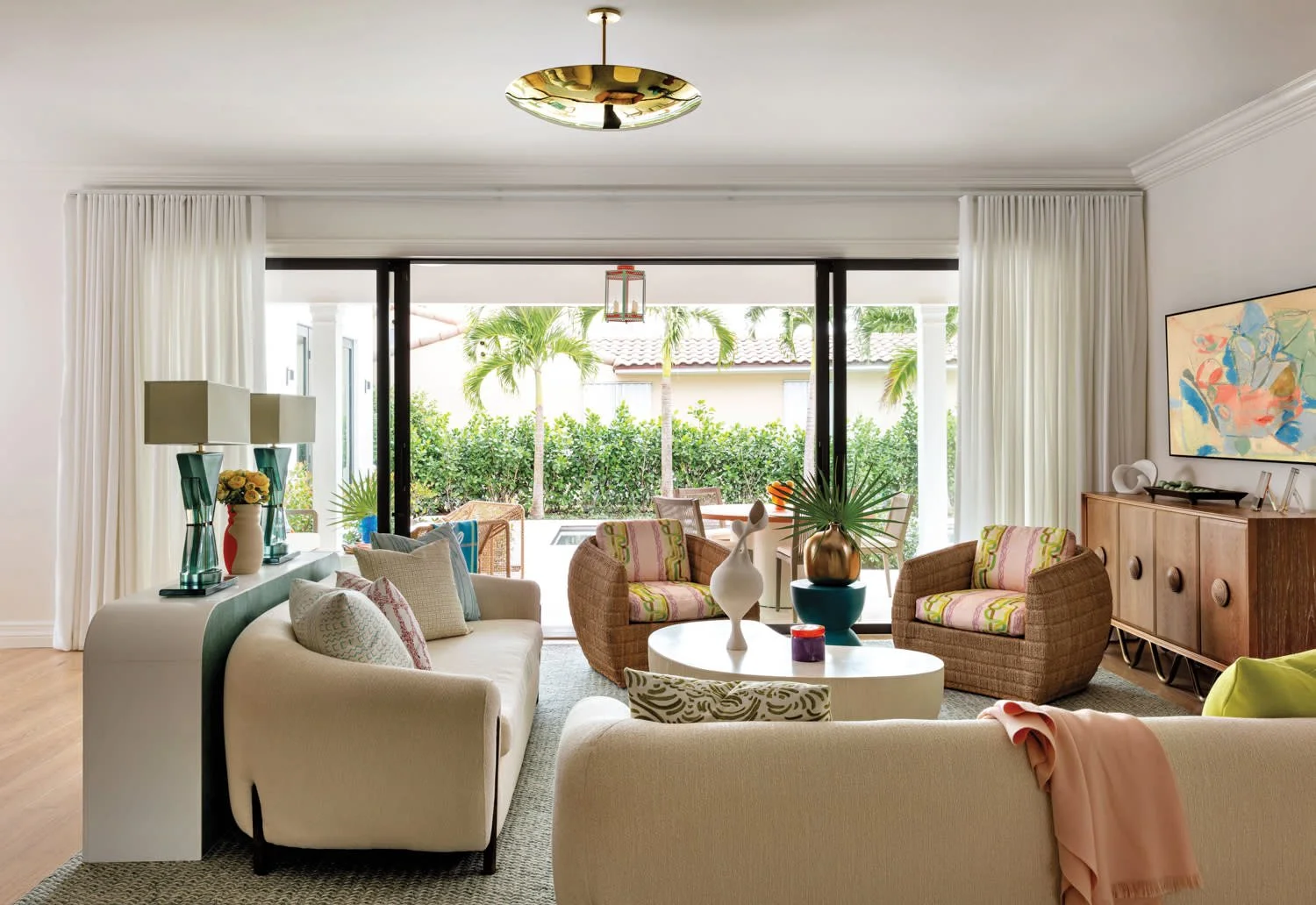
A colorful Palm Beach living room opens to the outdoors, featuring curved cream sofas, woven armchairs, and layered artwork that create a vibrant yet relaxed coastal retreat.
How NEUROAESTHETIC Interior Design InfluenceS Mood and Wellbeing
Well-designed interiors are never accidental. They are shaped by hundreds of deliberate decisions that influence how a space feels the moment you arrive. Neuroaesthetic interior design brings clarity to this process, organizing each decision around a central question: how should your home make you feel, every day?
Light, Circadian Rhythm and Natural Alignment
Light is one of the most powerful regulators of our circadian rhythms the internal clock that governs sleep, energy, and mood. A wellness interior design approach begins by understanding how natural light moves through your home over the course of the day, supporting our well-being.
In Palm Beach, we are fortunate to work with abundant sunlight. Rather than overpowering a room, we sculpt it. Sheer drapery filters harsh midday rays, while layered window treatments allow you to adjust brightness and privacy with nuance. Thoughtfully placed mirrors amplify soft daylight without glare, and warm-toned lamps extend an inviting evening glow that reinforces and signals rest, not alertness.
Artificial lighting is equally intentional. Cooler, clearer light supports tasks in the kitchen or office, while warmer, dimmable fixtures in living spaces and bedrooms cue the nervous system to unwind. The goal is to align the home with your natural rhythms so that energy feels abundant when you need it and reduced for serenity to feel effortless when you don’t.
Texture and Tactile Comfort
We experience our homes not only with our eyes, but with our hands and our bodies. Texture - what you touch and how it feels - plays a quiet but powerful role in sensory design at home.
Soft bouclé upholstery, finely woven linens, and natural fibers underfoot send constant messages of comfort and warmth. Thoughtfully curved furnishings can feel more welcoming than angular silhouettes, especially in spaces meant for relaxation. Even the weight of a door handle or the softness of a throw blanket can subtly influence your sense of ease.
In neuroaesthetic interior design, we layer textures to create a sense of depth and security. A smooth plaster wall against a nubby wool rug, a sleek stone coffee table beside a woven accent chair; these contrasts provide visual interest while grounding the senses. For Palm Beach homes, we often introduce tactile elements that nod to nature - rattan, grasscloth, finely finished woods - balancing and reinforcing refinement with an organic touch.
Color and Emotional Response
Color is perhaps the most immediately recognizable tool for shaping emotion. Yet in sophisticated interiors, it is less about dramatic gestures and more about calibrated nuance.
Soft neutrals and muted tones can create a cocooning effect, ideal for bedrooms and spaces of retreat. Cool blues and gentle greens often evoke calm and clarity, while warmer undertones introduce a sense of welcome and intimacy. Even within a predominantly neutral palette, subtle shifts of creamy whites instead of stark whites, gentle taupes instead of harsh greys can support or alter how grounded a room feels.
In wellness interior design, we look beyond trends to choose colors that support the way you want to feel in each room: clear-minded in your home office, restored in your primary suite, connected and energized in your living and dining spaces. The palette becomes a quiet emotional map for the home, guiding experiences without ever announcing itself.
Spatial Flow and A Sense of Calm
How you move through your home influences how calm or chaotic life feels. Neuroaesthetic design pays close attention to circulation, sightlines, and how each zone transitions to the next.
A thoughtful floor plan reduces friction: seating that invites conversation without blocking walkways, storage that keeps visual noise at bay, and furniture arrangements that support both daily rituals and larger gatherings. Clear pathways and balanced proportions give the nervous system a sense of predictability there is room to breathe, room to move, room to exhale.
In Palm Beach residences, open-plan living is common, but openness alone does not guarantee serenity. We create subtle spatial cues with rugs, furniture groupings, ceiling treatments, and lighting that delineate zones - reading, dining, or conversation - while preserving a sense of continuous flow. The result is a home that feels both expansive and intimately human-scaled.
Applying Neuroaesthetic Principles to Luxury Interior Design
Science and sensory awareness are only meaningful when they translate into spaces that feel exquisitely livable. At Domaine Luxe, we weave neuroaesthetic principles into every layer of our luxury interiors, particularly for coastal and Palm Beach clients who expect an elevated level of refinement. Within our full-service interior design approach, these principles are carefully integrated into every phase of the project.
Materials
Materials are chosen not only for beauty, but for how they age, sound, and feel. Natural woods, honed stones, linen, and wool introduce subtle variation and warmth qualities that the brain reads as authentic and reassuring.
We are deliberate about contrast: pairing reflective surfaces with matte finishes, cool stone with warm wood, smooth metals with organic fibers. This interplay offers sensory richness without visual clutter. Every surface you touch is an opportunity to reinforce comfort and quiet luxury.
Palette
For Palm Beach homes, we often develop palettes rooted in soft sands, cloud whites, sea-glass blues, and muted greens tones that echo the landscape without becoming thematic. Accents may be layered through art, textiles, or a single sculptural statement, but the overall impression remains calm and cohesive.
By aligning color with light, we ensure that each room feels balanced across time of day. A carefully tuned palette means sunrise doesn’t wash out your interiors and late afternoon light doesn’t overwhelm them.
Layout
Layouts are tailored around real life: morning routines, evening rituals, entertaining, quiet work, and time with family. We consider where you like to read, where you set down a drink, how you welcome guests, and how you prefer to unwind at the end of the day.
Furniture groupings support intimacy and connection, not just symmetry. Hidden storage keeps daily essentials within reach but out of sight. Sightlines are edited so that each vantage point offers something pleasing a view to the garden, a curated vignette, an art piece that anchors the room.
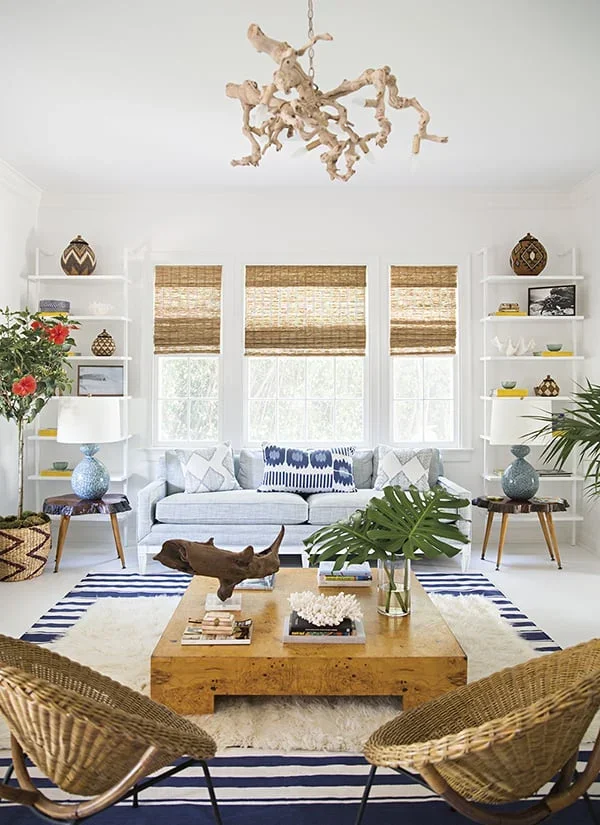
A bright coastal living room features a striped rug, rattan chairs, a wood coffee table, and layered blue and white accents for a relaxed Palm Beach feel.
Designing a Home That Supports WELLBEING AND How You Want to Feel
Every client we work with can articulate how they want their home to look: serene, sophisticated, modern, warm. The deeper question - the one that drives neuroaesthetic design - is how you want your home to make you feel.
Do you want mornings that feel clear and unhurried? Evenings that invite conversation and connection? Spaces where you can work with focus and rest with ease? When we begin from feeling, every design decision acquires new clarity.
We may specify a particular fabric not only because it is beautiful, but because its texture calms the senses. We may recommend a certain wall color because it supports mental clarity or warmth in a social space. We might orient a reading chair toward a specific window because it captures the softest afternoon light.
Sensory design in the home is an act of care for how you live each day. When approached at a luxury level, creating an environment that allows beauty and wellbeing to coexist seamlessly, so your home becomes a place defined by comfort, clarity, and a sense of ease is an approach we explore in detail through our design consultations.
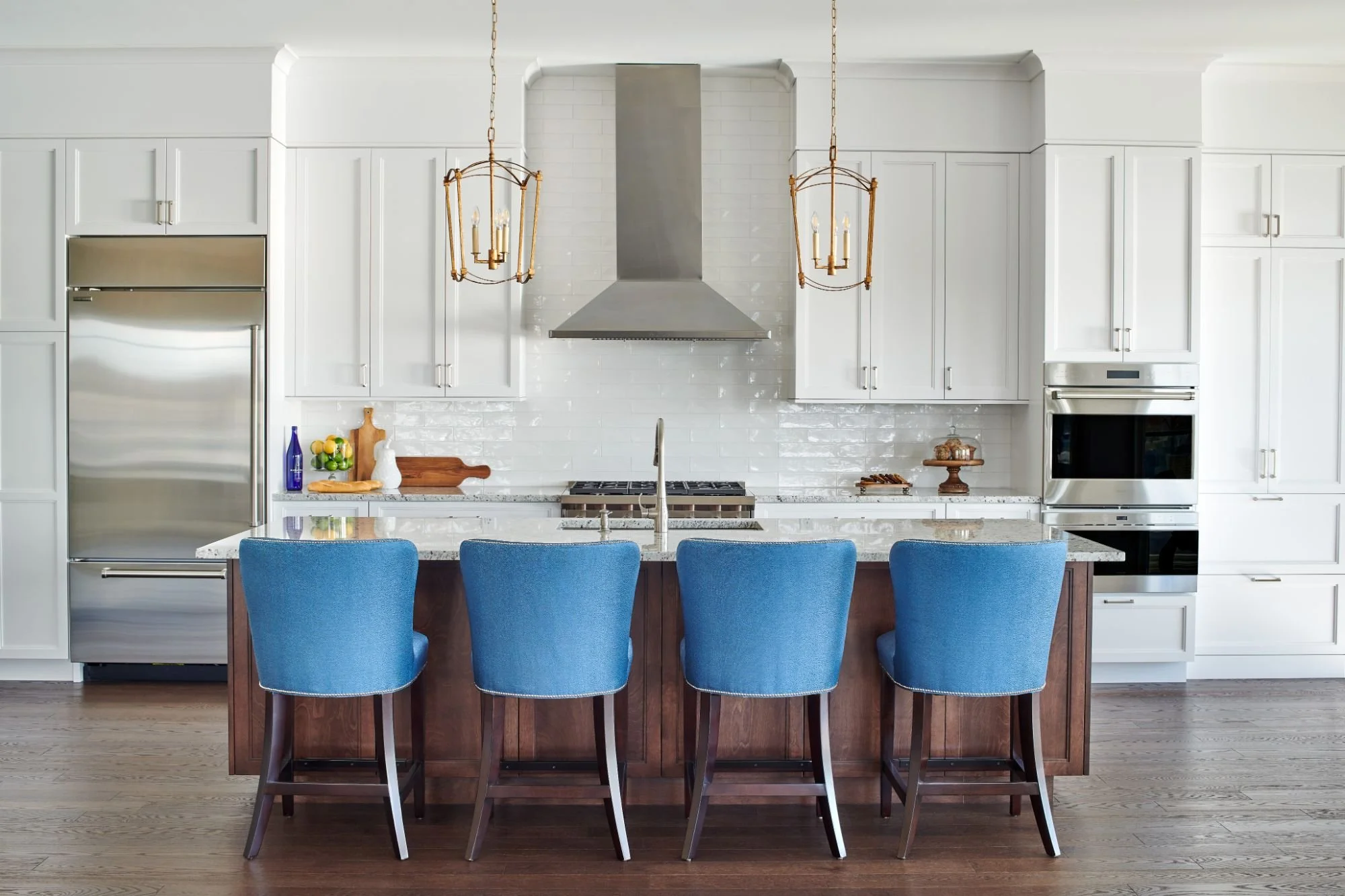
A bright Palm Beach kitchen designed with neuroaesthetic principles features white cabinetry, a warm wood island, and vivid blue barstools that create a fresh, uplifting focal point in the heart of the home.
Begin a Wellness-Focused Interior Design ConSUltation
If you’re drawn to a home that feels perfect, not only photographs beautifully but actively supports how you live each day, neuroaesthetic interior design offers a more considered path. This approach is especially suited to clients who value discretion, depth, and a truly bespoke experience, where every detail is shaped through the lens of both elegance and wellbeing.
As a designer recognized by Forbes for her expertise in wellness-focused interiors, Denise Jadd brings a refined, research informed perspective to each project.
Schedule a private consultation to explore a design approach tailored to your home’s aesthetic and the way you want to live each day. We would be honored to help you create a Palm Beach residence that supports your senses, your routines, and the way you want to live each day.