Quiet Coastal Luxury in Palm Beach: Why Warm Neutrals and Texture Are Replacing High-Contrast Interiors
Denise Jadd
Quiet coastal luxury is all about creating rooms that feel effortless, sun-washed, and quietly elevated - especially in Palm Beach, where the light and landscape do so much of the talking. Instead of sharp black‑and‑white contrast, the new coastal interiors are embracing organic modern interiors built on warm whites, layered textures, and subtle patterns drawn from nature. The result is a palette of warm neutral interiors inspired by sand, sea, limestone, and palms - spaces that feel serene, refined, and naturally connected to their surroundings.
In practice, a Designer South Florida approach creates rooms that feel just as beautiful barefoot on a Tuesday morning as they do when hosting cocktails at sunset. Sofas in relaxed, linen-style fabrics, pale oak or driftwood tables, and quietly patterned rugs establish a foundation of understated luxury interiors rooted in natural materials. Layered neutral interiors, with woven accents, plaster lighting, and soft double-width drapery, add depth without competing with the view. The overall effect is calm yet curated - a home where every detail supports an easy, indoor–outdoor rhythm that defines coastal luxury Palm Beach interior design today.
At Domaine Luxe, we’re seeing many Palm Beach homeowners move away from stark contrast in favor of warm neutral interiors and layered natural materials that create a calmer, more enduring sense of luxury.
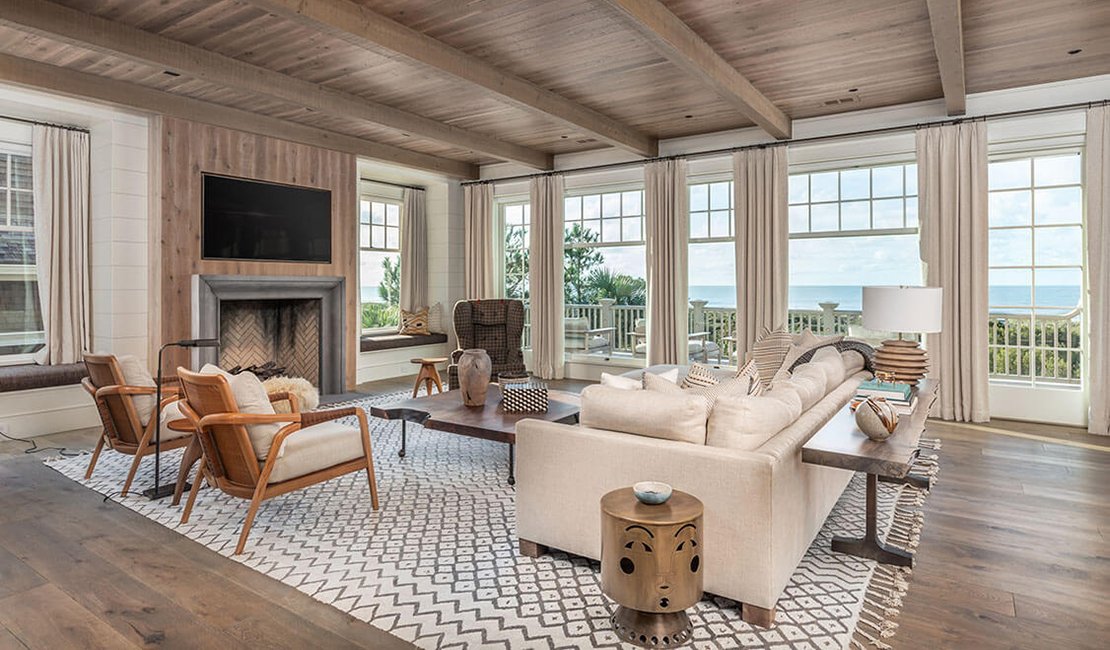
A Palm Beach coastal luxury living room featuring warm whites, layered neutral textures, and organic modern furnishings framing sweeping ocean views.
Why Palm Beach Homes Are Moving Away from High-Contrast Interiors
Homeowners are craving calmer, restorative, and wellness-oriented, more emotionally grounding spaces after years of bold, graphic high-contrast interiors. In Palm Beach and other coastal markets, that translates to softer palettes, fewer harsh lines, and an emphasis on quiet luxury comfort that still feels curated and luxurious.
Several shifts are driving this move away from high contrast:
People want rooms that not only photograph beautifully but also feel restful in real life, morning to evening.
Warmer, low-contrast palettes are more forgiving of daily life—sand, salt, pets, and guests disappear more easily against layered neutrals.
Design trends for 2026 emphasize textured interiors - tactile materials, mineral finishes, and nature-inspired hues instead of stark, graphic color schemes.
In Palm Beach, the lush green outdoors and bright sun already provide contrast, so interiors work better as a soft, neutral backdrop.
High-contrast black-and-white will always have a place in coastal luxury interior design small doses, but quiet coastal luxury relies on nuance: shifting tones of cream, sand, and driftwood instead of hard edges of ebony and optic white.
This shift toward warm neutrals and tactile materials reflects the philosophy behind modern luxury interior design in Palm Beach, where serenity and understated elegance are replacing stark contrasts.
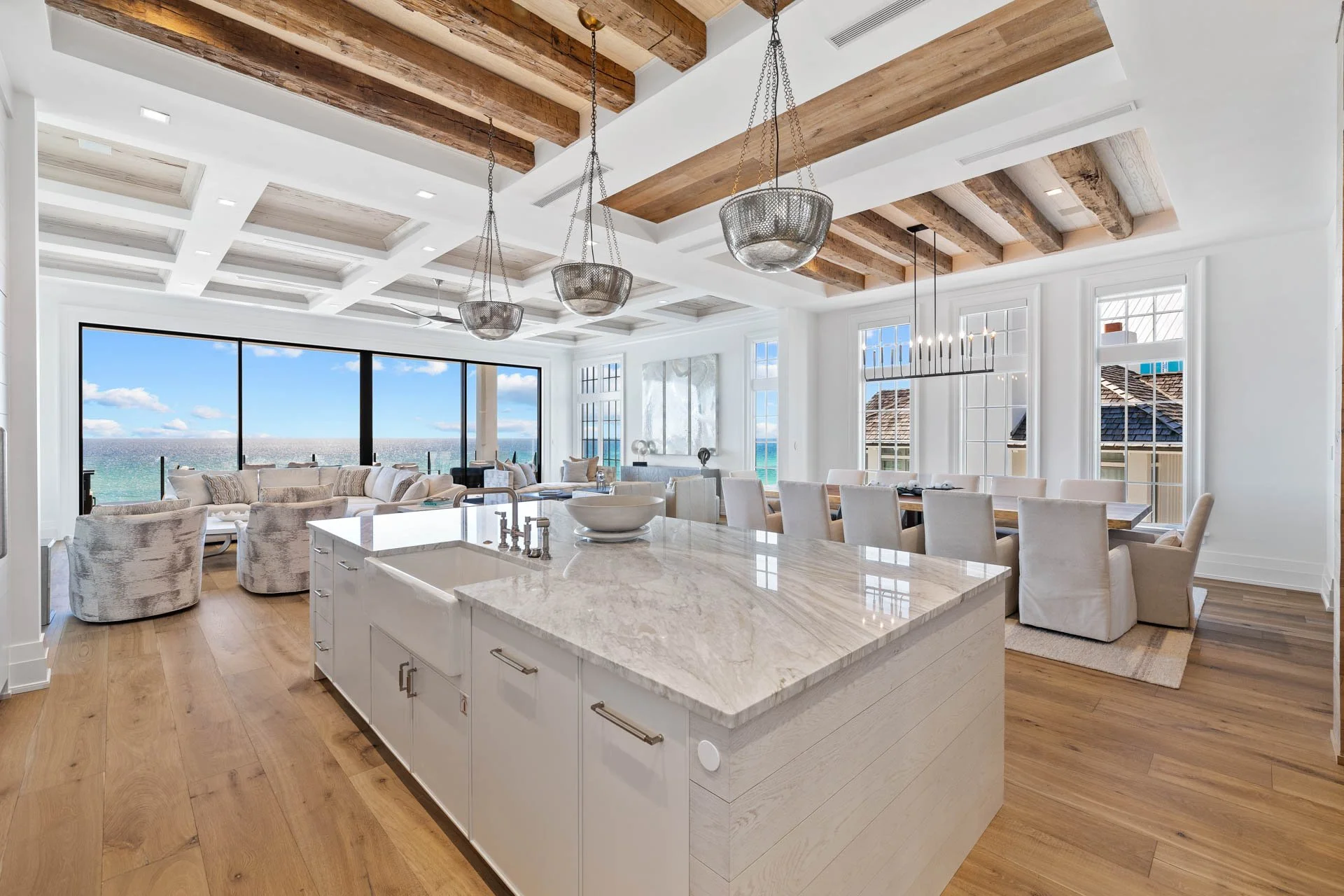
Oceanfront Coastal Gathering Space
An oceanfront Palm Beach–style great room combines a marble island, warm wood beams, and soft neutral seating for a coastal luxury kitchen, dining, and living space.
The Power of Warm Whites in Palm Beach Light
In a Palm Beach home, the quality of light is everything - bright, reflective, and often slightly golden. Warm whites work with that light, not against it, wrapping rooms in a soft glow instead of a clinical glare.
Warm, neutral interiors soften strong midday sun and make early-morning and golden-hour light feel even more flattering. In rooms with large windows or coastal exposures, these gentle tones keep the architecture feeling seamless, airy, and quietly luxurious.
What “Warm White” Really Means
Warm whites are off-whites with a hint of cream, beige, or taupe, rather than cool blue or gray undertones. They create a welcoming, sun-kissed effect that flatters both architecture and skin tones, which matters in social, entertainment-driven understated luxury homes.
Examples used in coastal settings include:
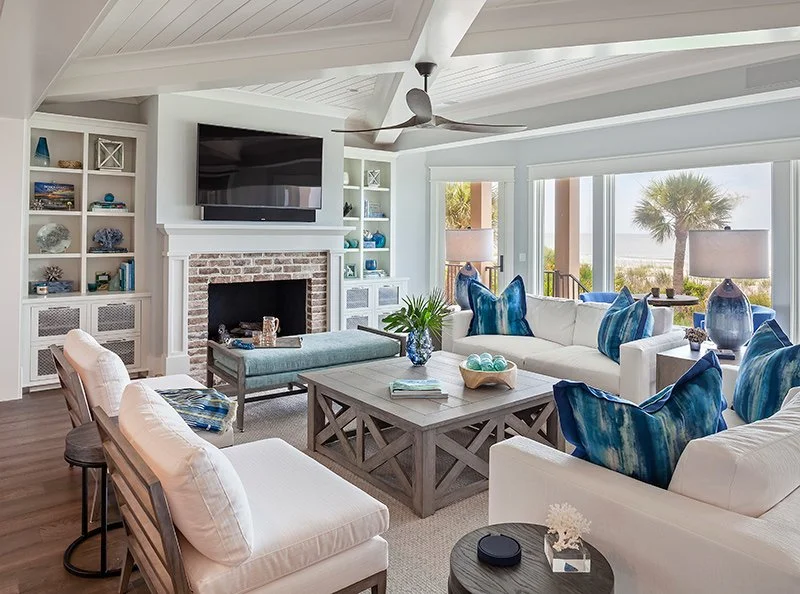
A bright palm beach living room pairs crisp white seating, ocean-blue pillows, and layered textures around a brick fireplace with views of palm trees and water just beyond.
Soft off-whites with a whisper of beige that feel serene rather than stark.
Creamy whites like Swiss Coffee–type tones that instantly warm up a space and pair beautifully with pale woods.
Stone-inspired whites that mimic beach pebbles or sand, offering a grounded, natural backdrop.
Instead of one flat white throughout, the quiet luxury approach layers slightly different warm whites: a creamier tone on walls, a softer white on trim, and an even lighter shade on ceilings for a gentle, enveloping feel.
Why Warm Whites Suit Coastal Homes
In coastal locations, very crisp whites can read harsh or blue under strong sun and reflective water. Warm whites diffuse the light, making spaces feel calm and luminous rather than overlit.
They are ideal for:
Open-plan living rooms where you want a seamless flow between kitchen, dining, and lounge zones. Warm whites help unify the space without feeling flat.
Bedrooms that should feel cocooning at night yet fresh in the morning; creamy walls keep the mood soft around the clock.
Coastal kitchens where stone, wood, and woven textures need a quiet backdrop to shine.
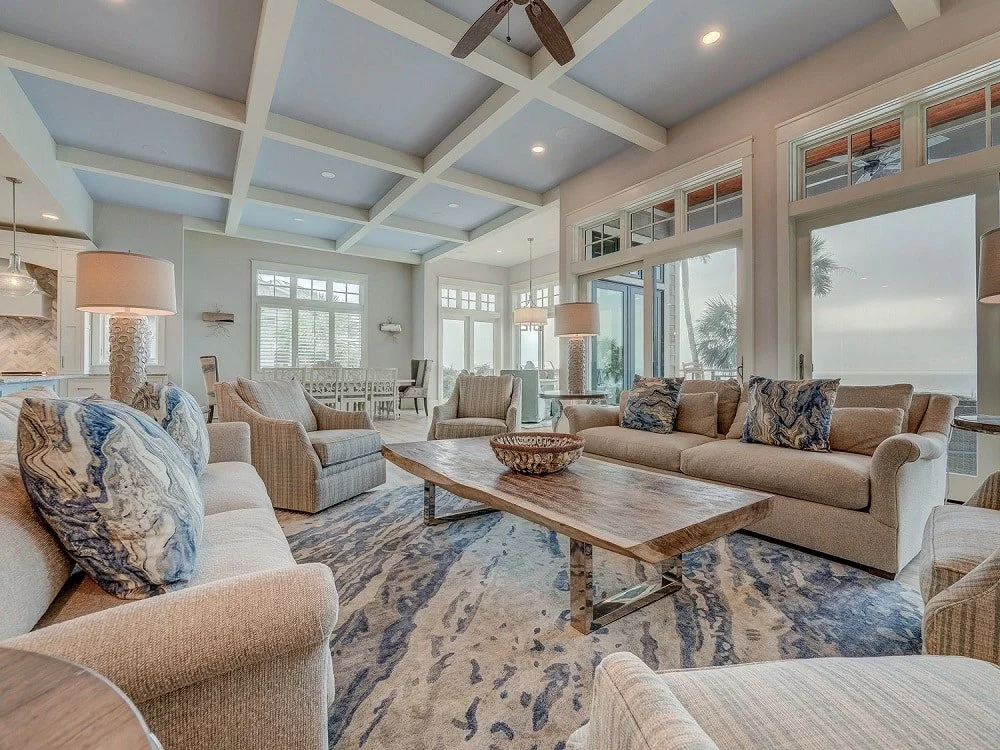
A soft coastal living room features warm neutral seating, blue marbled pillows, and a driftwood-style coffee table layered over a watery patterned rug with expansive windows framing the shoreline.
In Palm Beach, warm whites also harmonize with existing elements—terra-cotta roofs, limestone pavers, and tropical landscaping—so interiors feel connected to the property as a whole.
Layered Textures: The New “Pattern”
The rise of natural material interiors reflects a desire for authenticity and tactile comfort. In quiet coastal luxury, texture replaces loud pattern as the main source of visual interest. When your palette is mostly warm whites and soft neutrals, the richness has to come from how materials feel and catch the light.
Softly slubbed linens, woven grasses, velvety plaster, and honed stone all create depth without ever raising the volume. As light shifts throughout the day, those surfaces pick up highlights and shadows, giving a neutral room a sense of movement and quiet drama.
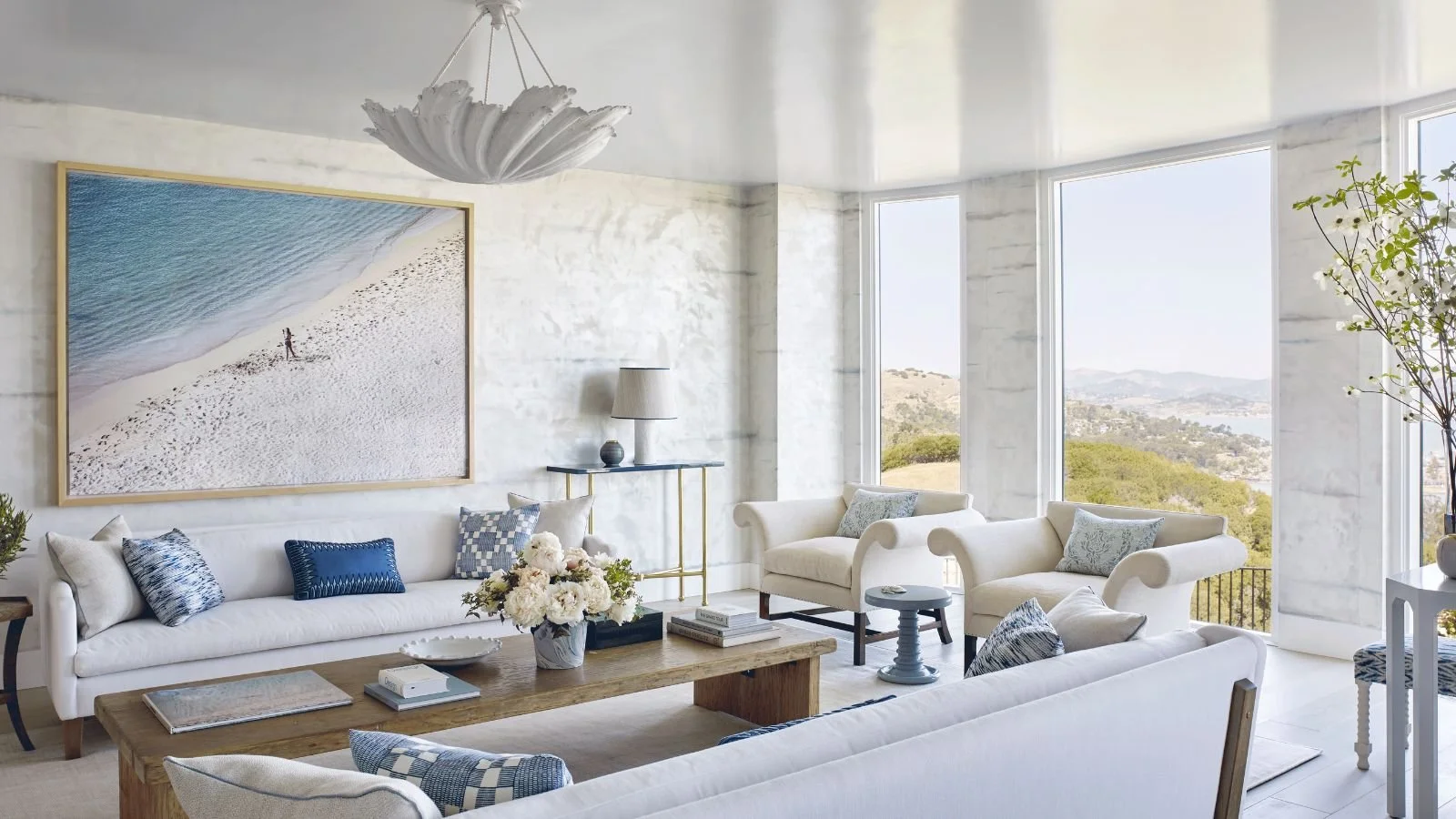
An airy coastal salon-style living room layers white sofas, soft neutrals, and blue accents around a rustic wood coffee table, with a large beach photograph and expansive windows framing serene water views.
How to Think About Texture Layers
Quiet luxury spaces emphasize natural materials instead of synthetic finishes. Rather than one big “statement” material, this look builds depth through many quiet layers. A single room might include:
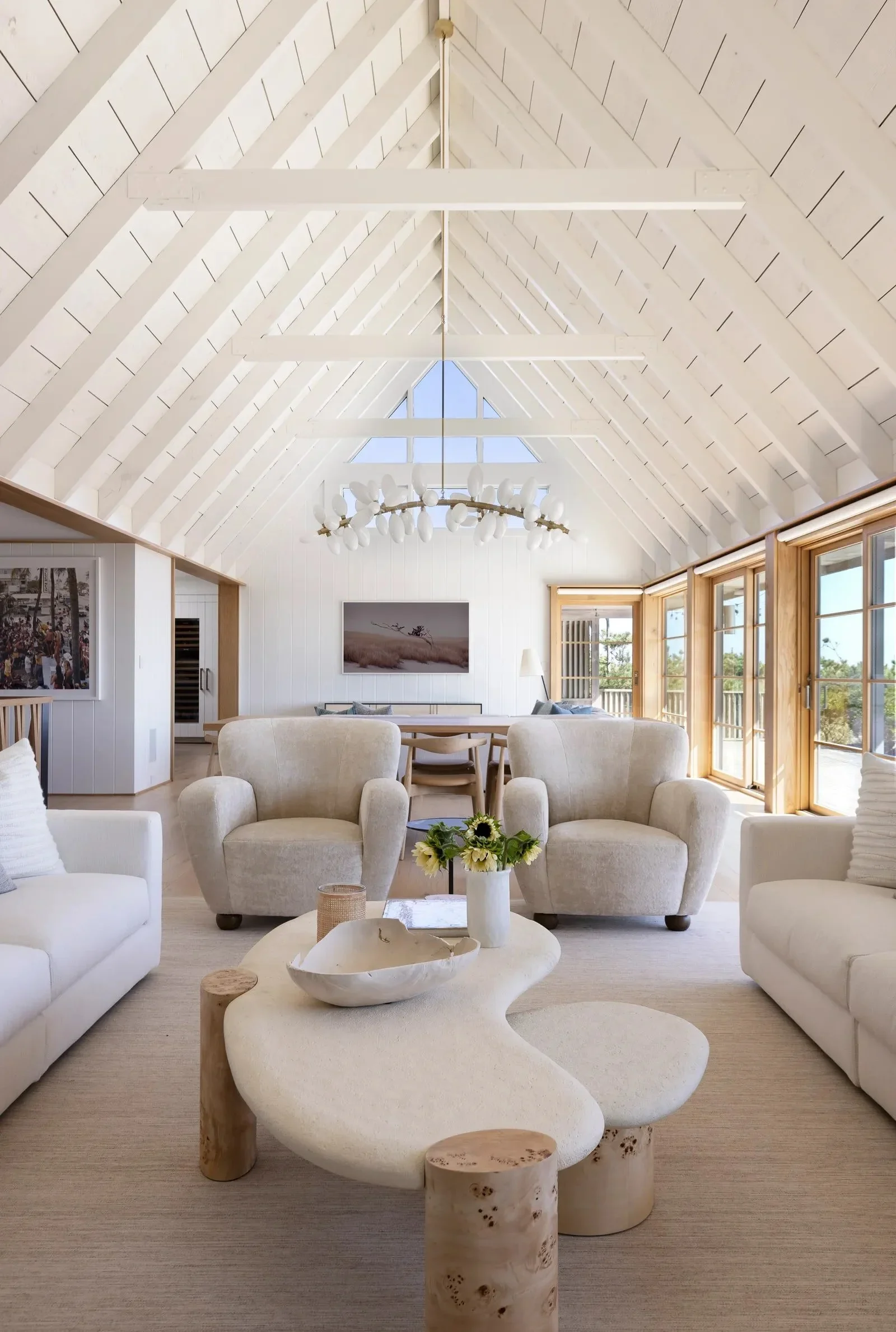
A serene vaulted coastal living room layers warm white sofas, cozy armchairs, and a sculptural organic coffee table beneath a soaring planked ceiling and modern chandelier, with sunlight streaming through wood-framed glass doors.
Linen upholstery and slipcovers that feel breathable and relaxed—perfect for the coastal climate.
Woven materials like rattan, jute, and wicker in lighting, seating, or baskets for natural warmth.
Pale oak or whitewashed wood for floors and cabinetry, adding subtle grain and character.
Matte stone, tumbled limestone, or honed marble that reads soft and lived-in rather than glossy and formal.
Textural wall finishes—limewash, plaster, or grasscloth—that add movement without busy pattern.
The goal is for the eye to travel gently around the room, discovering layers of interest without ever feeling overwhelmed.
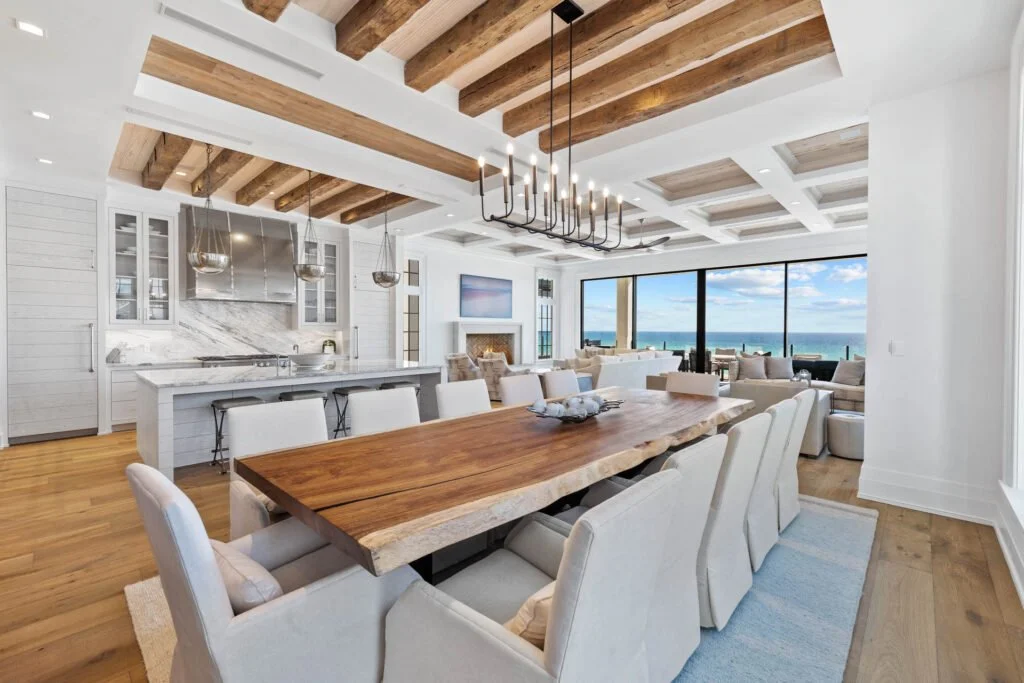
Seaside Dining Room
An inviting Palm Beach dining room where warm wood and ocean views meet.
Texture in Key Palm Beach Spaces
Texture is now the main visual interest in quiet luxury design. Texture plays a slightly different role in each area of a Palm Beach home.
Living rooms: Think nubby linen sofas, a chunky jute or wool rug, ribbed wood cabinetry, and ceramic vases on a plaster console - all in similar tones but varied textures.
Bedrooms: Upholstered beds in soft performance linen, woven shades that filter the sun, and quilted or matelassé coverlets instead of bold duvets.
Dining rooms: A simple oak or cerused wood table, woven or cane-backed chairs, a textured plaster chandelier, and grasscloth on the walls for quiet drama.
In quiet coastal homes, layered texture interiors replace bold pattern, allowing stone, linen, and natural wood to quietly define the room. The movement toward organic modern interiors reinforces the small details with natural and sculptural forms - like the lip of a handcrafted ceramic bowl or the weave of a throw - and become part of the serene luxury interiors story.
Subtle Patterns: Gentle Movement, Not Noise
Quiet coastal luxury does not ban pattern; it simply softens it. Instead of large-scale black-and-white geometrics, you’ll see hushed stripes, tone-on-tone motifs, and nature-inspired prints that almost read as texture from a distance.
Patterns are chosen to support the calm of the room, not compete with the view or the architecture. A narrow stripe on a lumbar pillow or a delicate palm frond print on an accent chair becomes a whisper of interest rather than the main event.
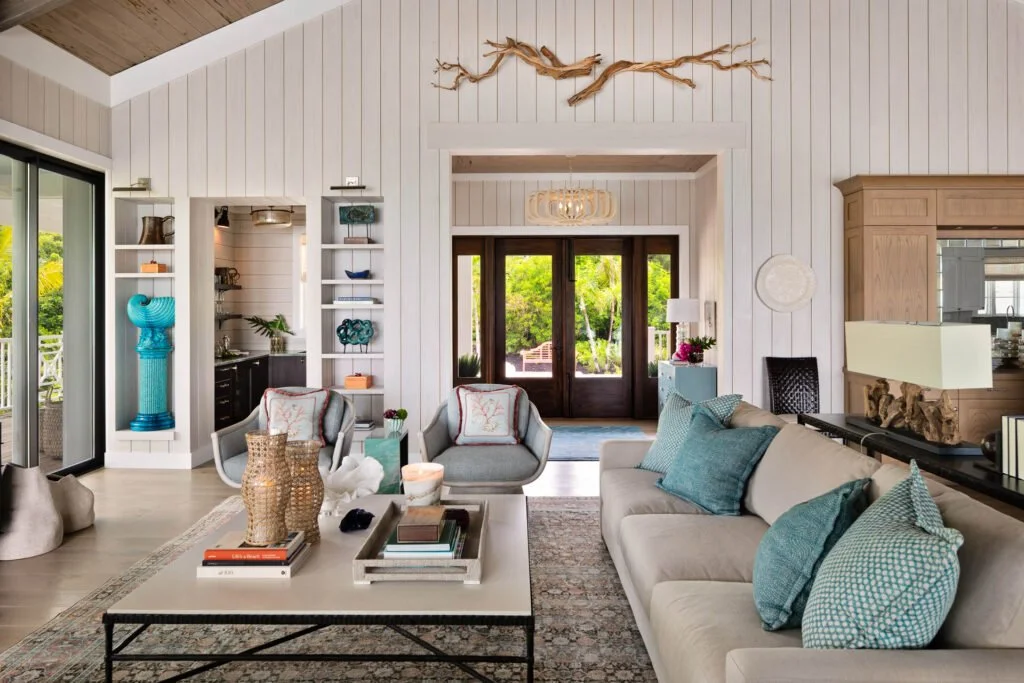
A Palm Beach coastal living room layers neutral upholstery with turquoise accents, woven textures, and curated decor, opening to lush greenery beyond.
What “Subtle Pattern” Looks Like
Subtle patterns keep the mood calm while preventing the room from feeling too plain. In coastal interiors, that often means:
Narrow or broken stripes in soft cream and blue that evoke beach umbrellas or cabana awnings without shouting.
Tone-on-tone jacquards or matelassé fabrics where the pattern is visible more through shadow than color contrast.
Small-scale botanical or shell-inspired prints in sand and ivory, used sparingly on pillows or an accent chair.
Herringbone or chevron in pale wood flooring that adds movement while staying neutral.
Patterns are often confined to textiles and smaller elements, making it easy to edit, refresh, or seasonally shift the look without redoing the entire room.
Balancing Pattern in a Low-Contrast Scheme
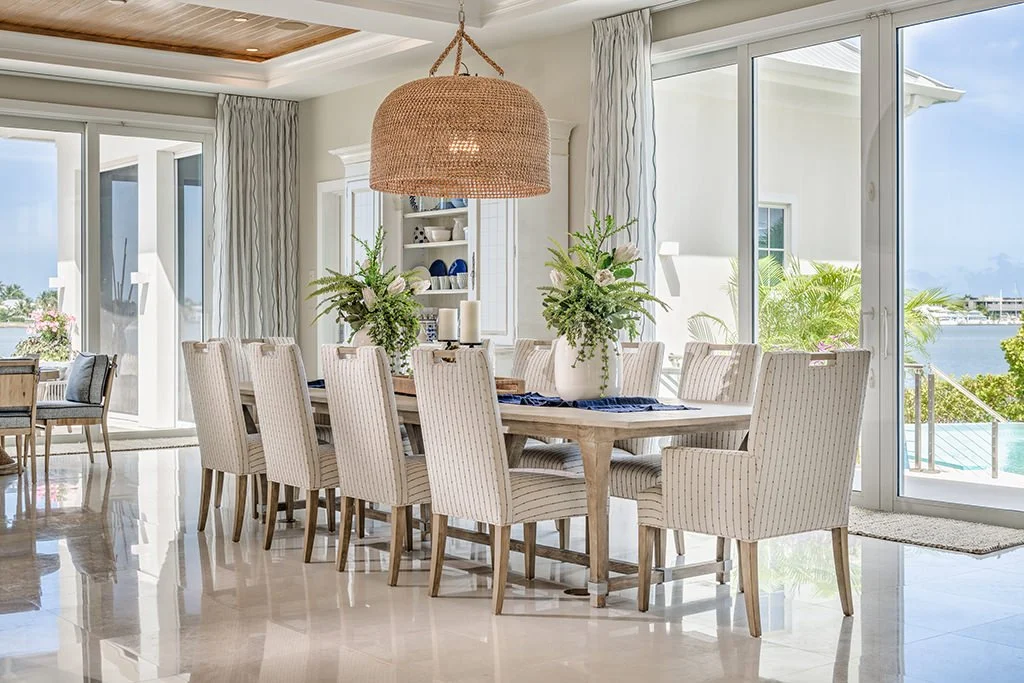
A light-filled, warm coastal dining room features a long wood table, subtle stripe patterned slipcovered chairs, and a woven pendant chandelier over the table, with floor-to-ceiling glass doors opening to water views.
Because the palette is restrained, placement and proportion become more important. A quiet coastal space might follow a simple formula:
Start with solid, warm white walls and large furniture pieces in textured neutrals.
Introduce pattern in 20–30% of the textiles—pillows, throws, and maybe one rug—with everything else remaining solid but textured.
Keep contrast low by choosing patterns where colors sit close together in value (cream with sand, misty blue with stone, not navy with bright white).
This approach allows the room to feel layered and personal without losing its sense of calm.
Palm Beach–Specific Coastal Neutrals
Palm Beach style has historically embraced color and pattern, but the current expression is more sun-washed and refined. Quiet coastal luxury here still nods to that heritage; it just does it through nuance instead of maximalism.
Today’s Palm Beach interiors still borrow the playful spirit of resort living, but filter it through layers of warm neutrals and thoughtful restraint. Saturated hues and bold prints give way to sun-faded tones, textured neutrals, and a few carefully edited accents that feel timeless rather than trendy.
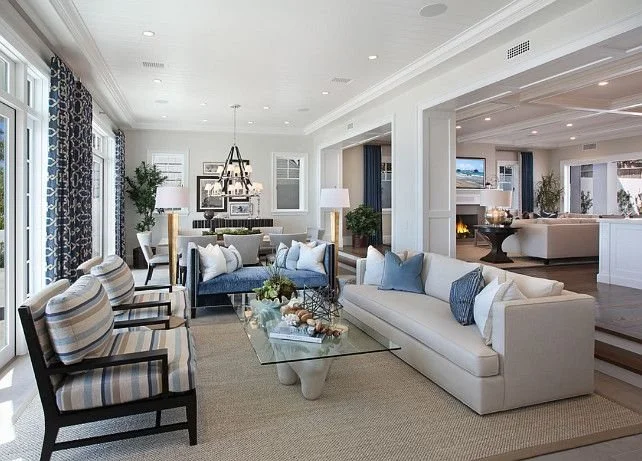
Layered Palm Beach Living Lounge
A refined coastal living room layers soft neutrals and tailored blue accents in an open, connected space perfect for relaxing and entertaining.
Neutrals That Reflect the Landscape
“The most successful coastal palettes borrow directly from the surroundings.”
Think of:
Sand tones: warm beiges, light taupes, and oat colors that echo nearby beaches.
Stone and shell: chalky off-whites, putty, and pale greige reminiscent of coral stone and shell-studded paths.
Sea and sky: muted blue-grays and soft sea-glass hues used as very gentle accents, not dominant colors.
Palm and foliage: soft, mossy greens and sage introduced through textiles or art for an organic, grounded feel.
Earth tones: clay, mushroom, and natural light brown driftwood tones feel rooted, centered and add depth.
These colors work particularly well with iconic Palm Beach materials like wicker, rattan, bamboo, raw silk, and grasscloth, which inherently bring texture and warmth.
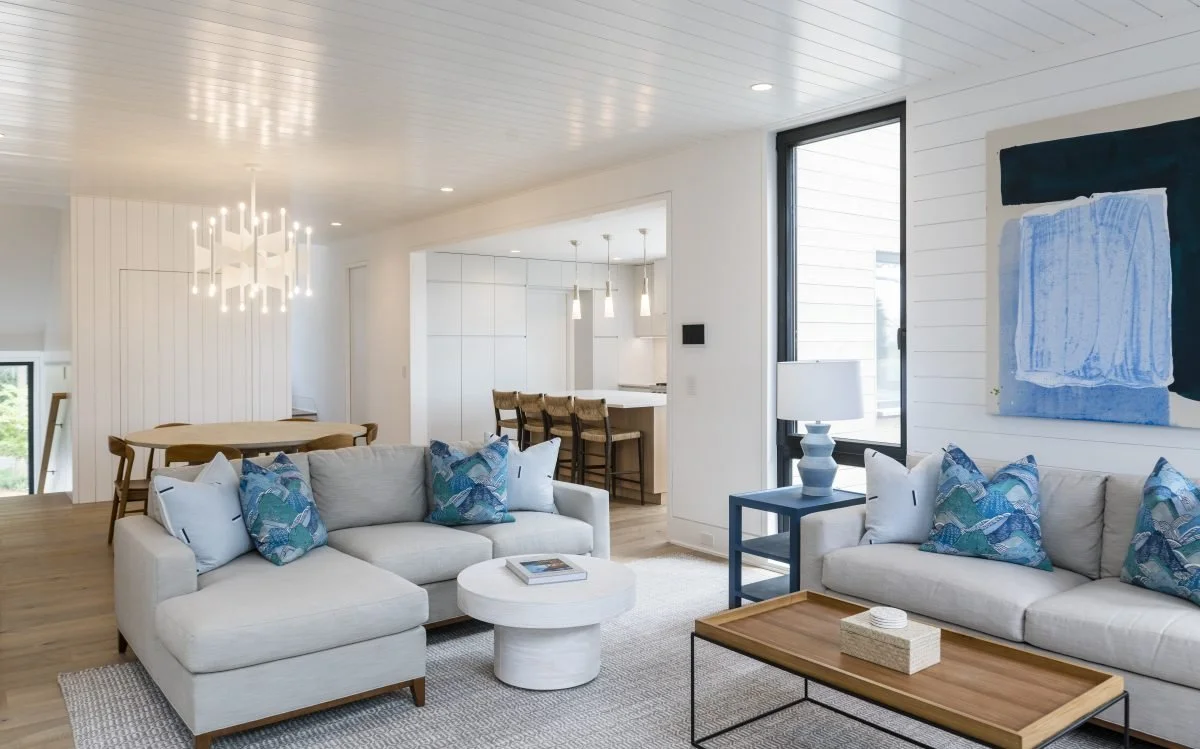
A modern coastal living lounge features light neutral sofas with ocean-inspired blue pillows, a simple wood-and-stone coffee table, and an open flow to the dining area and sleek white kitchen.
How This Differs from Traditional Palm Beach Boldness
Classic Palm Beach interiors often feature bright pinks, greens, and graphic prints, grounded by crisp whites. The quiet coastal version keeps the sophistication but dials down the volume, using color more as an accent than a headline.
Instead of:
High-gloss lacquer, you might see matte plaster or limewashed walls.
Saturated turquoise upholstery, you’ll find soft blue piping or a single patterned pillow.
Black window frames, designers are opting for soft charcoal or deep bronze to soften the contrast. White window frames are still classic, expect to see more ivory frames soon.
The result is a home that still feels distinctly Palm Beach—light, elegant, coastal—but with an ease that suits modern, wellness-focused lifestyles.
Design Strategies to Achieve “Soft Neutrals + Texture”
Quiet coastal luxury becomes much more approachable when you break it down into actionable steps. Let’s look at the new foundation palette. Here are practical strategies from Interior Designer South Florida expert, Denise Jadd, you can apply room by room in a Palm Beach home.
1. Start with a Soft, Unified Base
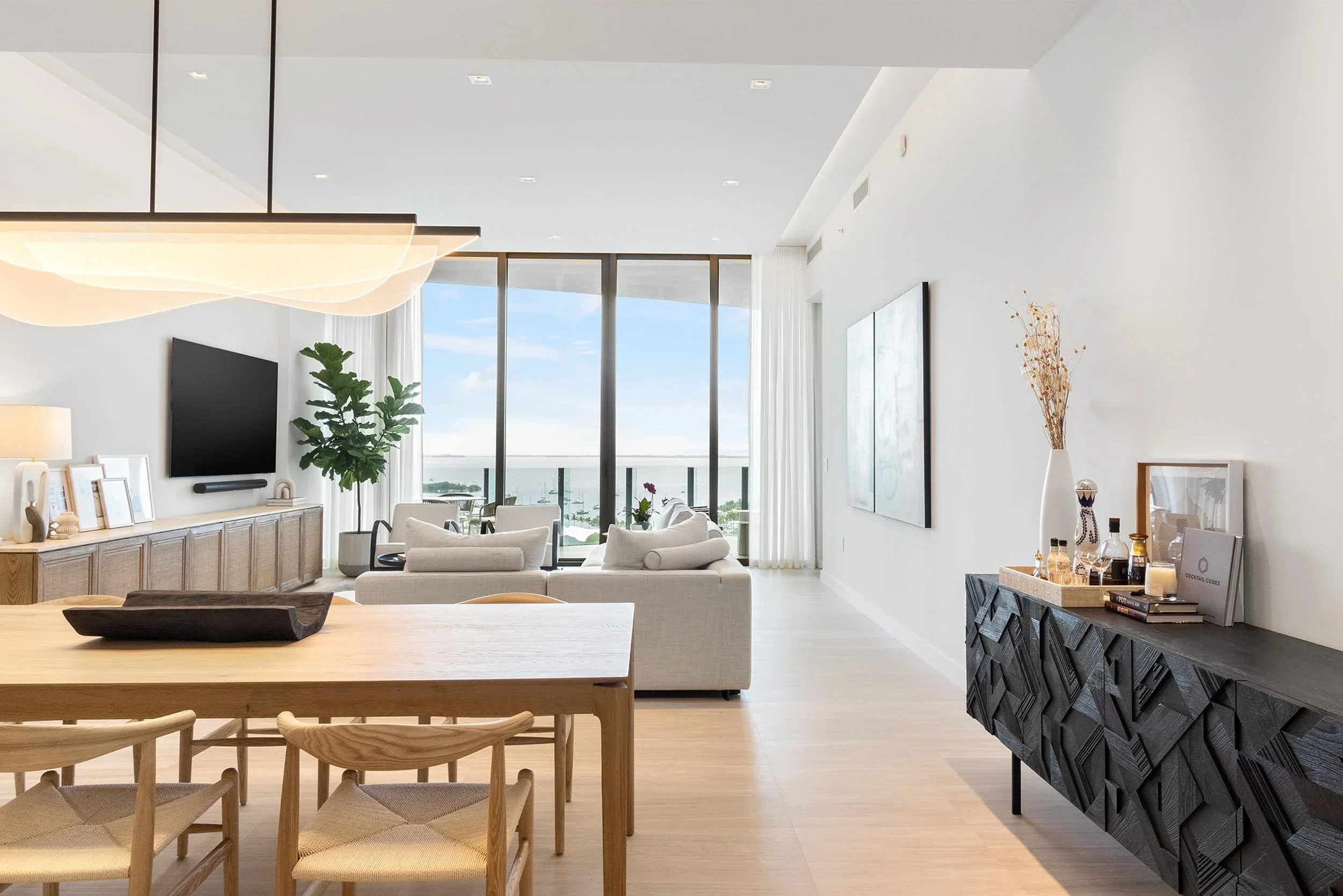
A modern Palm Beach living and dining space pairs light woods, sculptural lighting, and soft neutral seating with full-height glass framing expansive sky and water views.
Create continuity with warm white walls and ceilings that flow from space to space. Keep trim just a touch brighter to subtly frame the architecture without strong contrast.
Choose one main warm white and either the same or one slightly lighter or cleaner white for trim and ceilings.
Avoid abrupt changes in wall color between rooms; let texture and furnishings define zones instead.
This gives you a seamless backdrop against which layered neutrals can shine.
2. Build a Neutral Palette in “Bands”
Think in bands of color that feel like natural gradients rather than sharp steps.
For example:
Light band: soft white walls, off-white linen drapery, pale woven shades.
Middle band: sandy upholstered seating, oat-toned rugs, driftwood side tables.
Deep band: a few accents in caramel leather, muted charcoal, or soft moss green for grounding.
By keeping everything related, you avoid the disjointed look that can come from mixing too many unrelated neutrals.
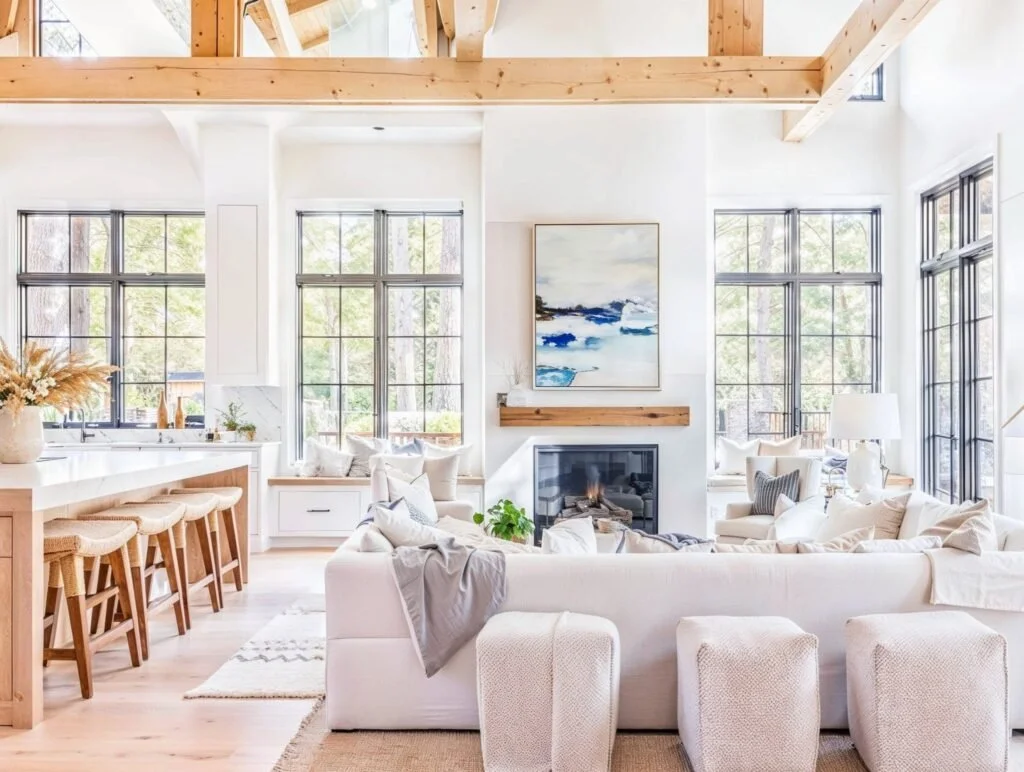
An airy rustic coastal great room blends light sofas, natural wood beams, and a cozy fireplace with expansive windows that fill the open kitchen and living area with soft daylight.
3. Prioritize Natural, Tactile Materials
Choose materials that invite touch and wear in beautifully over time.
Upholstery: textured linen, cotton, boucle and performance fabrics with a natural hand.
Rugs: jute, sisal, wool, or blends that add body underfoot.
Casegoods: light or medium-tone natural woods with visible grain, cane or rattan panels, and matte finishes.
Surfaces: honed stone, travertine, limewash, plaster, and ceramic rather than high-gloss or overly polished finishes.
These tactile materials instantly telegraph relaxed luxury without the need for heavy ornamentation.
4. Use Pattern Sparingly but Intentionally
Treat pattern as a seasoning, not the main dish.
Start with solid, textured foundational pieces (sofas, larger chairs, major rugs).
Layer in subtle stripes, tone-on-tone geometrics, or small-scale coastal motifs via pillows, throws, or a single accent chair.
Keep a consistent color story so patterns support the palette instead of competing with it.
Because everything is within a soft, coastal palette, even a small amount of pattern feels impactful.
5. Let Light and Shadow Do Some of the Work
In quiet interiors, the way light moves across surfaces becomes a design element on its own.
Use sheer draperies, woven shades, and adjustable layers of window treatments to control and soften Palm Beach sun.
Choose surfaces and wall finishes that show subtle variation—brushstrokes, texture, or stone movement—so they change gently throughout the day.
This dynamic quality keeps a neutral interior feeling alive and atmospheric rather than static.
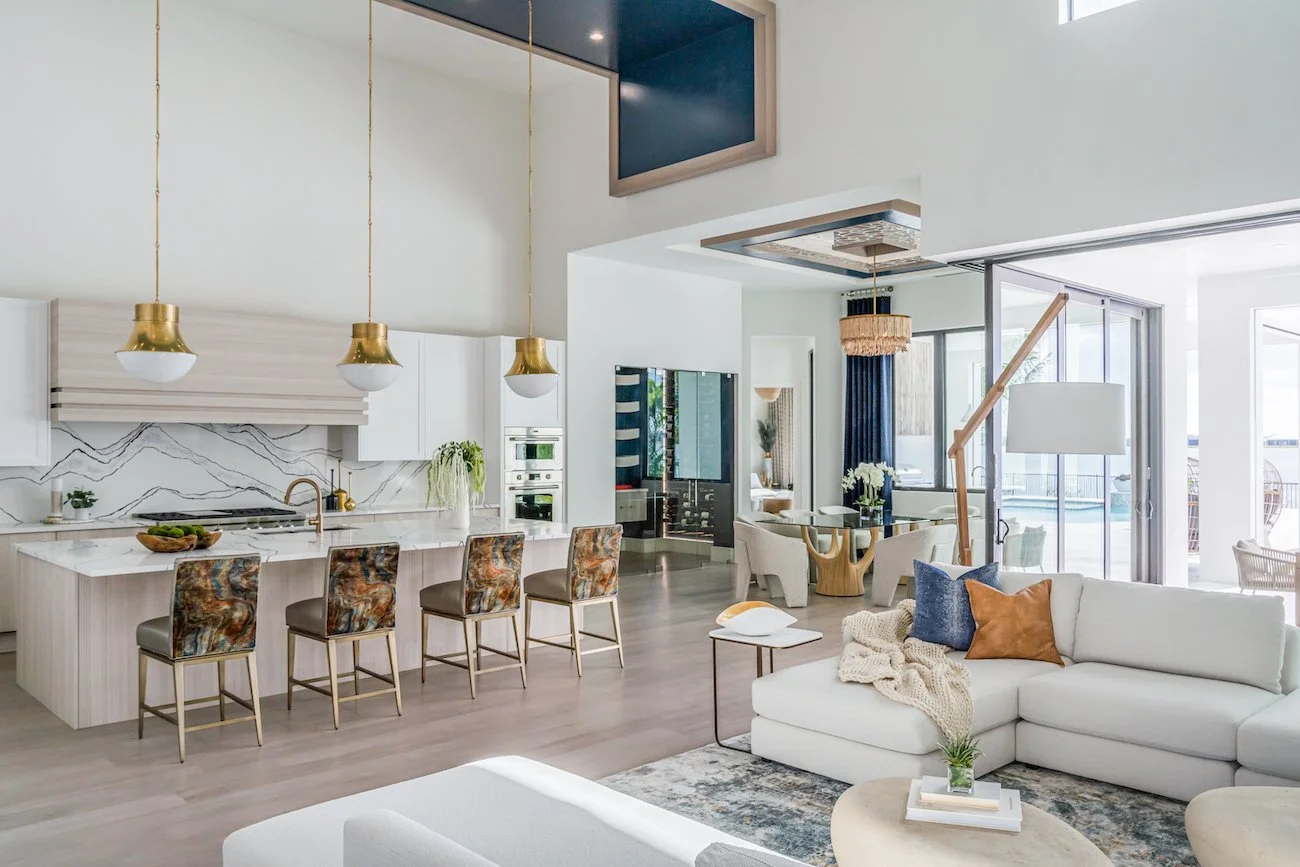
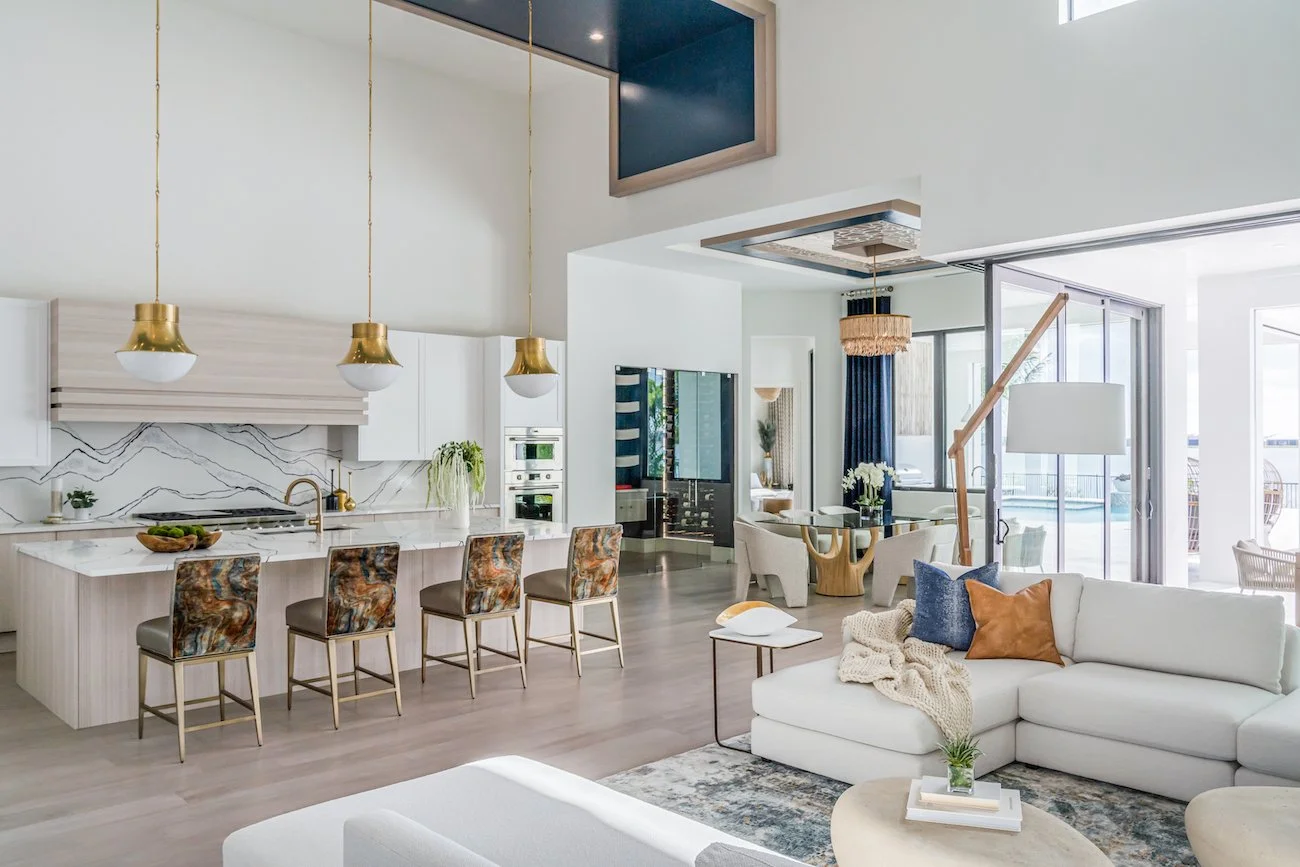
A chic coastal entertaining space pairs a light sectional, sculptural nesting tables, and a marble waterfall island with bold brass pendants and a glass-framed dining area overlooking the pool.
The Emotional Side of Quiet Coastal Luxury
Beyond aesthetics, the shift toward soft neutrals and texture is about neuroaesthetics - how spaces make people feel. Coastal homes are increasingly designed as sanctuaries, places to recharge, reconnect, and slow down. Designers are increasingly embracing wellness-focused interior design, where layered neutrals, natural materials, and calming textures support a restorative home environment.
Warm whites and layered textures:
Support nervous-system coastal calm by reducing visual noise and harsh contrast.
Encourage barefoot living, inviting people to touch, lean, and live in the spaces rather than just admire them.
Provide a forgiving backdrop that welcomes guests, kids, and pets, aligning with the reality of busy coastal lifestyles.
In Palm Beach, where the pace of life can be fast and social calendars full, a quietly luxurious home becomes the ultimate status symbol, not because it shouts, but because it feels deeply, unmistakably serene.
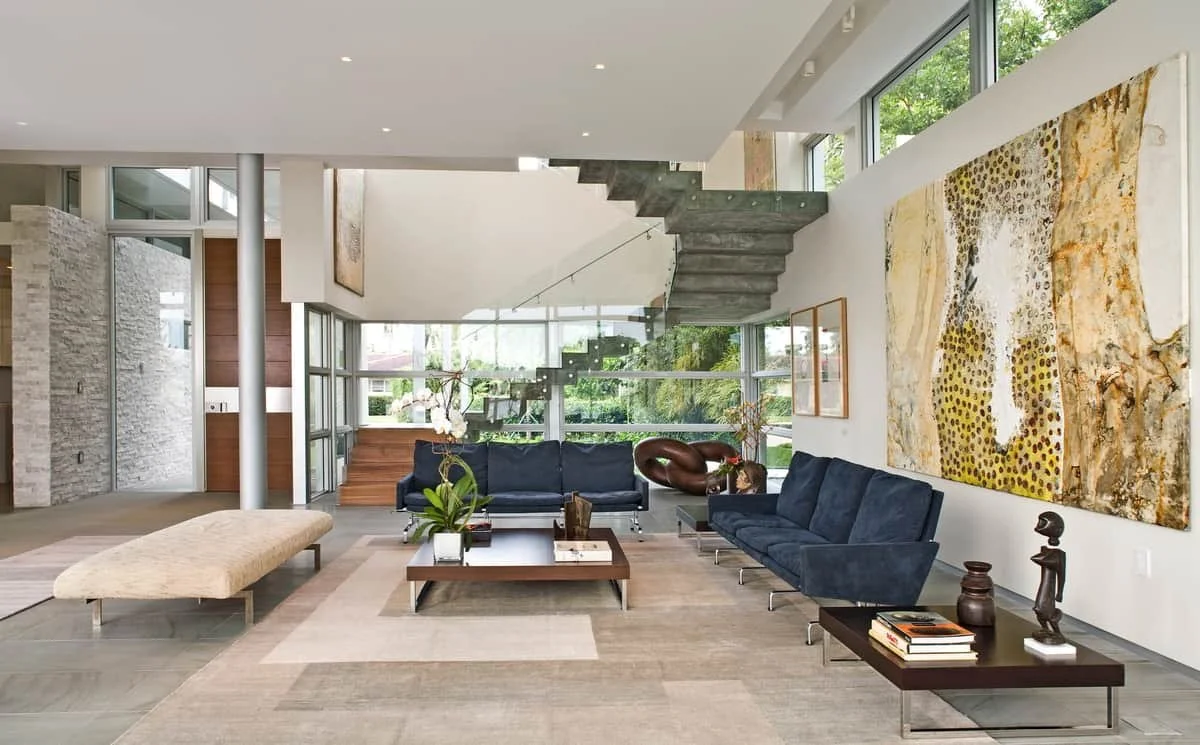
A modern sculptural Palm Beach living lounge features deep blue sofas, layered neutral rugs, and bold art, all anchored by floating concrete stairs and expansive glass framing lush greenery.
A Reflection of Enduring Design.
Serene luxury interiors is not about doing less; it’s about doing only what truly matters. Warm whites, gentle neutrals, layered textures, and softened patterns create a backdrop that feels grounded, livable, and quietly elevated, perfectly in tune with Palm Beach’s light and landscape. When you design this way, with wellness first, your home stops trying to “perform” and starts to breathe: morning light feels softer, evenings feel more intimate, and every space invites you to exhale.
Palm Beach homeowners are increasingly drawn to understated luxury interiors, where quality craftsmanship replaces decorative excess. For homeowners undertaking a custom home renovation and new build design, this quieter palette creates a foundation for timeless coastal luxury.
Ultimately, this shift away from high-contrast interiors reflects a broader move toward ease—spaces that photograph beautifully but, more importantly, feel good to live in every single day. By embracing warm neutrals, natural materials, and layered texture, homeowners aren’t simply following a trend; they’re creating a timeless coastal foundation that evolves gracefully with their lifestyle and the ever-changing Palm Beach landscape.
The result is a new generation of serene luxury interiors - homes designed to calm the senses, celebrate natural light, and support the relaxed sophistication that defines coastal living today.
For those considering a renovation or new build, this quieter palette offers an enduring framework for coastal luxury interior design in Palm Beach, where elegance is expressed through restraint, craftsmanship, and thoughtful material choices.
Designing Quiet Coastal Luxury for Palm Beach Living
If you’re considering a renovation, new build, or thoughtful refresh in Palm Beach, the shift toward warm neutrals and layered textures offers a timeless starting point. As a premier interior designer South Florida, Domaine Luxe specializes in transforming ordinary spaces by approaching each project as a collaboration - crafting interiors that feel serene, personal, and deeply connected to the coastal landscape. We invite you to explore what quiet coastal luxury could look like in your own home.
By embracing quiet coastal luxury, Palm Beach homes today are as restorative as they are timeless - a reflection of lifestyle, landscape, and enduring design.