Palm Beach Luxury Interiors: The Dutch Design Approach to Intentional Living
Denise Jadd
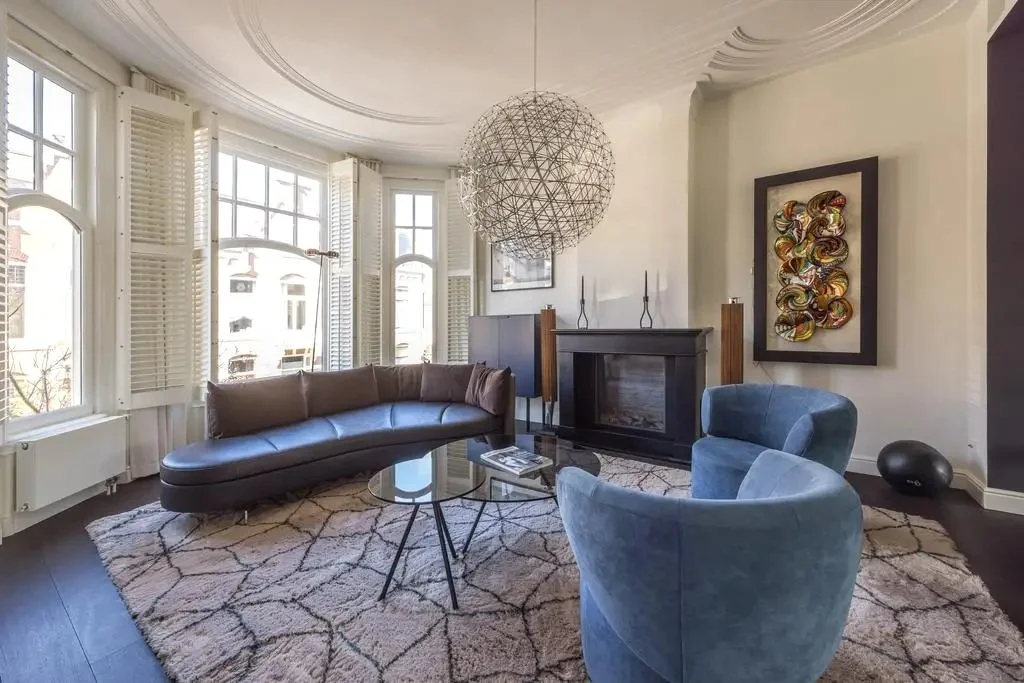
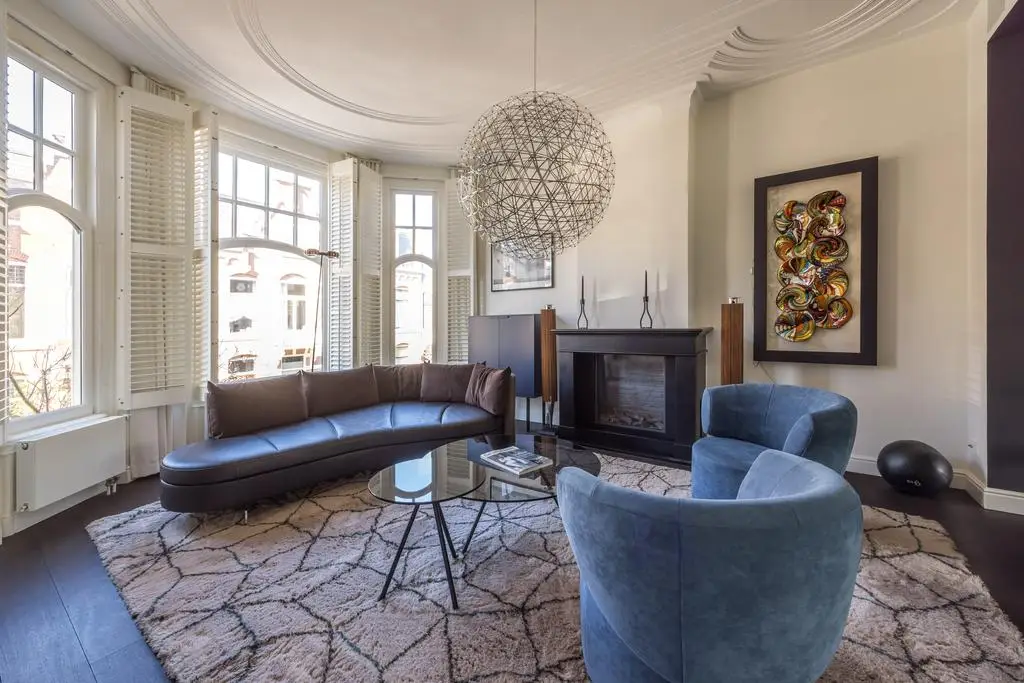
A light‑filled Dutch living room features a curved leather sofa, blue swivel chairs, and contemporary art framed by tall bay windows and delicate ceiling plaster.
Luxury interior design in Palm Beach has long been defined by scale, visual impact, and a layered sense of opulence. Expansive estates, statement lighting, custom millwork, and highly curated finishes often represent what many consider the pinnacle of high-end living. While these elements undeniably create striking spaces, they reflect only one interpretation of luxury.
During my time living in The Hague, I discovered a more nuanced perspective on luxury. It was not a departure from elegance, but a refinement of it - one that is quieter, more intentional, and more deeply connected to how a home supports everyday living. This has changed my own understanding of luxury.
Dutch design introduces a compelling framework for Palm Beach homeowners who are beginning to value not only how their home presents visually, but how it feels to experience daily. It emphasizes calm, functionality, natural light, and wellness. These are not abstract concepts, but tangible design decisions that influence mood, behavior, and overall well-being in subtle yet powerful ways.
Today, this philosophy aligns remarkably well with neuroaesthetic design, an emerging field that explores how our surroundings influence the brain and body. Research continues to show that exposure to natural light, organic materials, balanced proportions, and visually harmonious surroundings can reduce stress, improve focus, and enhance emotional well-being.
Walking through neighborhoods in The Hague, it becomes clear that these ideas are not modern wellness trends. They have shaped Dutch homes and communities for centuries, influencing not only interiors but daily life itself. One concept, in particular, captures this philosophy better than any other.
The Dutch Secret to a Home That Feels Truly Luxurious
One of the most beautiful ideas in Dutch culture is gezelligheid, a word with no direct English equivalent. While it is often translated simply as "cozy," its meaning is far richer. It describes the feeling of warmth, connection, and quiet contentment that emerges when a home encourages people to slow down and enjoy one another's company. This philosophy resonates deeply with the kind of luxury interior design increasingly sought in Palm Beach, where beautiful homes are expected to support both elegant entertaining and everyday well-being. A thoughtfully designed room can certainly feel comfortable, but gezelligheid is ultimately about creating an atmosphere where conversations linger, family gathers effortlessly, friends feel instantly welcome, and everyday moments become meaningful. It reminds us that the true luxury of a home is not found in perfection or extravagance, but in how deeply it supports a life well lived. It is a European interior design philosophy that closely reflects our own approach to intentional living, where thoughtful design creates spaces that elevate daily rituals, strengthen connection, and support lasting well-being.
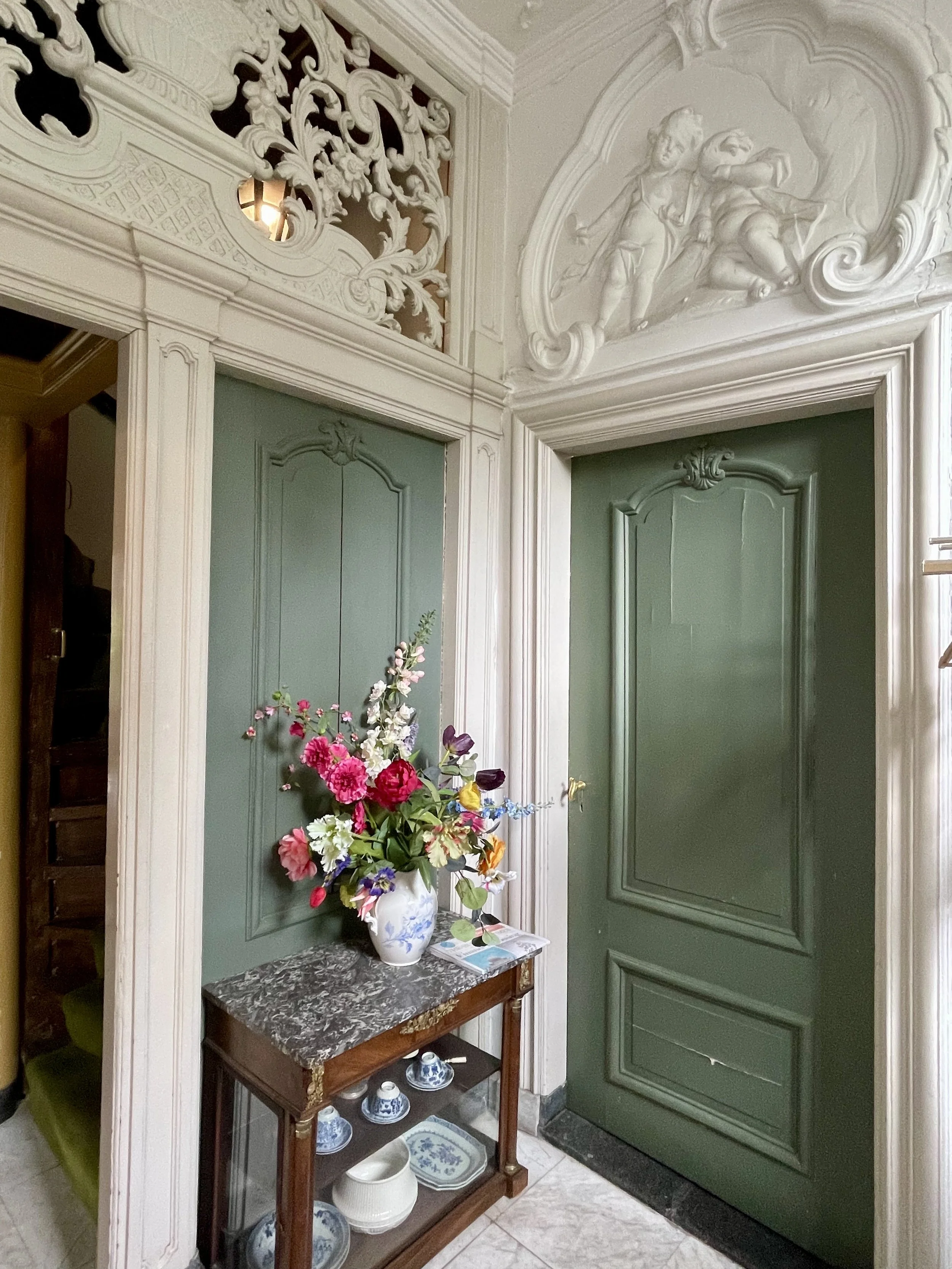
In a historic Den Haag Dutch canal house, originally owned by well known artists, sage‑green paneled doors, ornate plasterwork, on walls and ceiling, marble floors, and a marble‑topped console styled with Delftware and fresh flowers create a charming, timeworn entry.
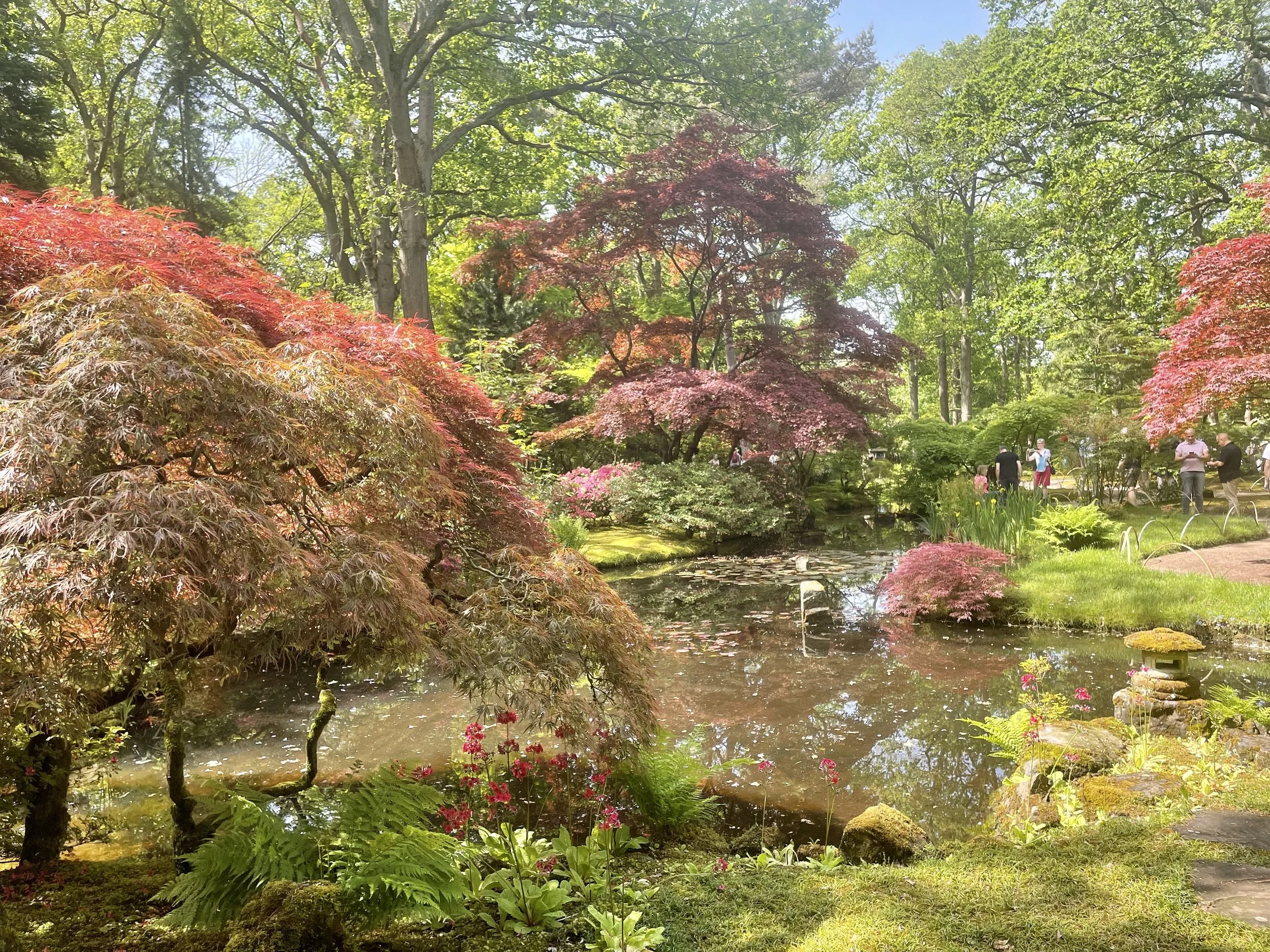
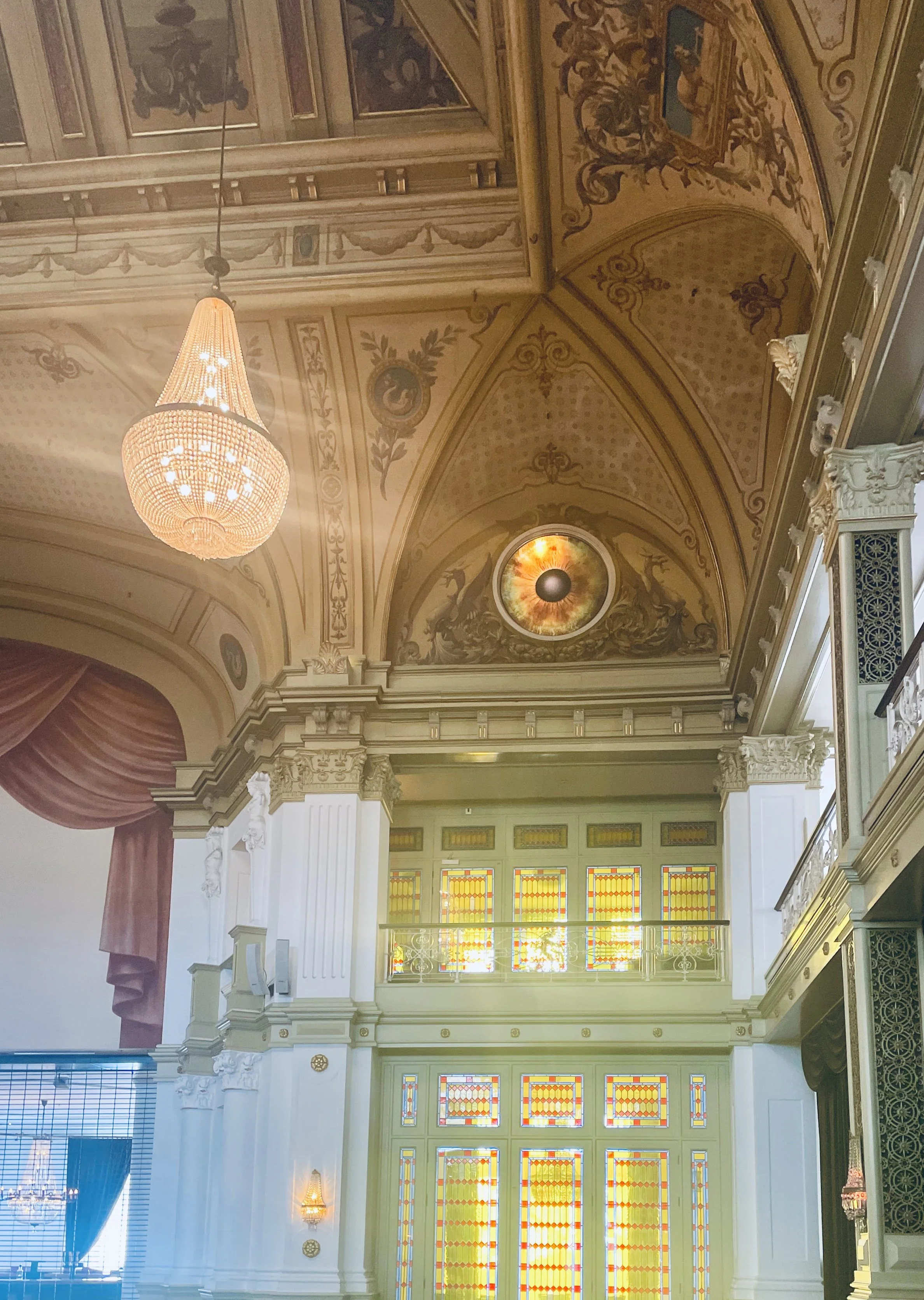
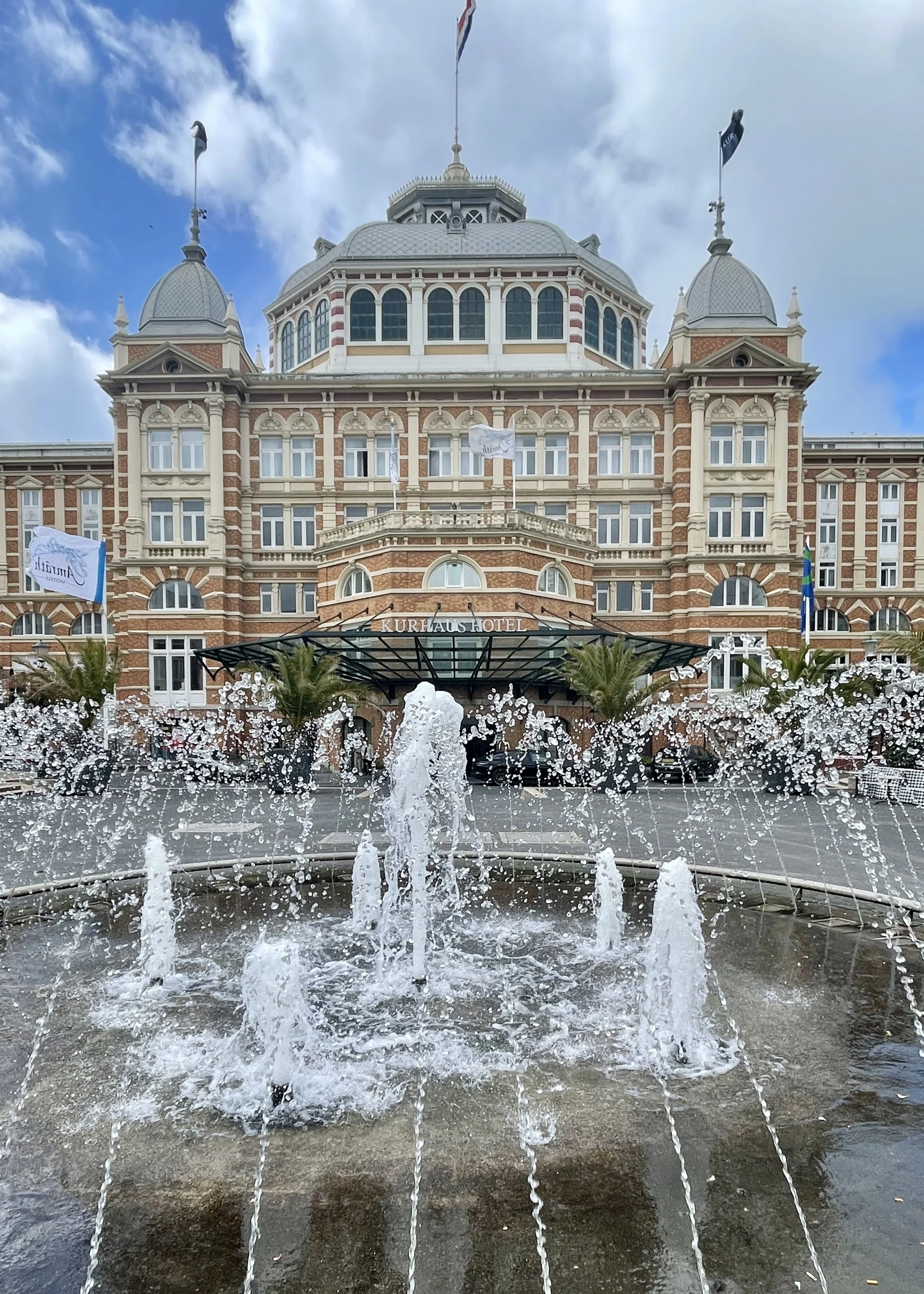
While many visitors associate the Netherlands primarily with tulip season, its connection to nature extends far beyond spring blooms. Throughout The Hague, landscapes are thoughtfully woven into daily life, from the wooded paths and wildlife of Clingendael Estate to the quiet tranquility of its renowned Japanese Garden, one of the oldest Japanese gardens in Europe. In the heart of the city, the Paleistuin, the historic gardens behind Noordeinde Palace, offers a different expression of well-being. Formal gardens, contemporary sculptures, shaded pathways, a children’s playground, and a peaceful lake come together to create spaces that support both reflection and community. Along the coast, the iconic Grand Hotel Amrâth Kurhaus overlooks the North Sea at Scheveningen, where expansive horizons, sea air, and natural light foster a sense of calm and restoration. Even urban parks such as Westbroekpark, with its celebrated Rosarium, reflect the Dutch commitment to integrating beauty, nature, and wellness into everyday life.
What is particularly compelling is how seamlessly these environments support multiple human needs at once. They encourage movement, create opportunities for social interaction, offer visual engagement through art and landscape, and provide moments of quiet refuge within the rhythm of urban life. Neuroscience increasingly confirms what these places intuitively demonstrate: exposure to nature, water, natural light, and aesthetically balanced environments can positively influence mood, reduce stress, and support cognitive well-being.
These same principles are now shaping a more thoughtful approach to luxury interior design.
When viewed through the lens of Palm Beach design, this creates a meaningful shift. It suggests that true luxury interiors in Palm Beach is not only about visual impact, but about how a home supports clarity, calm, and connection to its surroundings. It is about creating spaces that feel restorative, livable, and deeply aligned with the way people want to experience their everyday lives.
Clingendael Estate: A study in biophilia, offering full immersion in nature and a sense of sensory restoration through wooded paths and natural surroundings.
Japanese Garden (Japanese Tuin): An expression of visual harmony and balance, designed for stillness, contemplation, and quiet reflection.
Kurhaus and Scheveningen Beach: Defined by expansive horizon views, water, and natural light, creating an environment that supports calm and stress reduction.
Paleistuin: A public garden behind the palace, a blend of cultural enrichment and landscape design, where gardens, pathways, and art encourage movement, reflection, and everyday beauty.
Westbroekpark Rosarium: A celebration of seasonal beauty, where color, fragrance, and the rose itself create a rich sensory experience grounded in color psychology and nature.
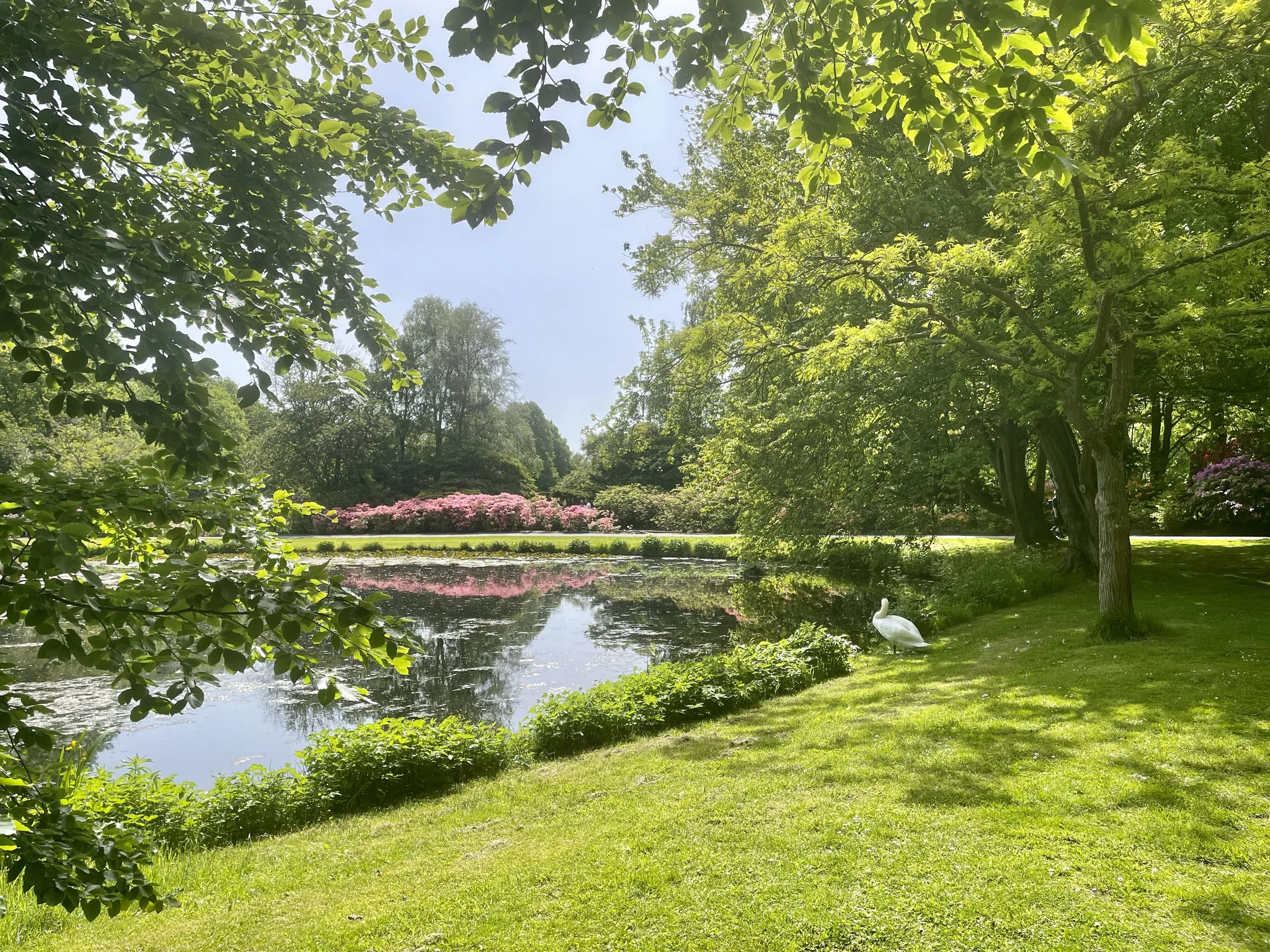
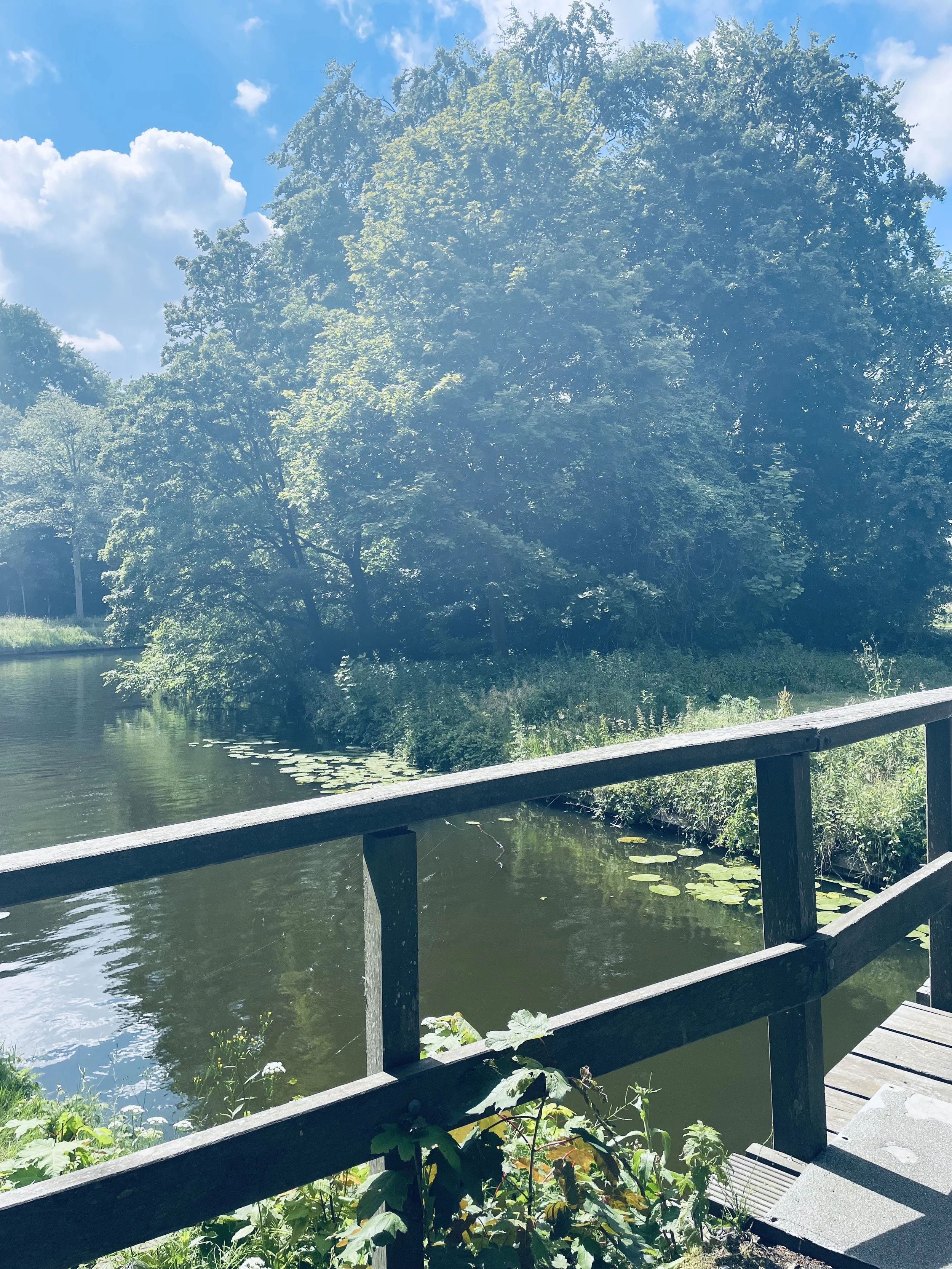
Spending time in The Hague over the fall and now into summer has been a reminder that the most memorable environments are not always the most elaborate. They are the ones that quietly connect us to light, landscape, and a sense of ease. These qualities feel just as relevant in a Palm Beach residence as they do along the Dutch coast.
For Palm Beach homeowners, the takeaway is not simply to add more landscaping or expand outdoor spaces. It is to think more intentionally about how a property supports daily living. Gardens become places to move through and experience, not just admire. Outdoor areas are designed to accommodate both gathering and solitude. Art, water, planting, and pathways are considered together, creating environments that feel restorative, engaging, and truly livable.
A Different Definition of Luxury
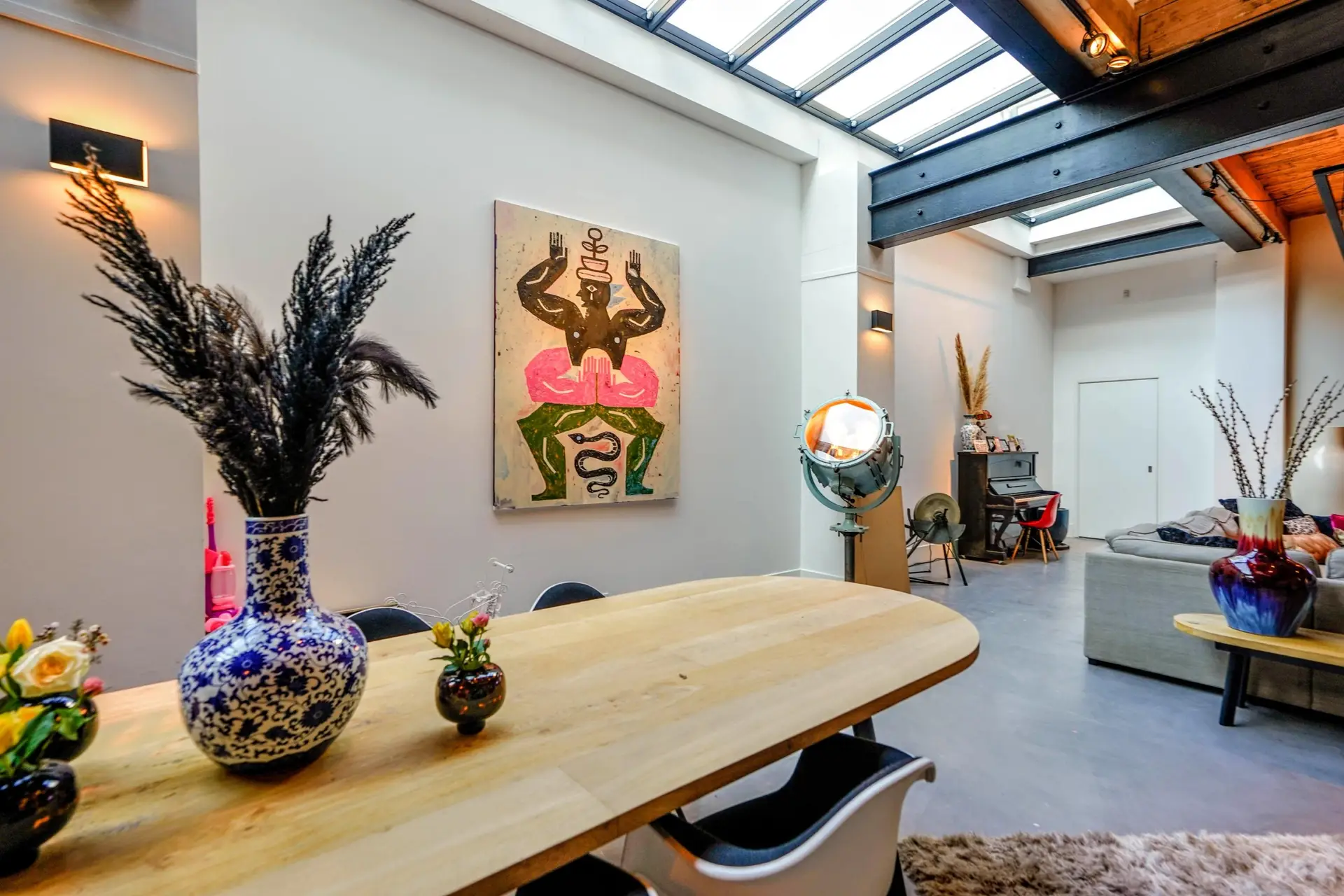
A Dutch dining area sits beneath a large skylight, with industrial beams exposed, natural wood, bold contemporary art, and sculptural lighting bringing warmth and personality to the space.
“Luxury, in the Dutch context, is not diminished. It is distilled.”
There is a common misconception that quieter interiors are simpler or less sophisticated. In reality, they often require a higher level of precision and intention. Every material, proportion, and detail must work harder because there is less distraction.
In the Netherlands, luxury is expressed through quality rather than quantity.
Materials are selected for their integrity and longevity. Wood is allowed to show its grain. Stone is appreciated for its natural variation. Linen softens with time. These materials are not chosen to impress immediately, but to age beautifully and support everyday living.
Craftsmanship becomes more visible in this environment. Custom cabinetry, architectural detailing, and joinery are executed with a level of restraint that allows their quality to speak quietly rather than compete for attention.
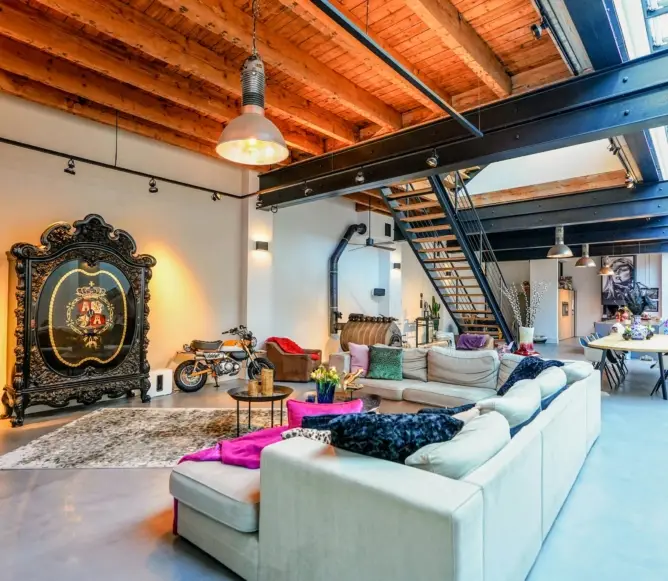
An industrial Dutch loft pairs exposed beams, steel, and a relaxed sectional with bold art, demonstrating how layered texture and light can inform more playful luxury spaces for Domaine Luxe clients.
There is also a strong emphasis on comfort. Seating is designed to be used, not just admired. Spaces are arranged to support conversation, relaxation, and daily routines. This creates an environment that feels both refined and approachable.
For Palm Beach homeowners, this perspective introduces a shift in thinking. Luxury is no longer defined by how much is included within a space, but by how intentionally each element contributes to the overall experience.
At Domaine Luxe, this philosophy is foundational. Through our Design Philosophy and Full-Service Interior Design services, we focus on creating homes where beauty and livability are fully integrated. Every decision is guided by how the space will function and feel over time.
This approach results in interiors that are not only visually compelling, but deeply supportive of everyday life. Read more on wellness driven neuroaesthetic design.
Why Dutch Homes Feel Naturally Calm
The sense of calm found in Dutch interiors is not accidental. It is the result of a series of deliberate design choices that align closely with how the human brain processes visual and sensory information.
One of the most important factors is visual order. Spaces are composed with clarity, allowing the eye to move naturally without interruption. There is a hierarchy to what is seen, which reduces cognitive load and creates a sense of ease.
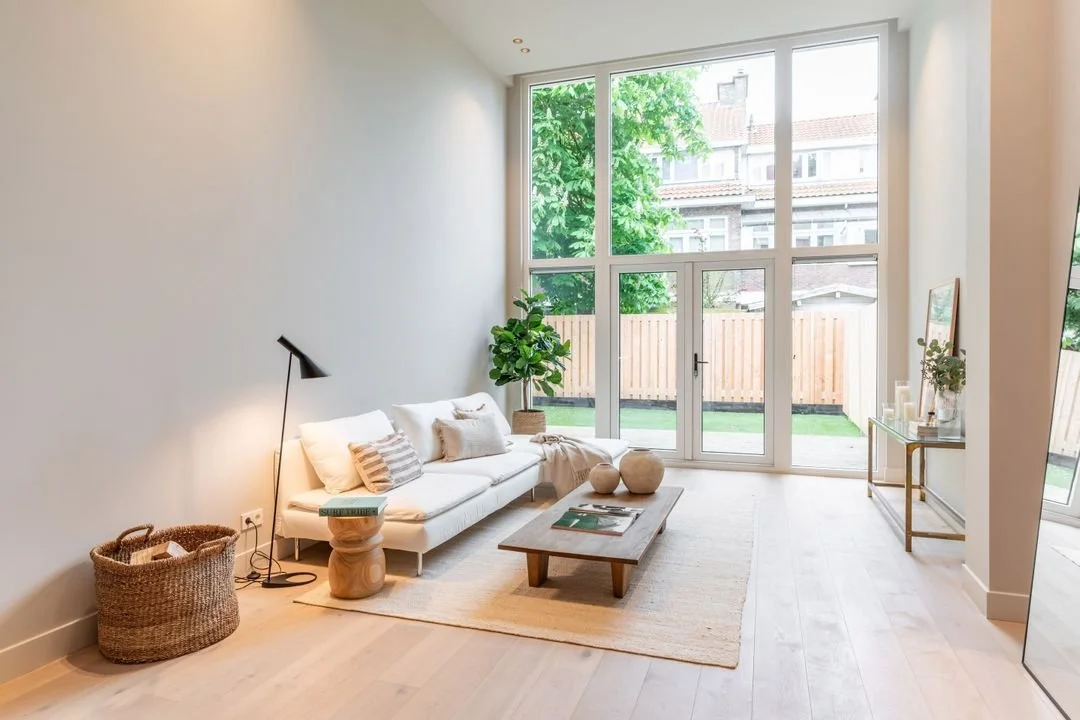
This minimalist Dutch living room with soaring windows, pale wood floors, and soft neutrals shows how light, proportion, and simplicity can inspire calmer luxury interiors in Palm Beach.
Clutter is minimized, but not in a way that feels sparse or empty. Instead, each object has presence and purpose. This creates a more meaningful relationship between the occupant and their environment.
Proportion also plays a significant role. Rooms are designed at a human scale, ensuring that they feel comfortable rather than overwhelming. Ceiling heights, furniture placement, and architectural details are balanced in a way that supports both openness and intimacy.
Natural daylight further enhances this sense of calm. Light softens edges, highlights textures, and creates subtle variation throughout the day. It introduces a rhythm to the space that artificial lighting cannot replicate.
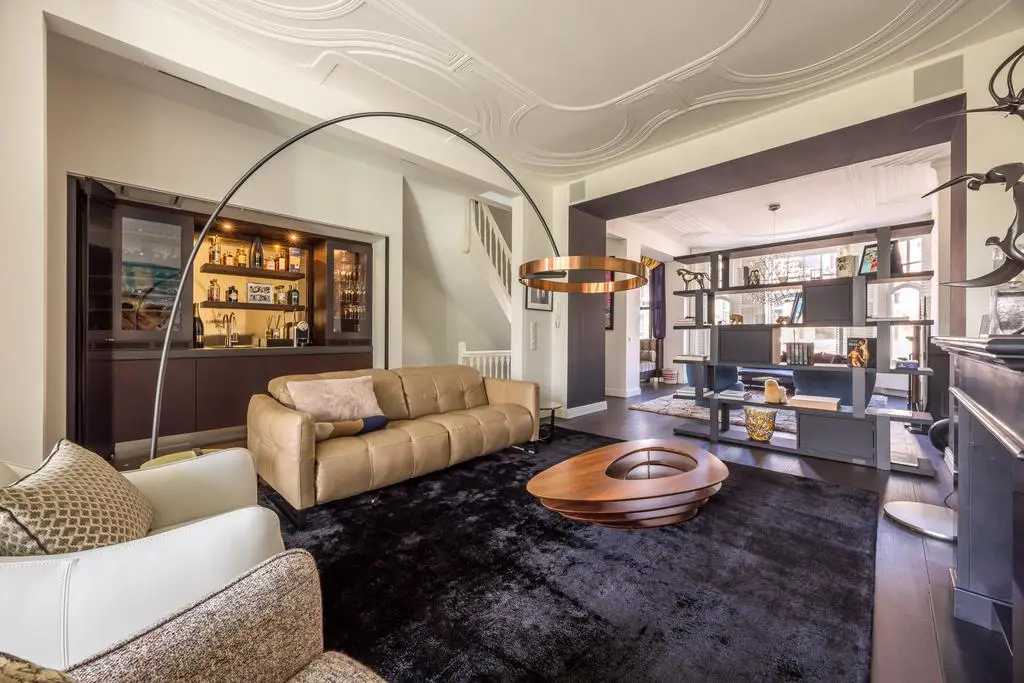
A sophisticated Dutch living room layers a hidden bar, sculptural lighting, and modern shelving within classic plaster ceilings, mirroring the quietly luxurious aesthetic Domaine Luxe translates for Palm Beach homes.
Sensory comfort extends beyond the visual. Materials are selected for how they feel as well as how they look. Flooring, upholstery, and finishes contribute to a tactile experience that reinforces the overall atmosphere of the home.
This is where Dutch design intersects directly with neuroaesthetic principles. Environments that offer visual clarity, balanced proportions, and sensory comfort are proven to support emotional regulation and cognitive function.
At Domaine Luxe, these ideas are central to our work in Wellness-Focused Design and Neuroaesthetic Interior Design. Rather than designing for appearance alone, we design for experience.
In Palm Beach, where homes often emphasize grandeur and scale, integrating these principles creates a more grounded and restorative environment. It allows a home to feel both luxurious and livable, rather than visually impressive but emotionally overwhelming.
The Dutch Relationship with Natural Light
Light is one of the most defining elements of Dutch design, and one of its most valuable lessons for Palm Beach interiors.
In the Netherlands, natural light is treated as a resource. Large windows are strategically placed to capture as much daylight as possible, even during shorter winter months. Interiors are organized to allow light to travel through the space, rather than being blocked by walls or heavy furnishings.
Water plays an important role in this dynamic. Canals reflect light into surrounding buildings, creating a soft, diffused glow that enhances interior spaces. This interaction between architecture and environment adds depth and movement to the experience of light.
There is also an awareness of how light changes throughout the day and across seasons. Dutch interiors respond to this by incorporating materials and colors that adapt gracefully. Soft neutrals, warm woods, and matte finishes help maintain balance as light shifts.
In contrast, Palm Beach has an abundance of sunlight, yet it is not always used effectively. Windows may be covered to reduce heat, layouts may limit natural light flow, and finishes may absorb rather than reflect light.
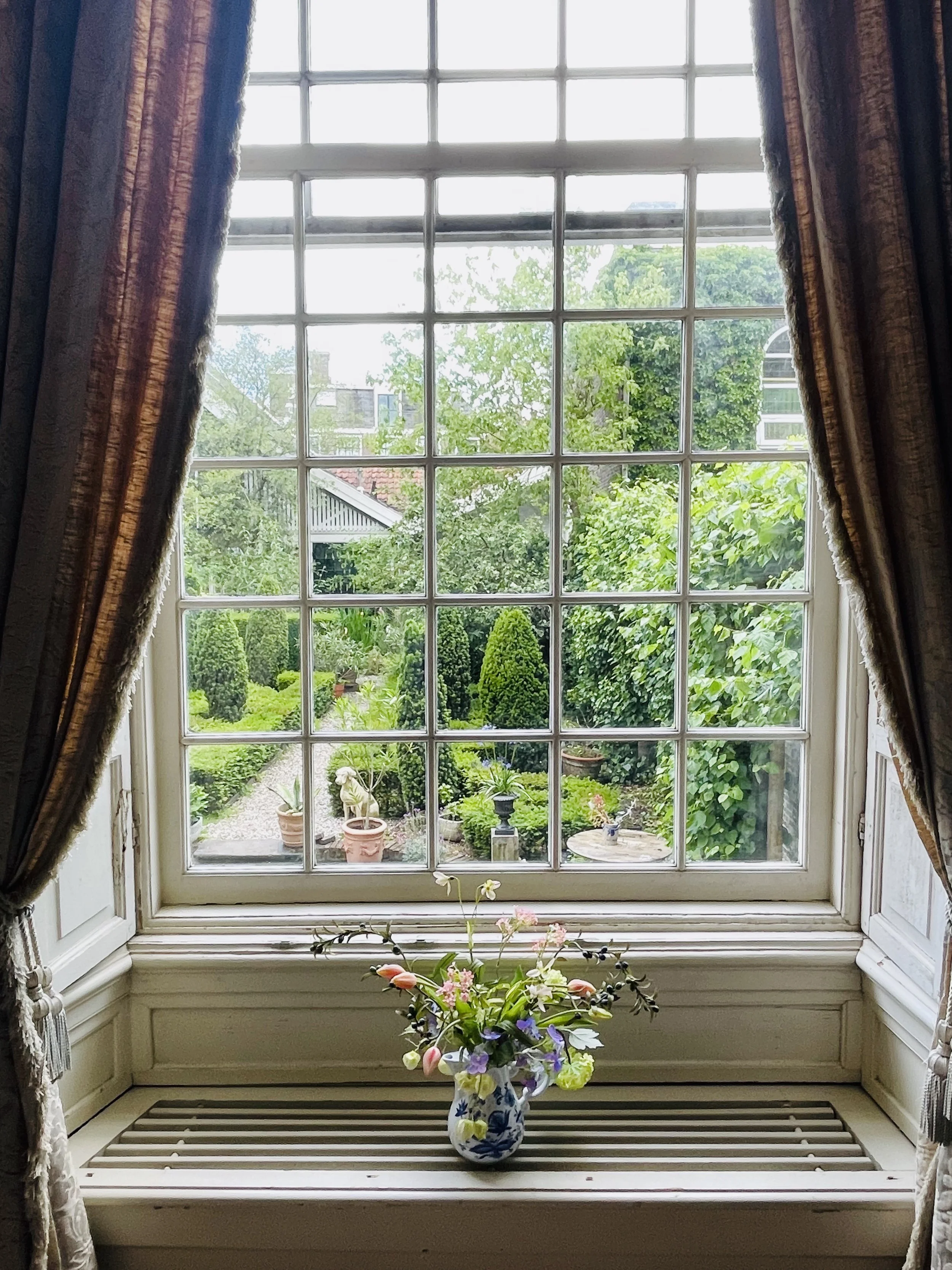
Looking through a historic Den Haag Buitenmuseum window to a manicured French style garden, this view captures how European homes frame nature as part of daily life - a principle Domaine Luxe brings into Palm Beach interiors.
This presents an opportunity.
European interior design in Palm Beach encourages a more intentional use of light. It invites homeowners to think beyond brightness and consider how light shapes mood, defines space, and enhances materials.
Through our Palm Beach Luxury Interior Design, kitchen and bath design and concierge driven Architectural Interior Design and Finish Selection services, we approach light as a central design element. We consider orientation, material reflectivity, spatial flow, and layering of natural and artificial lighting to create environments that feel balanced and luminous.
The goal is not simply to maximize light, but to use it thoughtfully to support both function and atmosphere.
Lessons from the Artists Who Painted the Dutch Landscape
The Dutch relationship with light and landscape is deeply rooted in its artistic history.
During the Dutch Golden Age, artists turned their attention to the everyday environment. Rather than depicting idealized or mythological scenes, they painted nature - fields, waterways, skies, and agricultural life with remarkable attention to detail and atmosphere.
Nature Has Always Been Central to Dutch Living

A small portion of “The Bull” by Paulus Potter, 1647, shows incredible detail of this grand Dutch Golden Age painting, painted in Den Haag.
Paulus Potter’s “The Bull” is a powerful example. By focusing on a single animal within a pastoral setting, he elevated an ordinary subject into something monumental. The grand scale painting from 1647 reflects a cultural appreciation for nature and simplicity. This was one of the first of it’s kind during this Dutch Golden Age in the 17th century, as Potter painted what he liked, and saw from his home on the water at the edge of the town. He had family wealth, so he was not confined to painting portraits to make a living. I was lucky to witness this work’s restoration which took over a year to restore.
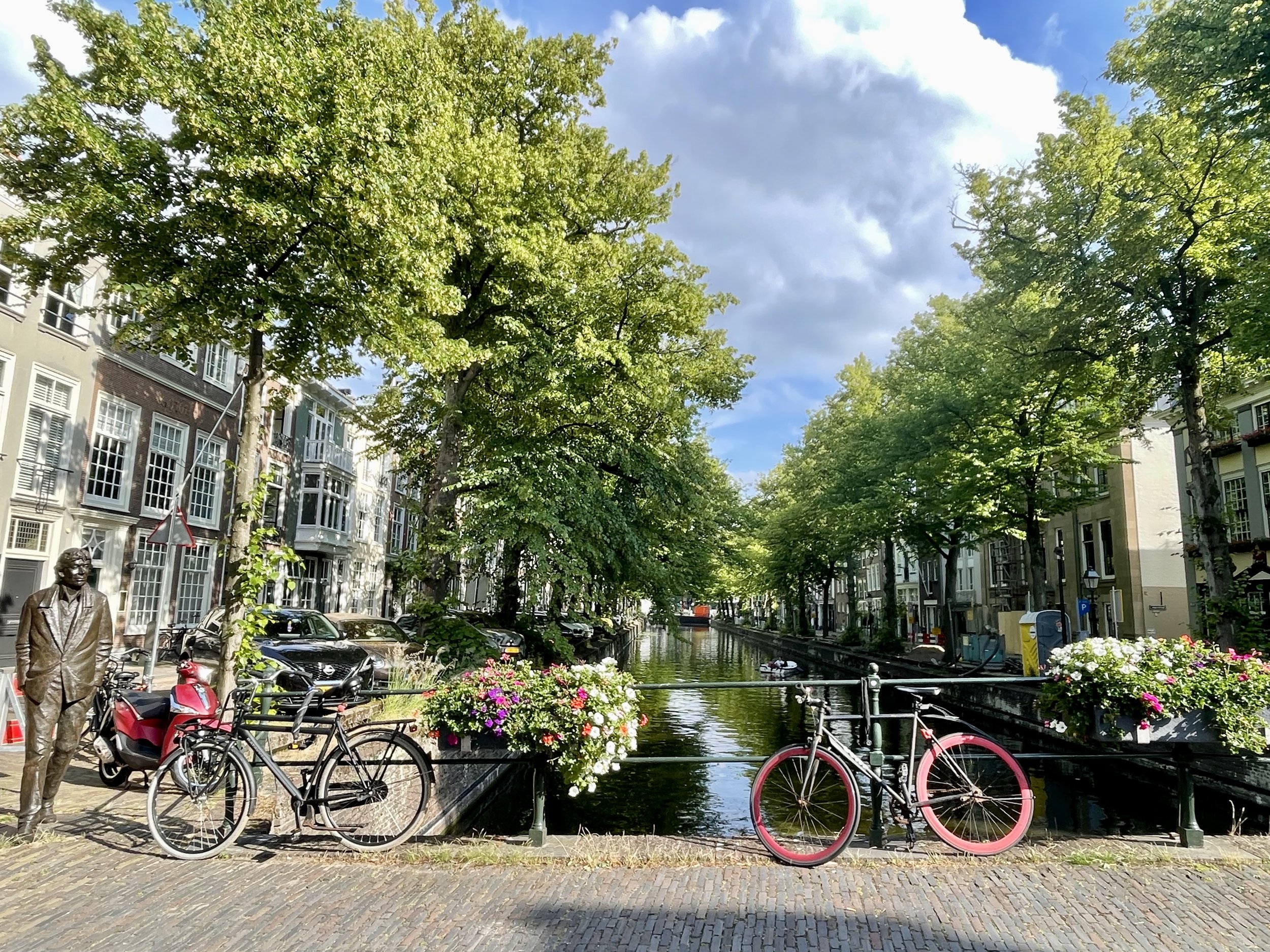
A tree-lined canal in The Hague, complete with bicycles and flower boxes on the bridge, showcases the everyday blend of nature, movement, and beauty that informs Domaine Luxe’s approach to Palm Beach wellness design.
Jan van Goyen approached landscape differently, using a limited color palette to capture the tonal subtlety of the Dutch countryside. His work emphasizes atmosphere over detail, drawing attention to the interplay between land, sky, and light. Learn more about these important Dutch artists at museums Buitenmuseum or Mauritishuis.
These artists were not simply painting scenery. They were expressing a cultural appreciation for light, landscape, and daily life that continues to influence Dutch design today.
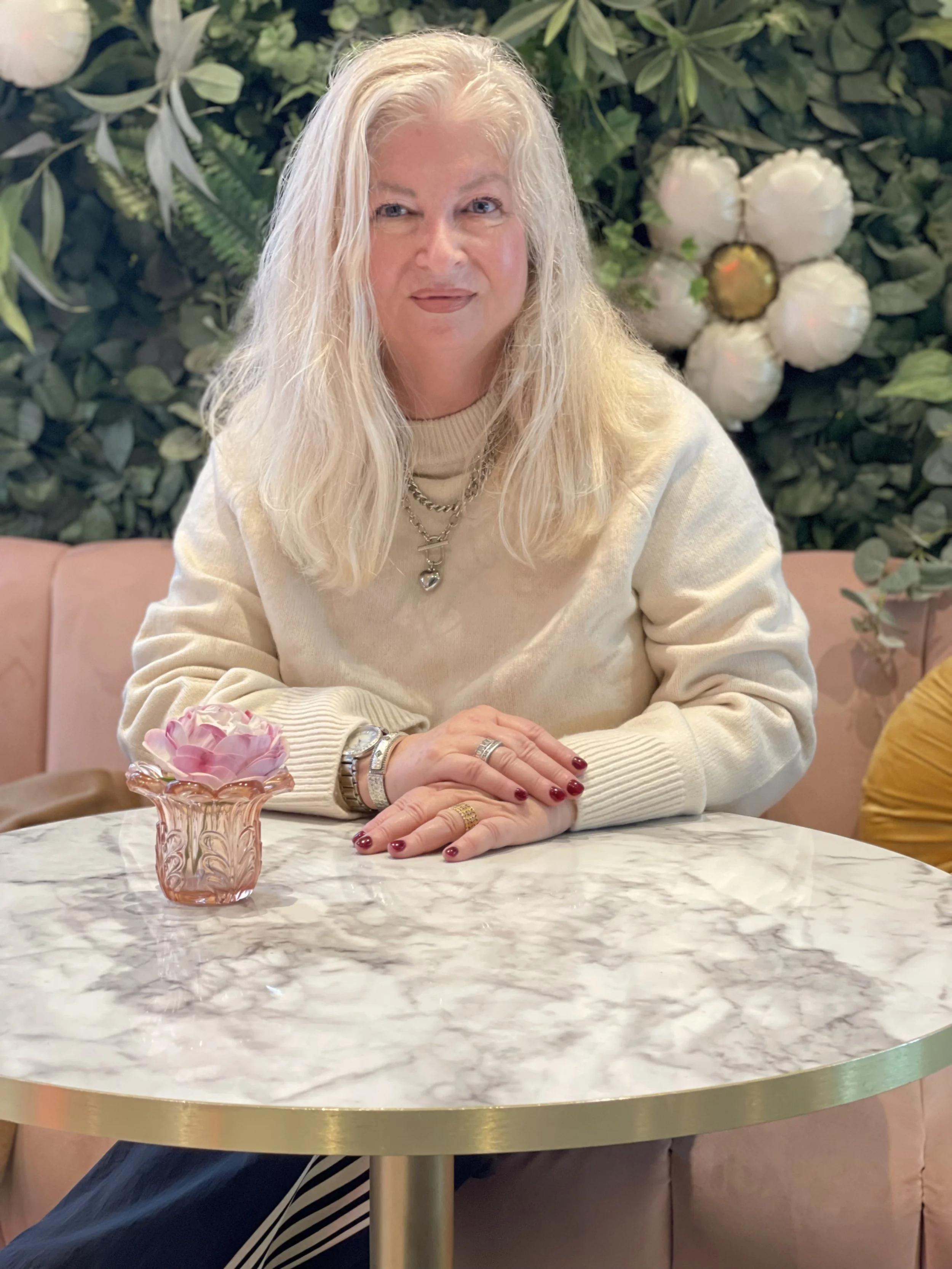
Denise sits at a marble café table framed by lush greenery, reflecting the European lifestyle influences behind Domaine Luxe’s Palm Beach luxury interior design.
Biophilic Design and Wellness focused interiors build on these same principles. They recognize that humans have an inherent connection to nature, and that incorporating natural elements into the built environment can significantly enhance well-being. As I shared in Forbes, our approach prioritizes clients' health and wellness by thoughtfully selecting materials that support healthier indoor environments. Choosing non-toxic finishes, natural materials, and products with low chemical emissions not only contributes to better indoor air quality but also creates homes that feel restorative, comfortable, and designed for long-term well-being.
For Palm Beach homeowners, this offers a meaningful shift. Nature becomes more than a visual feature. It becomes an integral part of how a home functions and feels.
A Walk Along the Canals of The Hague
While Amsterdam is often the focus of Dutch design conversations, The Hague offers a more intimate and layered experience.
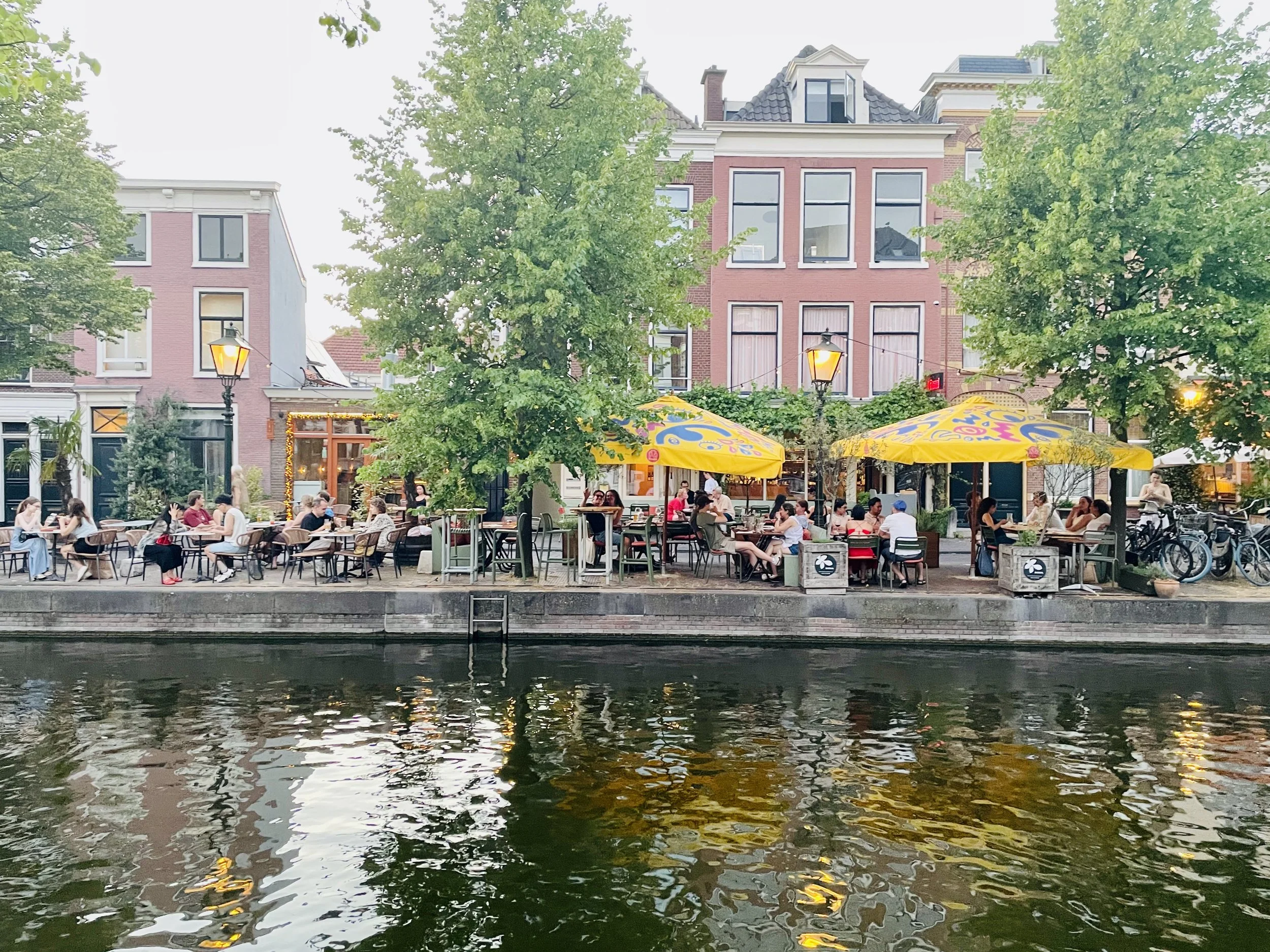
Guests gather along a canal-side café in The Hague at the late dusk, where soft lighting, trees, birds, and water create the kind of everyday atmosphere that inspires Domaine Luxe’s wellness-focused Palm Beach interiors.
The canal district surrounding the Buitenmuseum preserves a remarkable piece of history. The 17th century homes along Bierkade, Groenegracht, and Dunne Bierkade were once lived in by artists such as Jan van Goyen and Paulus Potter. These were not grand estates, but working homes where some of the most influential artworks of the Dutch Golden Age were created.
Walking these canals today reveals something that feels surprisingly relevant to modern design.
This experience reinforces a key principle of neuroaesthetic design. A space does not need to be large or elaborate to feel luxurious. It needs to be intentional, balanced, and connected to its environment.
For Palm Beach homeowners, this offers a valuable perspective. It suggests that refinement is not about scale, but about how thoughtfully a space is designed.
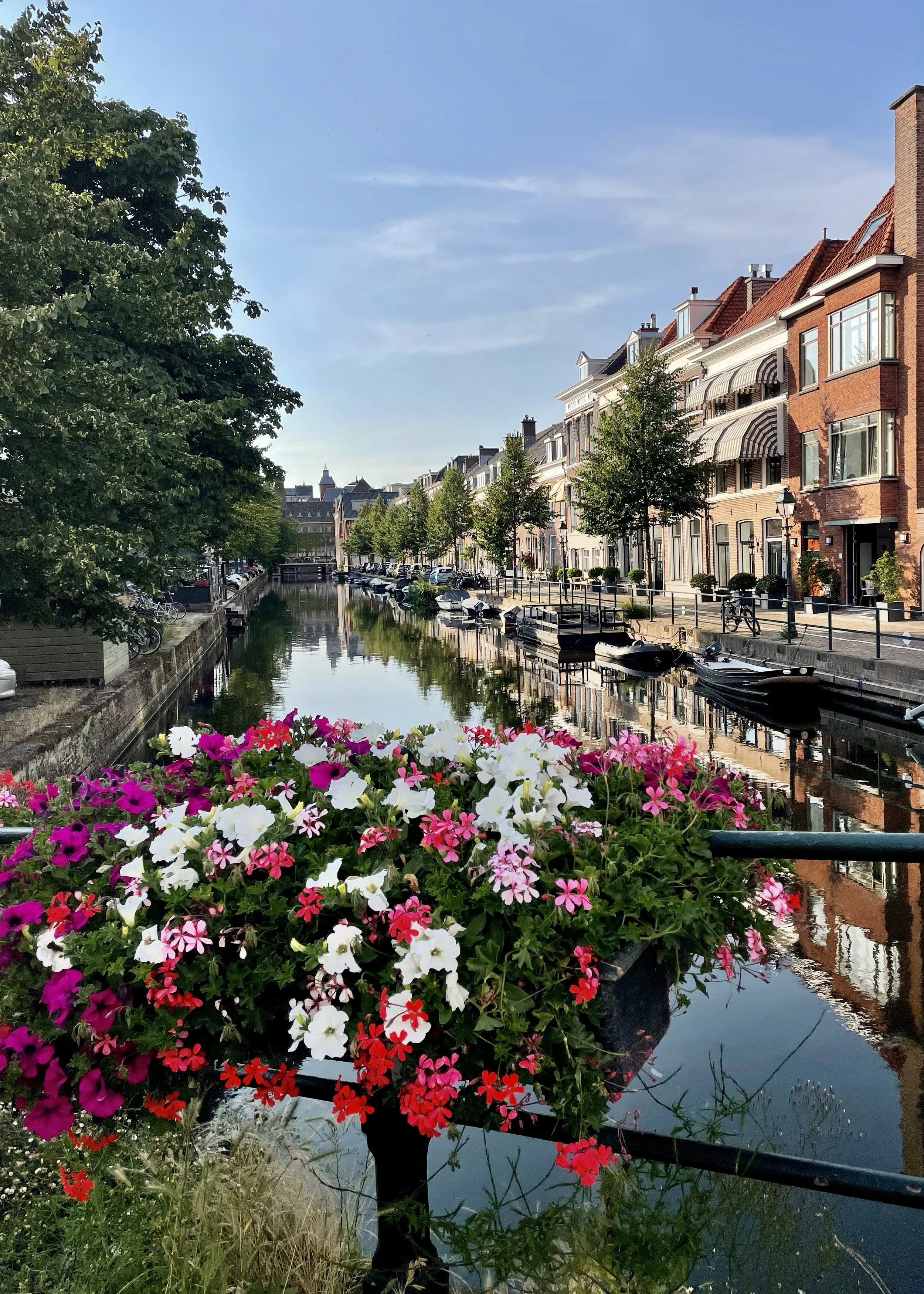
Morning light reflects across the Hooikade canal, where flower-filled planters, boats, and elegant townhouses show how everyday Dutch life weaves water, color, and calm - qualities Domaine Luxe translates into Palm Beach luxury homes.
“Walking these canals of Bierkade, Groenegie and Dunne Bierkade, today reveals something striking. The architecture is modest by modern luxury standards, yet the experience feels deeply refined. Natural light, human-scale proportions, craftsmanship, and a connection to the water create an atmosphere that feels remarkably restorative.”
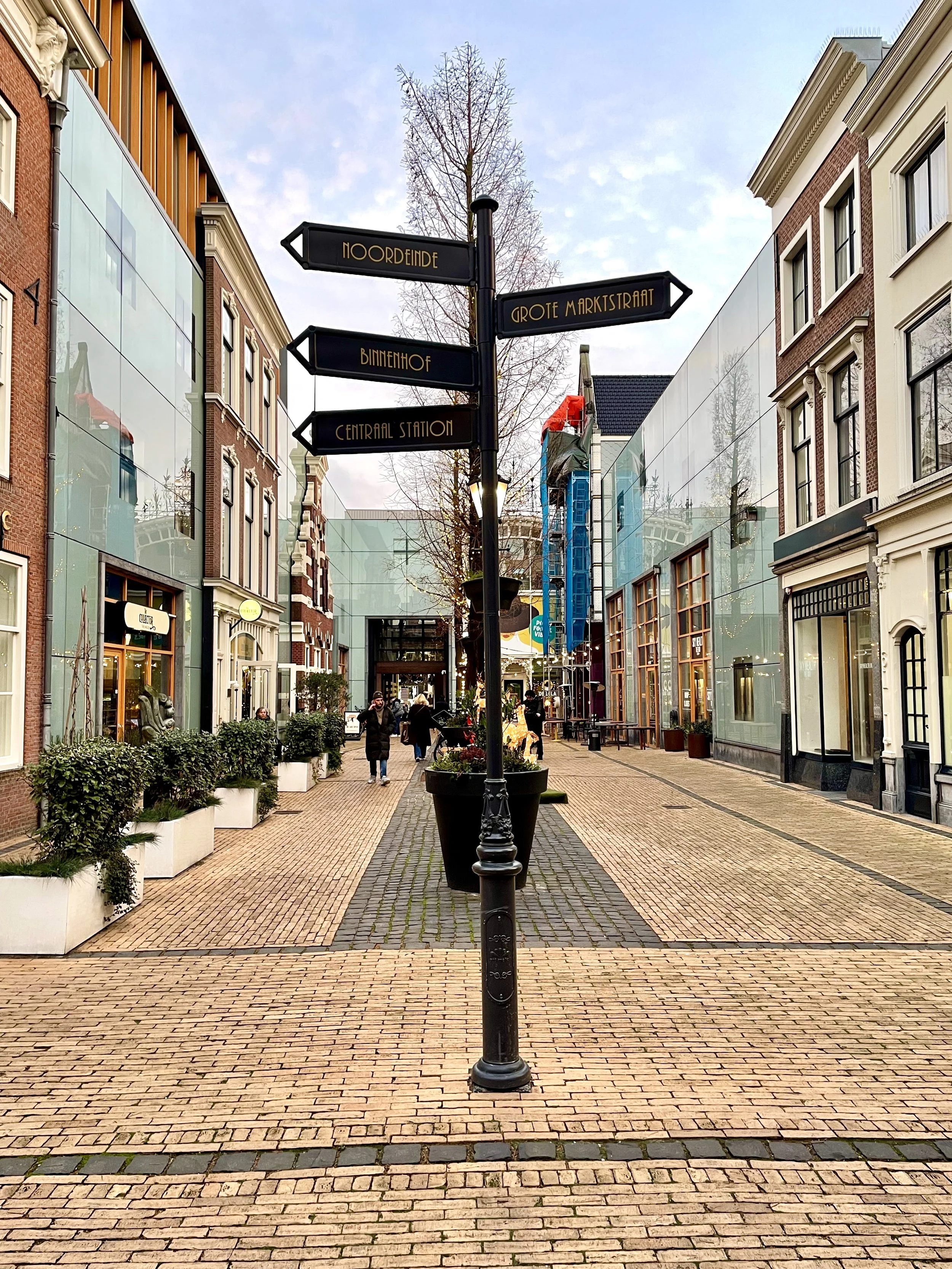
A black directional sign anchors a brick pedestrian shopping area, Haagse Bluf, in The Hague, pointing toward cultural landmarks and illustrating the walkable, human-scale urban planning that informs Domaine Luxe’s focus on livable luxury.
What Palm Beach Homeowners Can Apply Today
The principles of Dutch design can be translated into Palm Beach interiors in ways that feel both natural and elevated.
Maximizing natural daylight is one of the most impactful changes. This may involve rethinking window treatments, adjusting layouts, or selecting materials that reflect light more effectively.
Natural materials should be prioritized for their ability to create warmth and sensory richness. Wood, stone, linen, and plaster introduce texture and variation that synthetic materials often lack.
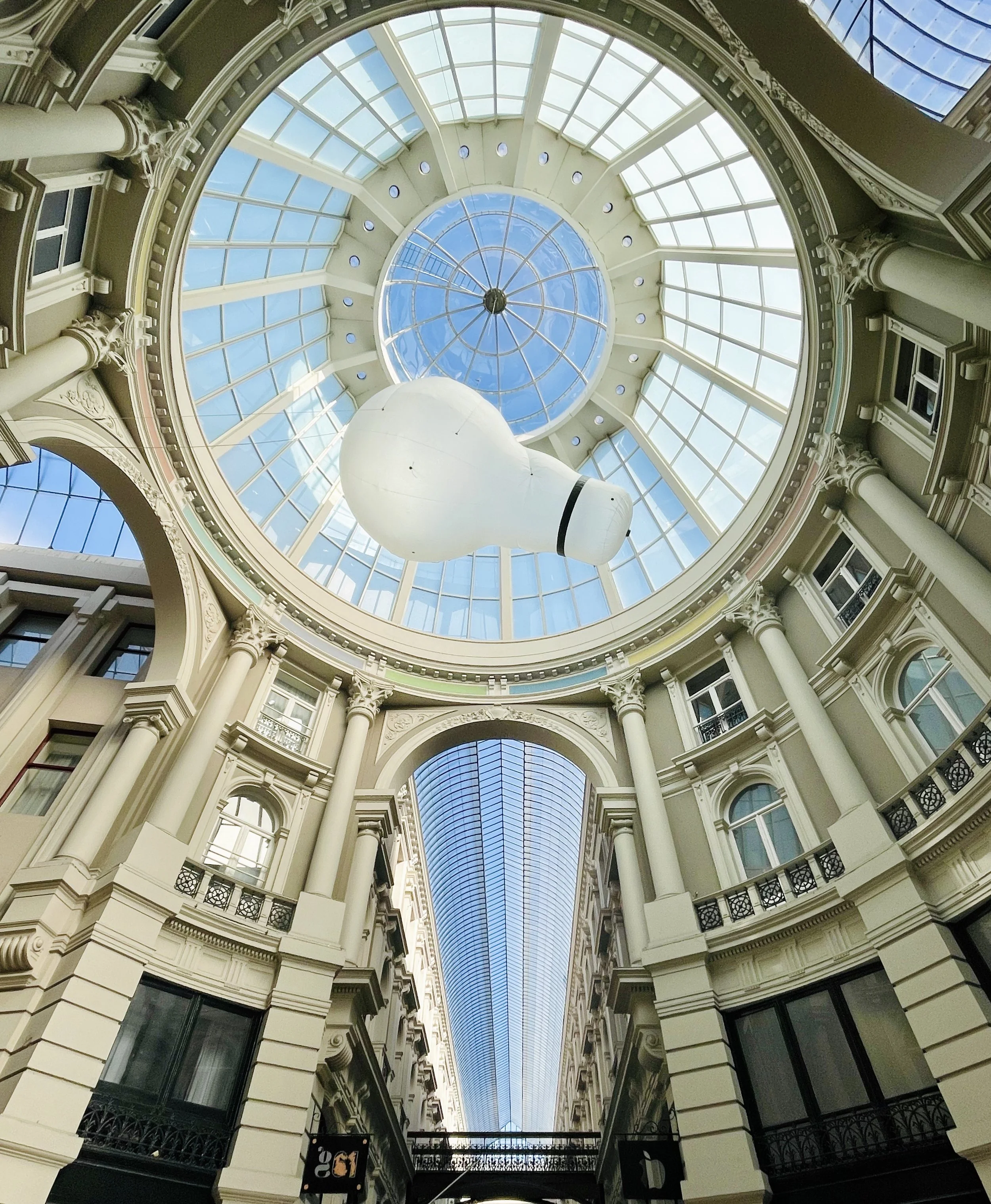
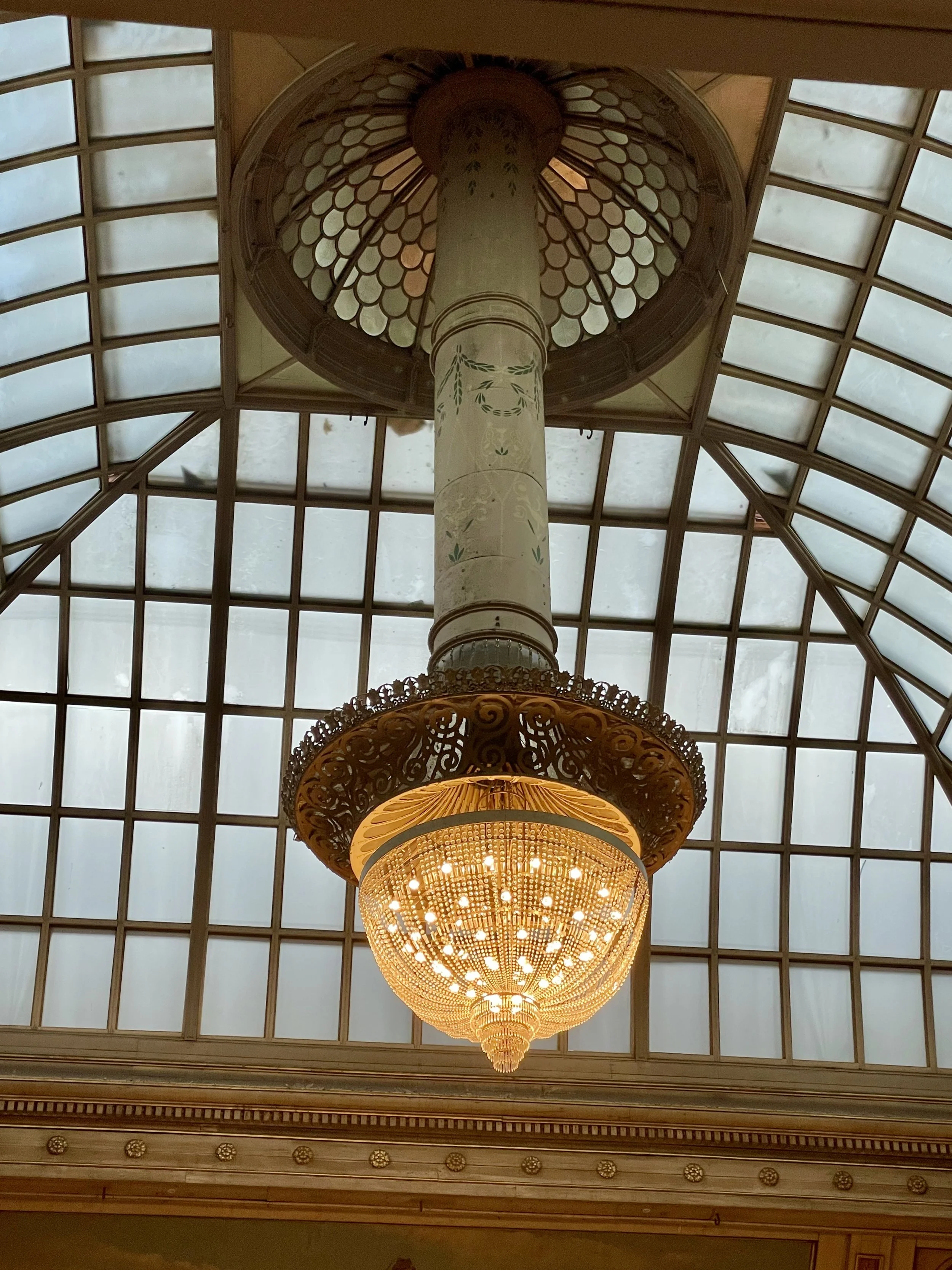
Under the glass dome of De Passage in The Hague, a large sculptural art installation of a lightbulb for BlowUp! Art floats above classical columns, echoing how Dutch design blends history, light, and contemporary art- a mix Domaine Luxe channels into Palm Beach interiors.
Designing around daily rituals ensures that spaces are not only beautiful, but functional. Kitchens, bathrooms, and living areas should support how homeowners actually live, rather than conforming to expectations.
Reducing visual noise helps create a sense of calm. This does not mean removing personality, but rather refining what is included so that each element has purpose.
Indoor-outdoor connections can be strengthened through landscaping, terraces, and transitional spaces that encourage movement between environments.
Sensory comfort should be considered holistically. Acoustics, lighting, texture, and spatial flow all contribute to how a space feels.
These strategies align directly with our approach to Full-Service Interior Design and Palm Beach Luxury Interior Design at Domaine Luxe. The goal is to create homes that support both social interaction and personal restoration.
What Palm Beach Homes Can Learn from Gezelligheid
The most memorable homes are designed around how people live and feel, not just how they look.
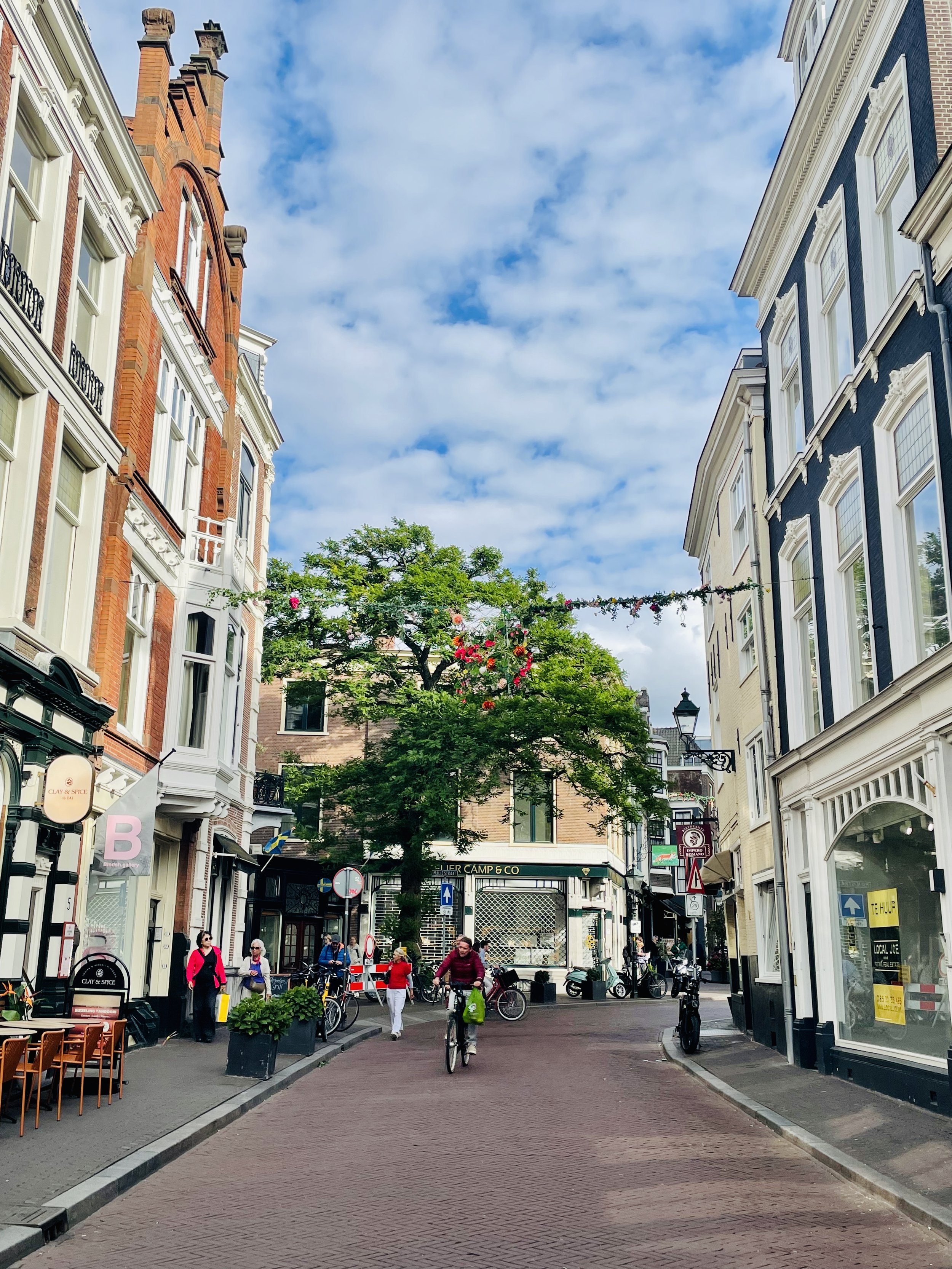
Late afternoon light brightens Denneweg in The Hague, where historic facades, cafés, flower pots and cyclists create the kind of charming, walkable streetscape that inspires Domaine Luxe’s vision for livable luxury.
Frequently Asked Questions
What makes Dutch interior design different from other European styles?
Dutch interior design prioritizes simplicity, functionality, and comfort without sacrificing elegance. Rather than emphasizing ornamentation, it focuses on natural light, high-quality materials, thoughtful layouts, and creating spaces that support everyday living. The result is a timeless aesthetic that feels both refined and welcoming.
What is gezelligheid in interior design?
Gezelligheid is a Dutch concept that describes a sense of warmth, connection, and contentment within a space. While often translated as "cozy," it represents much more than physical comfort. In interior design, it is about creating an environment where family and friends naturally gather, conversations linger, and daily life feels calm and meaningful.
How can Palm Beach homeowners incorporate Dutch design into their homes?
Dutch-inspired interiors work beautifully in Palm Beach by embracing abundant natural light, layering organic materials, incorporating thoughtful craftsmanship, and designing spaces that encourage relaxation and connection. The goal is not minimalism for its own sake, but creating a home that balances elegance with everyday comfort.
Is Dutch design compatible with luxury homes?
Absolutely. Dutch design demonstrates that luxury is not defined by excess but by thoughtful design, exceptional materials, and spaces that enhance well-being. Many Palm Beach homeowners are embracing this more intentional approach, creating homes that feel as beautiful to live in as they are to admire.
How does Dutch design support wellness at home?
Many principles of Dutch design naturally align with wellness-focused interiors. Maximizing daylight, incorporating natural materials, fostering a connection to nature, and creating visually balanced spaces can help reduce stress and promote a greater sense of comfort and well-being throughout the home.
Designing for Beauty, Wellness, and Everyday Living
Dutch design offers a framework that extends beyond aesthetics. It provides insight into how environments can support well-being in a meaningful and lasting way.
By integrating light, nature, proportion, and sensory comfort, interiors become more than visually appealing. They become restorative, functional, and deeply connected to daily life.
When applied to Palm Beach, these principles create a new expression of luxury. One that maintains sophistication while introducing a sense of ease and balance.
At Domaine Luxe, this approach informs every project. Through our work in Design Philosophy, Biophilic Design, and Neuroaesthetic Interior Design, we focus on creating spaces that feel as good as they look.
The future of luxury interior design in Palm Beach is evolving. It is becoming more thoughtful, more intentional, and more aligned with how people want to live.
Spaces that prioritize light.
Spaces that embrace nature.
Spaces that support clarity and calm.
These are the environments that define true luxury, not just in how they appear, but in how they are experienced every day.