Wellness Interior Design for Luxury Homes | Spa Bathrooms & Calming Bedrooms
Denise Jadd
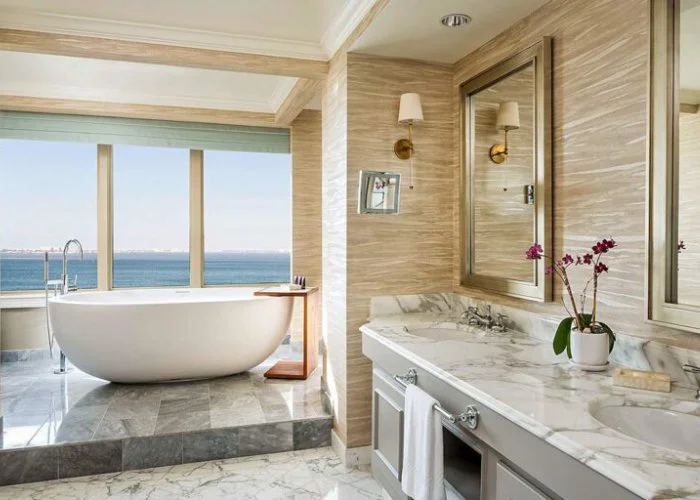
A sophisticated spa-like bathroom overlooks the ocean with a freestanding tub framed by floor-to-ceiling windows and a marble double vanity.
The New Definition of Luxury Is How a Space Supports Well-Being
Luxury is no longer defined solely by visual impact or material value. Today, it is increasingly measured by how a space makes you feel and how seamlessly it supports your well-being throughout daily life. In a culture shaped by constant connectivity, overstimulation, and accelerated routines, the home has evolved into something far more essential. It becomes a private sanctuary designed for restoration, regulation, and intentional living.
Affluent homeowners are shifting their priorities in response to this cultural change. While craftsmanship, scale, and aesthetics remain important, there is a growing emphasis on emotional comfort, sleep quality, privacy, and the ability to disconnect from external noise. The modern luxury home is no longer designed purely for presentation. It is deeply personal and carefully considered. It is created to sustain energy, improve well-being, and provide a consistent sense of calm.
This evolution has led to the rise of wellness interior design, a holistic approach that integrates beauty, function, and sensory experience. It prioritizes calming home interiors that support the nervous system, encourage slower rhythms, and elevate everyday routines into intentional rituals. From calming bedroom design to luxury spa bathroom design and dedicated wellness retreat spaces, the most refined homes today are centered on how they enhance quality of life.
As explored in our design philosophy, wellness focused interiors begin with a fundamental question. How should this space feel to live in every single day, from morning through evening?
“The most luxurious spaces today are designed not only to impress, but to restore.”
Designing Bedrooms for Restoration and Deep Rest
The bedroom has become one of the most important spaces in the home because it directly influences physical recovery and mental clarity. It is where the body resets, the mind slows, and the nervous system begins to regulate after constant input throughout the day. In luxury bedroom interiors, the focus is on creating an environment that feels effortless, calming, and quietly refined without unnecessary excess.
A. Calming Bedroom Design Begins with Sensory Quiet
A calming bedroom design begins by reducing visual noise and eliminating anything that feels overstimulating. Instead of layering decorative elements, the focus shifts to intentional simplicity. Each piece has a purpose and contributes to an overall sense of cohesion.
Soft layering replaces clutter. This includes tonal bedding, subtle variations in texture, and a restrained color palette that avoids sharp contrast. These choices allow the eye to move gently through the space without interruption. When visual transitions are softened, the body naturally begins to relax.
Negative space plays a critical role in this process. Leaving space between furnishings creates openness and ease. It prevents the room from feeling crowded and supports a sense of calm. Concealed storage is essential in maintaining this clarity. It allows everyday items to remain accessible while preserving clean and uninterrupted surfaces.
Upholstered elements further enhance sensory quiet. Fabric headboards, wall panels, and soft seating absorb sound and reduce echo within the room. This subtle acoustic control creates a cocooned atmosphere that encourages deeper rest and relaxation.
B. Materials That Support Comfort and Calm
Material selection is one of the most powerful tools in wellness bedroom ideas because it directly affects how a space feels on a sensory level. Natural materials introduce warmth, texture, and a sense of grounding.
Linen bedding offers breathability and softness. Boucle and wool provide tactile richness without heaviness. Oak wood tones bring warmth and stability, while plaster and stone introduce an organic texture that feels timeless and calming.
Highly reflective or glossy finishes are intentionally avoided. Matte surfaces diffuse light and create a softer visual experience. This approach reduces harshness and contributes to a restful luxury bedroom that feels layered and inviting rather than overly styled.
These materials also support longevity. They age gracefully and reinforce the idea that wellness interior design is an investment in long term comfort rather than short term trends.
C. Lighting for Circadian Rhythm and Relaxation
Lighting design has a direct impact on sleep quality and overall well-being. A thoughtful lighting plan supports the body’s natural circadian rhythm and allows the room to transition seamlessly from day to night.
Layered lighting creates flexibility. Ambient lighting provides general illumination, while task lighting supports reading and daily routines. Integrated bedside lighting eliminates the need for harsh overhead fixtures and allows for a more controlled and calming environment.
Warm dimmable lighting is essential in the evening. As light levels soften, the body receives cues to begin winding down. Blackout treatments further support sleep by eliminating external light and creating optimal darkness.
Lighting design is often integrated through architectural detailing so that fixtures feel cohesive and unobtrusive. This ensures that the space remains visually calm while still being highly functional.
D. Luxury Bedroom Amenities That Enhance Wellness
Luxury bedroom interiors now extend beyond basic function. They are designed to support intentional living and daily rituals that enhance well-being.
Sitting areas provide a place to unwind without screens. They create a transition between activity and rest. Morning coffee or tea stations encourage a slower start to the day and support mindful routines.
Quiet reading corners offer a dedicated space for stillness. Integrated fragrance systems introduce subtle scent layering that enhances the sensory environment without overwhelming it.
Technology is seamlessly incorporated but remains visually minimal. Charging stations, concealed televisions, and automation systems are integrated in a way that preserves the calm atmosphere of the room.
A well designed bedroom lowers stimulation, supports restorative sleep, and creates a consistent sense of emotional ease.
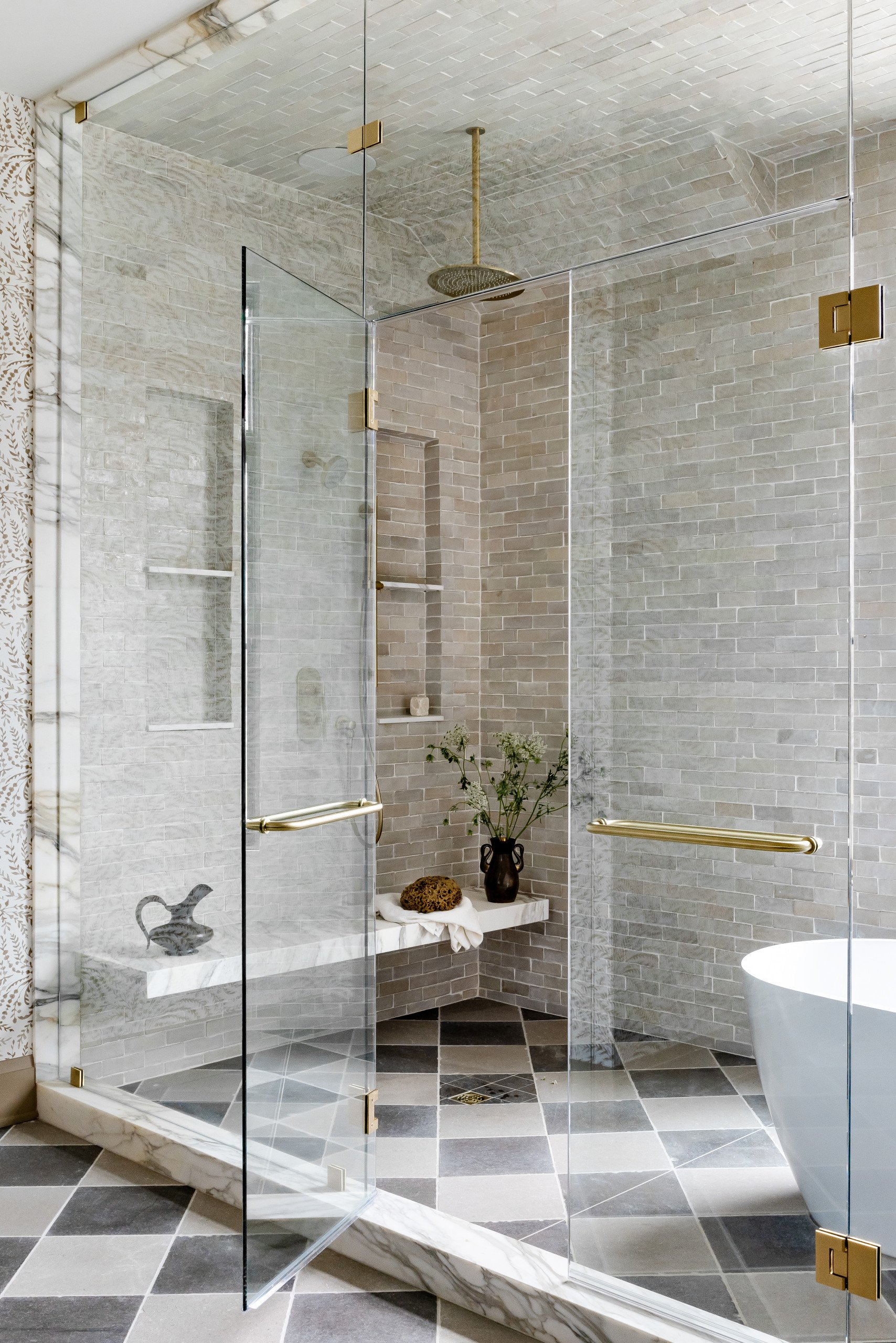
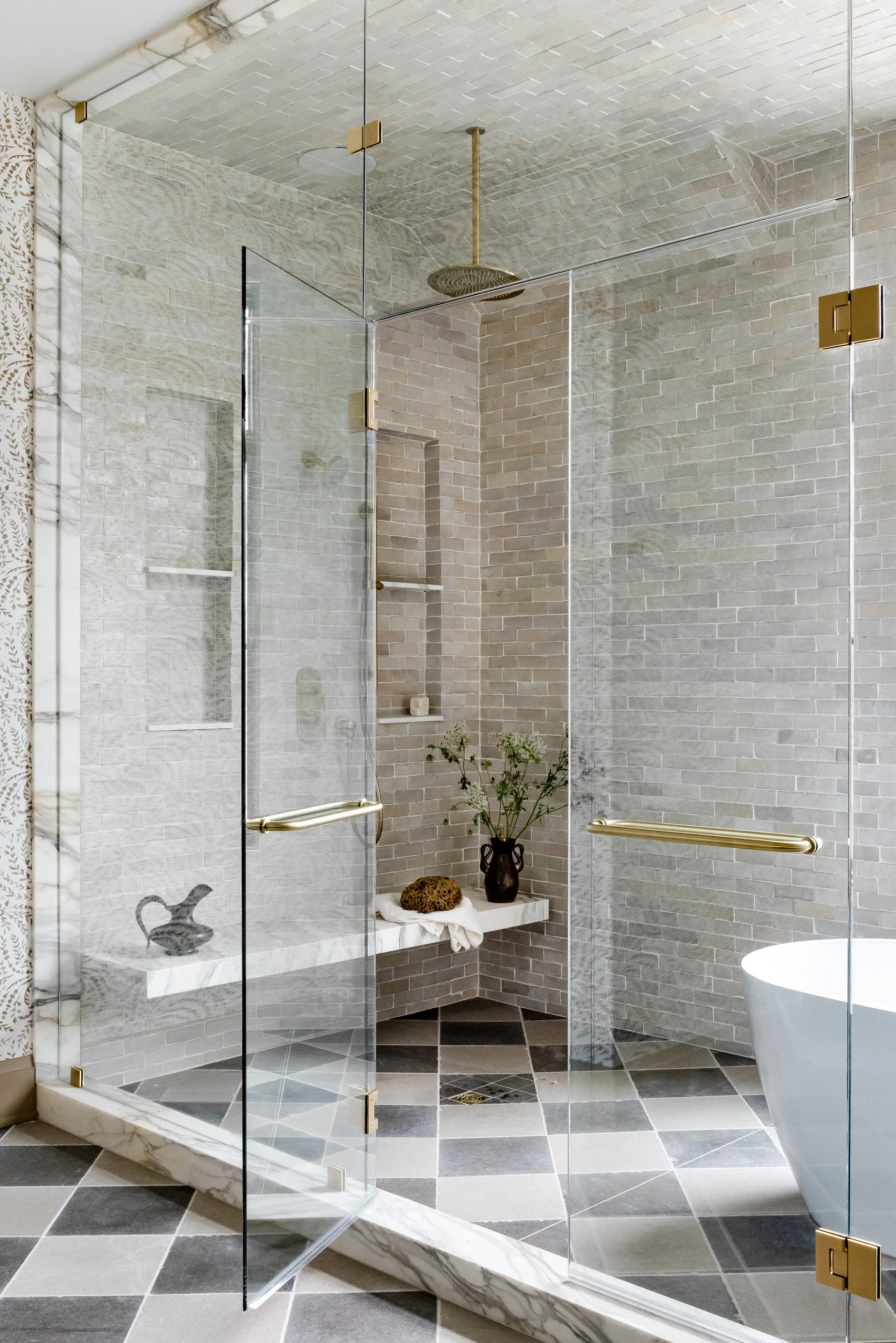
A glass enclosed shower and bathing area features soft neutral tile, brass fixtures, a marble bench, and a view to a sculptural soaking tub.
Luxury Spa Bathroom Design as a Daily Ritual Experience
Bathrooms are evolving into immersive wellness environments that support both physical and emotional restoration. What was once a purely functional space is now designed to reflect the experience of a private spa or boutique hotel.
Luxury spa bathroom design transforms routine into ritual by slowing down daily habits and turning them into intentional moments of care.
A. Creating a Spa-Like Atmosphere at Home
A spa like bathroom begins with clarity and spatial balance. Symmetry creates a sense of order and stability, while thoughtful layouts ensure that movement through the space feels natural and uninterrupted.
Visual clutter is minimized through integrated storage solutions. Products and personal items are concealed within custom cabinetry, allowing surfaces to remain clean and open. This simplicity enhances the overall sense of calm.
Open layouts contribute to a feeling of expansiveness. Even in smaller spaces, careful planning can create a sense of flow that feels effortless.
This level of cohesion is often achieved through full service interior design collaboration in Palm Beach, where architectural planning and interior detailing are developed together.
B. Wellness-Focused Bathroom Features
Wellness bathroom interiors incorporate features that support relaxation and recovery on a daily basis.
Steam showers provide therapeutic benefits that support circulation and respiratory health. Freestanding soaking tubs allow for full body immersion and a deeper level of relaxation. Heated flooring introduces comfort that is felt immediately, especially during early morning routines.
Aromatherapy systems can be integrated into the environment to enhance mood and relaxation. Layered lighting allows the space to shift between energizing and calming depending on the time of day.
For a more advanced wellness experience, features such as saunas or cold plunge pools can be incorporated. These elements transform the bathroom into a true luxury bathroom retreat that supports both physical and mental well-being.
C. Natural Materials and Organic Luxury
Material selection defines the sensory experience of the space. Natural stone such as limestone and travertine introduces softness and subtle variation. Wood elements such as oak vanities add warmth and balance.
Textured plaster walls and handcrafted finishes create depth without relying on contrast. Instead of bold color differences, these spaces use tonal layering. This approach builds visual interest while maintaining a cohesive and calming palette.
Our approach to luxury material selection ensures that each finish contributes to both aesthetic refinement and sensory comfort.
D. Designing for Slower, Intentional Rituals
A wellness bathroom is designed to encourage presence and mindfulness. Dedicated zones for skincare and self care allow routines to unfold at a slower pace.
Seating within the bathroom adds both function and comfort. It provides a place to pause, reflect, or simply take a moment before continuing with the day.
Hotel inspired detailing elevates the experience. Oversized vanities, custom millwork, and integrated lighting create a sense of quiet luxury.
The emotional transition is significant. These spaces guide the user from external stress into a state of restoration and calm.
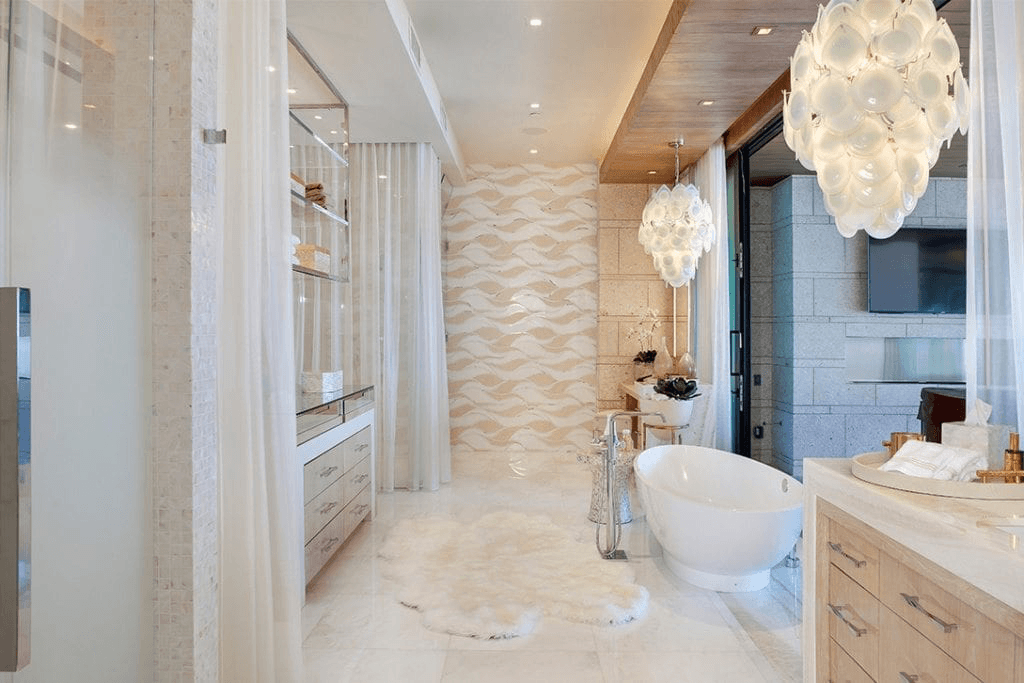
An airy coastal luxury bathroom showcases a freestanding tub, sculptural chandeliers, wave-textured feature wall, and layered sheer drapery in soft cream tones.
Retreat Areas and Wellness Rooms Beyond the Primary Suite
True luxury is reflected in the ability to step away from daily demands without leaving home. Beyond bedrooms and bathrooms, dedicated wellness spaces provide opportunities for retreat, reflection, and recalibration.
A. The Rise of Dedicated Wellness Spaces
Wellness retreat room design has become a defining feature in luxury homes. These spaces are tailored to individual lifestyles and personal habits.
Meditation rooms provide stillness and focus. Reading lounges offer a screen free environment for relaxation. Yoga and movement studios support physical well-being and daily practice.
Recovery spaces are becoming increasingly popular. These may include areas for stretching, massage, or other restorative activities. Cocoon rooms and quiet dens offer enclosed environments designed for complete disconnection.
These spaces are not about adding more. They are about creating intention within the home.
B. Designing for Emotional Regulation
Designing for emotional regulation requires careful attention to sensory input. Soft acoustics reduce noise and create a quieter atmosphere. Curved furnishings and rounded architectural details introduce a sense of ease and flow.
Visual stimulation is intentionally minimized. A restrained palette and limited decor allow the mind to settle without distraction.
Natural light enhances emotional well-being. When paired with greenery or garden views, it creates a strong connection to nature that supports relaxation.
C. Indoor-Outdoor Wellness Integration
Indoor outdoor wellness living is a key element in regions like Palm Beach. Homes are designed to blur the boundaries between interior and exterior environments.
Courtyards, terraces, and garden facing rooms create opportunities to engage with nature throughout the day. Outdoor showers and covered seating areas support daily rituals such as morning coffee or evening unwinding.
This integration is a defining characteristic of full service interior design collaboration in Palm Beach, where architecture, landscape, and interiors are developed as a cohesive experience.
D. Personalized Wellness Design
Wellness spaces are most effective when they are tailored to the individual. Each design reflects the client’s routines, preferences, and lifestyle.
Morning spaces may prioritize light and openness, while evening spaces focus on softness and enclosure. Family wellness is also considered, with shared spaces designed for collective relaxation.
Technology is carefully controlled within these environments. Boundaries are established to ensure that these spaces remain restorative and free from distraction.
True luxury allows for retreat, recalibration, and reconnection within the home itself.
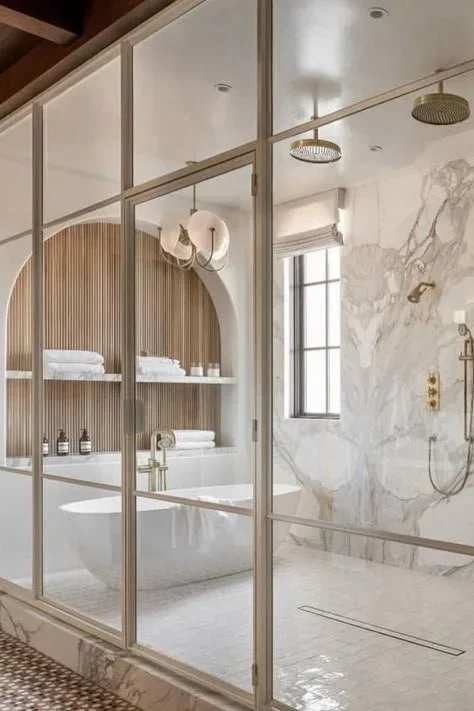
A luxurious marble bathroom combines an arched niche with wood slats, freestanding tub, and walk-in shower behind framed glass panels.
The Invisible Elements of Wellness Interior Design
The most impactful elements of wellness interior design are often the least visible. They are experienced through atmosphere rather than appearance and are felt on a subconscious level.
“Wellness interior design begins with understanding how a home should feel, not simply how it should look.”
A. Lighting and Mood Regulation
Circadian lighting strategies align artificial lighting with natural daylight cycles. This supports energy and focus during the day while promoting relaxation in the evening.
Daylight optimization enhances this effect. Window placement, sheer treatments, and reflective surfaces are used to distribute natural light evenly throughout the space.
Indirect lighting reduces glare and creates a softer environment that feels calm and balanced.
B. Air Quality and Material Health
Air quality is essential in healthy luxury home design. Low toxicity materials, proper ventilation, and natural sourcing contribute to a cleaner and healthier indoor environment.
These decisions are often made during the architectural planning phase. They require collaboration between designers, architects, and builders to ensure long term performance.C. Acoustics and Spatial Calm
C. Acoustics and Spatial Calm
Sound plays a critical role in how a space is experienced. Acoustic planning reduces unwanted noise and enhances comfort.
Sound absorbing materials, quiet mechanical systems, and soft architectural detailing all contribute to a calmer environment. These elements work together to create spaces that feel peaceful and controlled.
D. Wellness Through Spatial Planning
Spatial planning shapes the overall experience of the home. Flow between rooms, transitions between public and private areas, and layers of privacy all influence emotional well-being.
Designing for decompression is essential. Buffer zones between active and restful spaces allow for gradual transitions and support a natural rhythm throughout the day.
These principles define luxury wellness architecture and contribute to truly restorative home interiors.
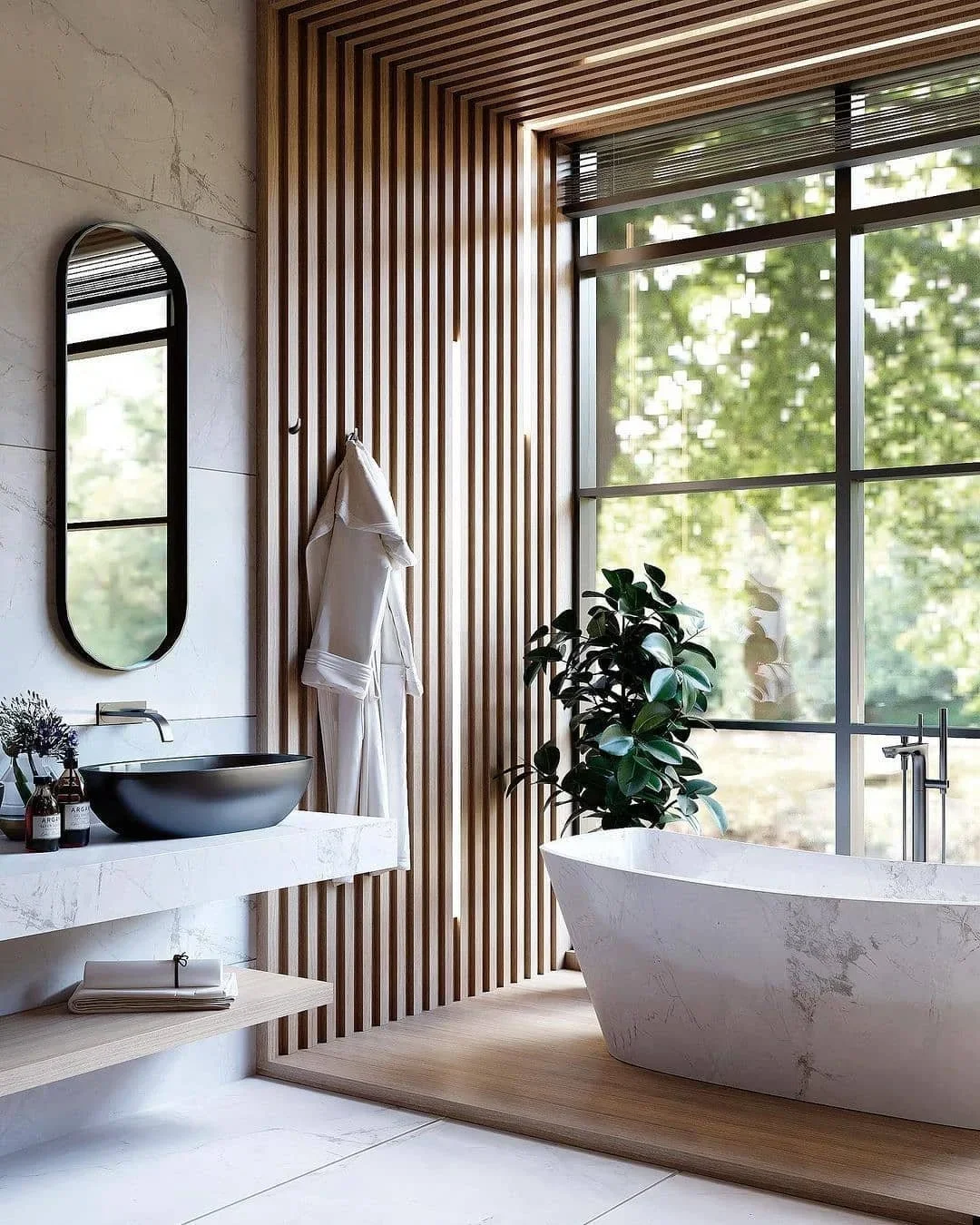
A serene modern spa bathroom features a marble soaking tub, wood slat wall, large windows with garden views, and a floating vanity styled with wellness accessories.
Luxury Living That Supports Everyday Well-Being
Luxury is evolving into something more intentional, more personal, and more enduring.
Wellness interior design reflects a shift toward homes that support daily life in a meaningful way. These spaces restore energy, enhance rituals, and improve overall quality of life.
From calming bedroom design to luxury spa bathroom design and dedicated wellness spaces, each element contributes to a cohesive vision of a luxury home sanctuary.
As explored in our insights on timeless interiors and neuroaesthetic interior design, the future of design lies in creating spaces that feel as good as they look.
“Luxury spa bathroom design transforms routine into ritual.”
If you are ready to transform your home into a wellness focused environment, our team specializes in full service interior design collaboration in Palm Beach. We bring together architecture, materiality, and lifestyle to create curated comfort spaces that support how you truly want to live.