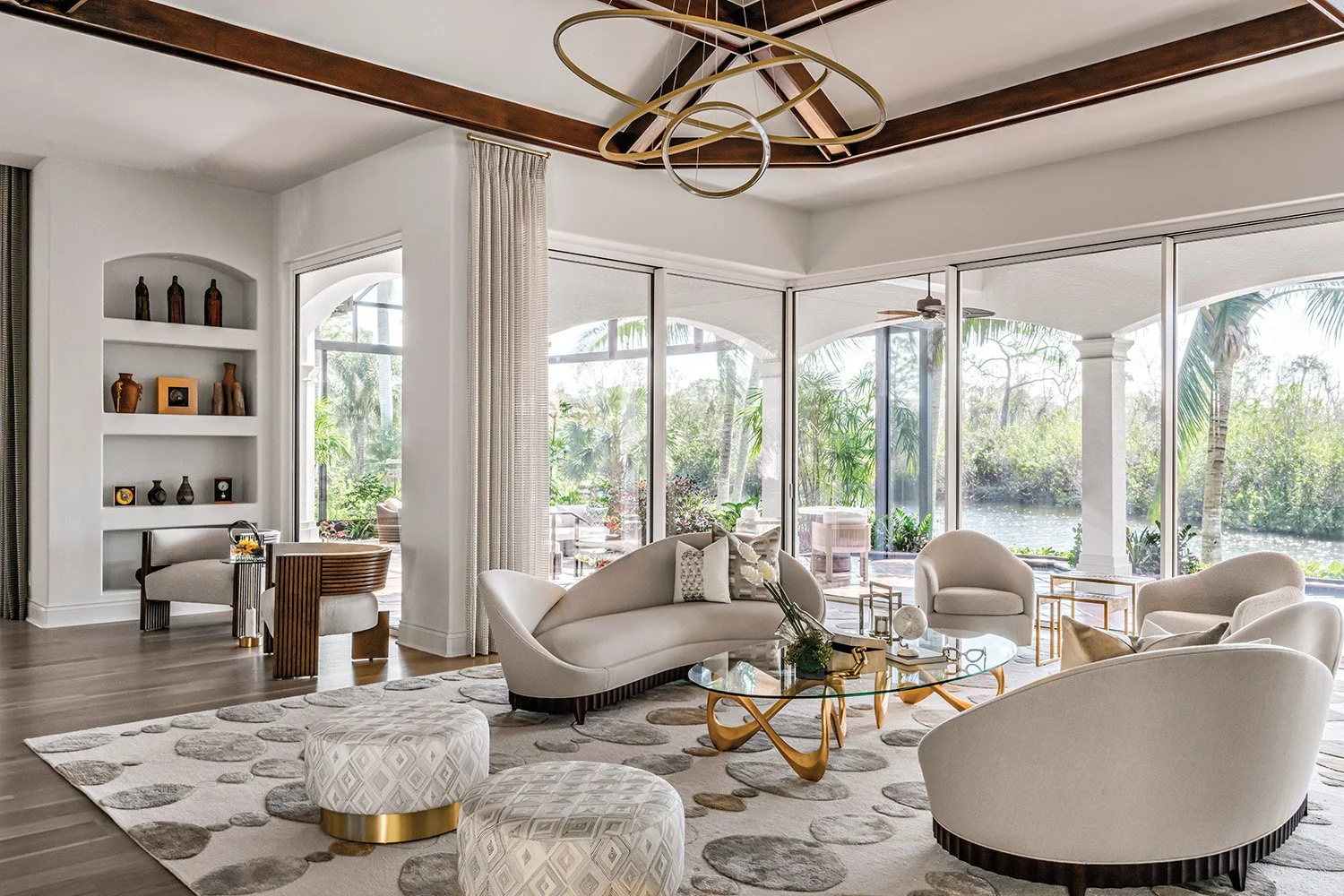
The European Art of Seasonal Living: How Homes Change With the Seasons
Denise Jadd
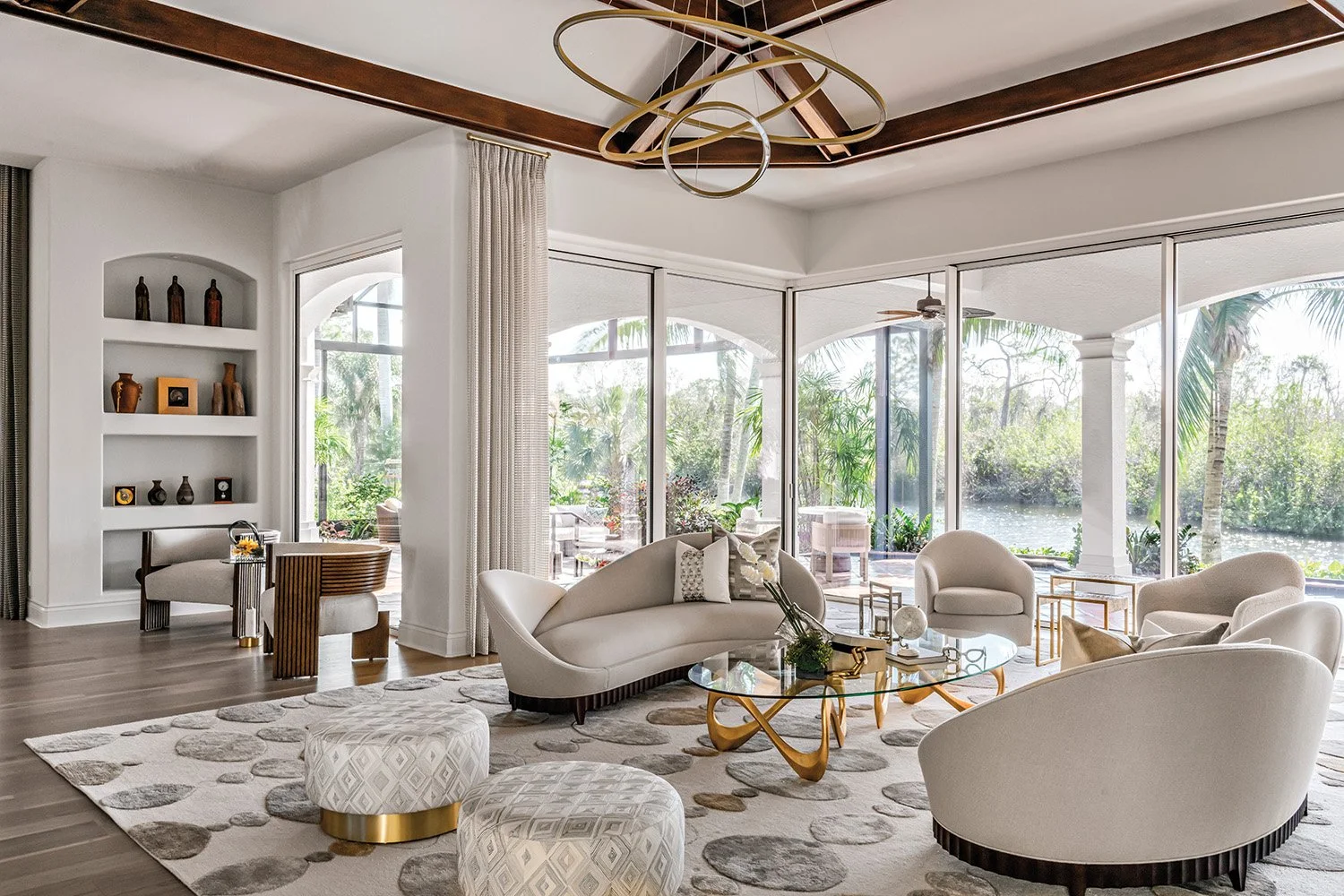
In South Florida, seasonal living is expressed through softer light, natural materials, and spaces that invite slower, more meaningful moments at home.
European homes do not simply decorate for a season. They respond to the season.
This distinction is subtle, but it changes everything. Seasonal decorating often suggests replacing objects, introducing familiar motifs, or following a short-lived visual trend. Seasonal living is something more lasting. It is the practice of noticing how daylight changes, how the home is used at different times of year, and how material, texture, fragrance, and illumination can support the rhythm of daily life.
At Domaine Luxe, we believe interiors should feel alive to their setting. A thoughtfully designed home is not fixed in one mood year-round. It is grounded in enduring architecture, natural materials, and considered furnishings, then gently adjusted through the seasons to create a deeper sense of comfort, beauty, and belonging.
In Palm Beach and throughout South Florida, the transition into fall may not arrive with dramatic temperature changes or turning leaves. Yet the season still shifts. The light begins to change. Evening gatherings move outdoors more comfortably. The desire for slower dinners, richer textures, and a more intimate atmosphere becomes more pronounced.
Seasonal living in South Florida is not about recreating a northern autumn. It is about responding to the subtler seasonal shifts we actually experience.
That is a distinctly Domaine Luxe point of view: refined, deeply personal, rooted in nature, and designed for how life is truly lived.
The European Art of Responding to the Season
European-inspired interior design is often recognized for its quiet elegance, layered materials, and sense of history. But beyond its visual appeal, European interiors offer an important lesson in how a home can evolve over time.
In many European homes, the room itself is not constantly reinvented. The architectural foundation remains. Beautiful millwork, stone surfaces, wood floors, antique pieces, linen upholstery, art, and well-proportioned furnishings provide continuity. What changes is the way the home is inhabited.
Windows may remain open later in the summer and close a little earlier as evenings become cooler. A table set for a casual afternoon meal may become a candlelit setting for dinner. A simple vessel of fresh flowers might give way to sculptural branches, olive stems, or foliage with more texture and presence. The same sitting room that feels open and bright in August may feel warmer in October simply because the lamps are turned on earlier and the seating has been softened with an additional textile.
The beauty of this approach is that it does not depend on excess. It depends on observation.
A home becomes more meaningful when it reflects the season outside its walls and the habits inside them. This may mean paying attention to where sunlight lands in the morning, which room receives the most beautiful late-afternoon glow, or which spaces feel most inviting when the day begins to slow down.
Rather than treating design as a finished result, seasonal living recognizes it as an ongoing relationship between the home, its surroundings, and the people who live there.
This is why timeless design matters. When a room is built on strong proportions, authentic materials, and an intentional palette, it can adapt gracefully without needing to be replaced. The foundation remains enduring. The atmosphere becomes more layered.
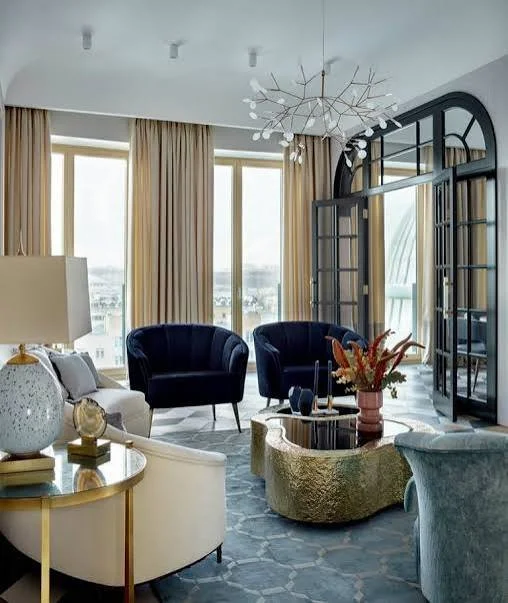
European-inspired interiors gain their lasting character through authentic materials, layered light, and small seasonal shifts that deepen the atmosphere without changing the foundation of the room.
Changing Daylight Changes the Home
Light is one of the first indicators of seasonal transition.
Even in South Florida, where warm weather and bright skies are familiar throughout much of the year, daylight shifts in direction, intensity, and duration. The sun sits lower. Mornings can feel softer. Late-afternoon light may become more golden. As the days gradually shorten, artificial lighting plays a more important role in shaping the emotional tone of the home.
Natural light interior design begins with an understanding that daylight is not simply functional. It affects mood, energy, focus, and the way we perceive color, texture, and scale.
A pale plaster wall may appear crisp and luminous in the midday sun, then warmer and more dimensional in the late afternoon. A wood dining table may take on a richer depth as the light changes. A room with views to a garden, courtyard, or water may feel completely different depending on the time of day.
For this reason, a carefully considered lighting plan should never be treated as an afterthought in luxury home design in Palm Beach. Lighting should support the changing conditions of the day, allowing a home to transition naturally from morning to evening.
The most successful interiors often use several lighting sources rather than relying on one overhead fixture.
Ambient lighting provides the overall level of illumination in a room.
Task lighting supports focused activities such as reading, cooking, working, or getting ready.
Accent lighting draws attention to art, architectural details, objects, texture, and areas of visual importance.
Decorative lighting adds sculptural presence and contributes to the visual identity of the room.
These layers work together to create flexibility. During the day, a room may depend primarily on natural light. In the evening, a combination of lamps, sconces, and accent lighting can create a softer and more intimate environment.
The goal is not to make every corner equally bright. In fact, a room often becomes more inviting when it contains areas of shadow and visual rest. Pools of warm light can create a sense of depth, drawing attention to seating areas, artwork, a dining table, or a favorite reading chair.
This is particularly important in open-plan homes, where a single large space may serve several functions. Layered lighting can visually define different zones without requiring walls or dramatic changes in furniture arrangement. A floor lamp can make a sitting area feel distinct from the adjacent dining space. A pendant over a table can anchor a gathering point. Under-cabinet lighting can make a kitchen feel inviting after sunset, even when the main overhead lights are turned off.
In this way, light becomes part of the architecture of daily life.
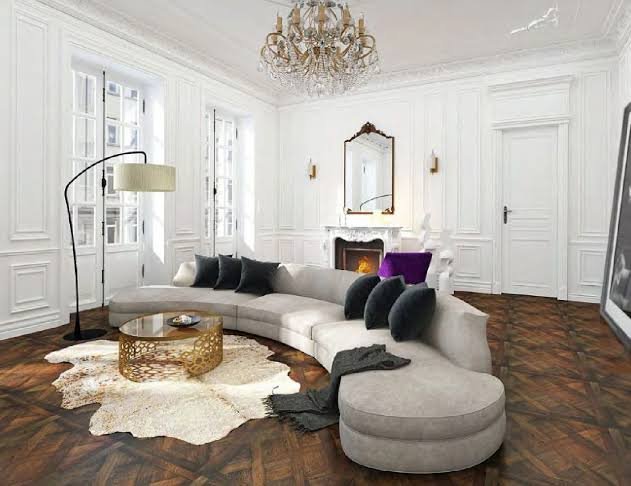
As daylight shifts throughout the day, layered lighting allows a home to move naturally from bright, open mornings to a softer and more intimate evening atmosphere.
Choosing the Right Warmth
When people think of fall interiors, they often imagine deeper colors, heavier fabrics, and abundant seasonal décor. While those choices may suit some climates and homes, they are not always aligned with the Palm Beach lifestyle.
Warmth does not have to mean heaviness.
In South Florida interior design, seasonal warmth can be created through tonal layering, tactile materials, and a more intimate approach to lighting. The effect can feel rich without becoming dark, crowded, or disconnected from the coastal environment.
Consider the difference between a saturated rust-colored sofa and a softer palette of warm ivory, sand, mushroom, tobacco, olive, muted terracotta, and sun-washed ochre. The latter can create a sense of seasonal depth while maintaining the lightness and restraint that many Palm Beach homes require.
Color should never be arbitrary. At Domaine Luxe, color is considered through its emotional effect, relationship to natural light, and ability to endure beyond a passing moment. Seasonal changes can be expressed through accent colors, artwork, textiles, and natural elements without disrupting the room’s permanent palette.
A neutral living room, for example, can take on a more grounded quality with a pair of tobacco-toned pillows, a handwoven wool throw, a ceramic vessel in a warm clay finish, or a piece of art that introduces soft earth tones. In a dining room, a linen tablecloth in a muted mineral shade can shift the mood without overwhelming the room. In a bedroom, warmer bedside lighting and a textured coverlet can create a more restorative feeling as evenings become longer.
The essential question is not, “What color is fall?” It is, “What will make this room feel more comfortable, composed, and connected to the season?”
That question leads to choices that endure.
Texture as a Form of Comfort
Texture has the ability to make a room feel more inviting before a person even sits down.
A well-designed space balances smooth and rough, soft and structured, polished and weathered. This variety creates visual interest, but it also shapes the sensory experience of being in the room.
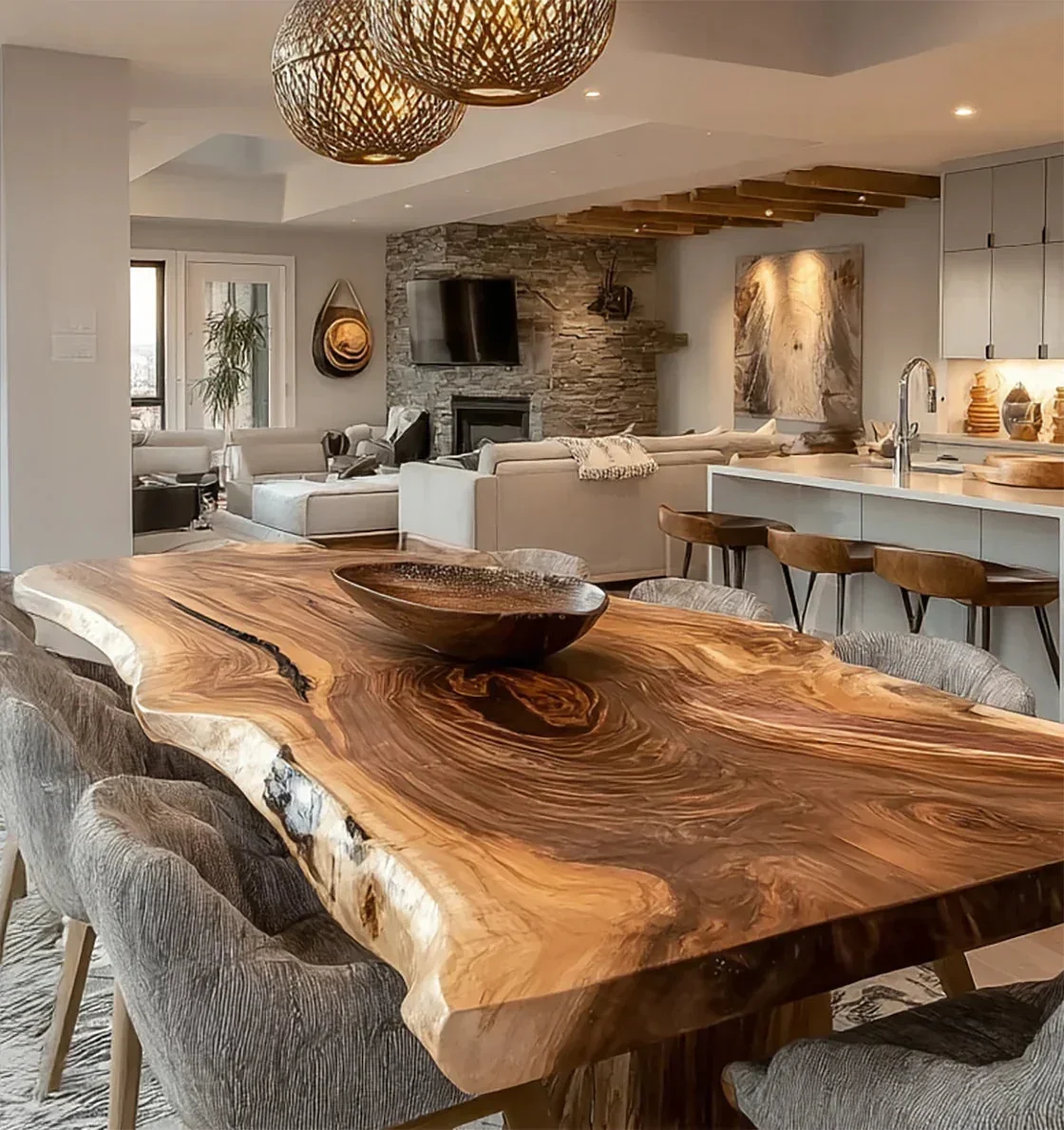
Natural wood brings warmth, movement, and tactile depth to an interior, creating a sense of comfort that becomes more meaningful with everyday use.
In a luxury residential interior design project, texture can appear in many forms:
The irregular grain of a natural wood table.
The veining and subtle variation of stone.
The softness of linen upholstery.
The gentle depth of bouclé or wool.
The handwoven character of a rug.
The matte finish of limewash or plaster walls.
The patina of aged brass, bronze, or leather.
The sculptural quality of ceramic, rattan, cane, or woven fiber.
These materials bring a sense of authenticity to an interior. They remind us that a home is meant to be touched, used, and experienced, not simply viewed.
As the season shifts, texture becomes especially valuable because it can change a room’s sensory character without changing its architecture or major furnishings. A room can remain light-filled and coastal while becoming more enveloping. A textured throw placed over the back of a chair, a wool rug layered beneath a coffee table, or linen drapery that softens the edges of a window can all add comfort in a way that feels natural rather than decorative.
Natural materials are particularly important because they age well. Wood develops patina. Leather becomes softer. Linen gains character. Stone reveals movement and depth under changing light. These are not materials that need to be replaced every season. They are materials that reveal new qualities over time.
This sense of longevity is central to artful living. The home becomes more beautiful not because everything is new, but because the materials within it have been selected with care and allowed to develop a relationship with daily life.
Bringing Nature Indoors With Restraint
Biophilic design, part of our design ethos, is rooted in the understanding that people benefit from a deeper connection to nature. This connection can be created through daylight, views, fresh air, natural materials, organic forms, water, and botanical elements.
In South Florida, nature is already an essential part of the visual landscape. Palms, tropical foliage, flowering trees, water, sky, stone, and filtered sunlight offer an abundance of inspiration. A refined interior does not need to compete with this environment. It can frame it, soften it, and bring elements of it inside.
As autumn approaches, botanicals can become more sculptural and textural.
TIP:
Instead of relying on overtly seasonal arrangements, consider using:
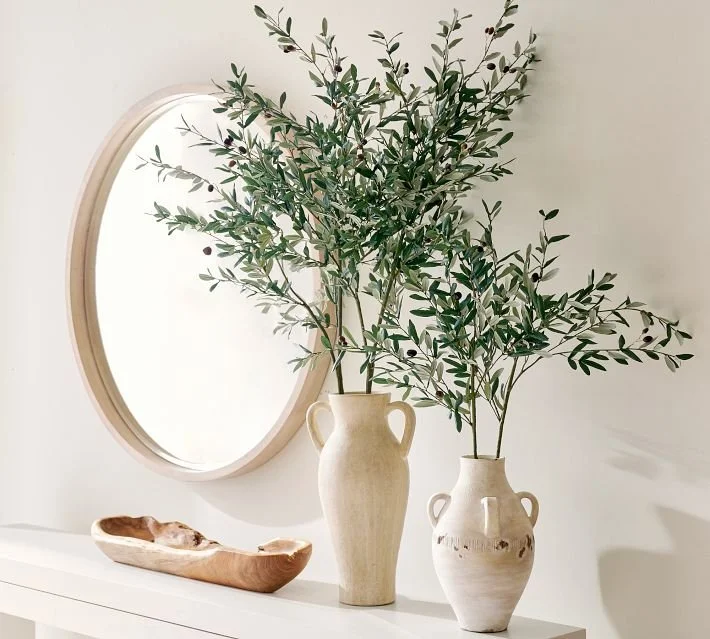
Olive branches offer a restrained, sculptural way to bring natural texture and a sense of season into the home.
Olive branches in a stone or ceramic vessel.
Palm fronds with strong architectural shape.
Dried grasses or seedpods in a restrained arrangement.
Foliage with tonal variation rather than bright floral color.
Fresh citrus or seasonal fruit displayed in a sculptural bowl.
A single flowering branch placed on a dining table or entry console.
Botanical forms that echo the landscape outside the home.
The most compelling arrangements often have a sense of simplicity. One substantial branch in the right vessel can have more impact than several smaller arrangements scattered across a room. The goal is not decoration for its own sake. It is to bring a living, imperfect, and seasonal element into the home.
Nature also appears through material choices. A limestone surface, woven shade, oak cabinet, handmade ceramic object, or linen-covered chair can create the same feeling of connection, even when no flowers are present.
This is why biophilic design should not be reduced to adding plants to a room. It is a broader philosophy. It asks whether the space supports a sense of calm, openness, sensory comfort, and connection to the natural world.
For a Palm Beach interior designer, this means considering the landscape as part of the interior experience. Views should be framed thoughtfully. Indoor-outdoor transitions should feel cohesive. Materials should have a relationship to the climate and setting. The home should feel rooted in place.
The Power of Evening Rituals
A home becomes more personal through ritual.
These rituals do not need to be elaborate. They can be as simple as turning on a particular lamp at dusk, setting the dining table before guests arrive, opening the doors to a terrace in the early evening, or lighting a candle while preparing dinner.
What matters is the intention behind the action.
As the season shifts, evening rituals can help create a more restorative rhythm. The transition from work to home, from daylight to evening, or from a busy afternoon to a shared meal becomes clearer when the environment supports it.
Lighting plays an important role here. Bright, cool overhead lighting can make a room feel functional and active. Warm, layered lighting can signal that the day is slowing down. A dimmer, lamp, sconce, or candle can change a room’s atmosphere in a matter of minutes.
In a bedroom, an evening ritual may include switching off overhead lights, turning on bedside lamps, drawing linen drapery, and making the bed feel inviting with a soft coverlet or throw. In a living room, it may mean lighting a lamp near a favorite chair, placing a book on the table, and allowing the room to become quieter.
In a dining room, it may mean setting the table with natural linens, ceramic serving pieces, glassware that catches the candlelight, and a centerpiece with texture rather than excessive height. These details can make an ordinary weeknight meal feel more considered.
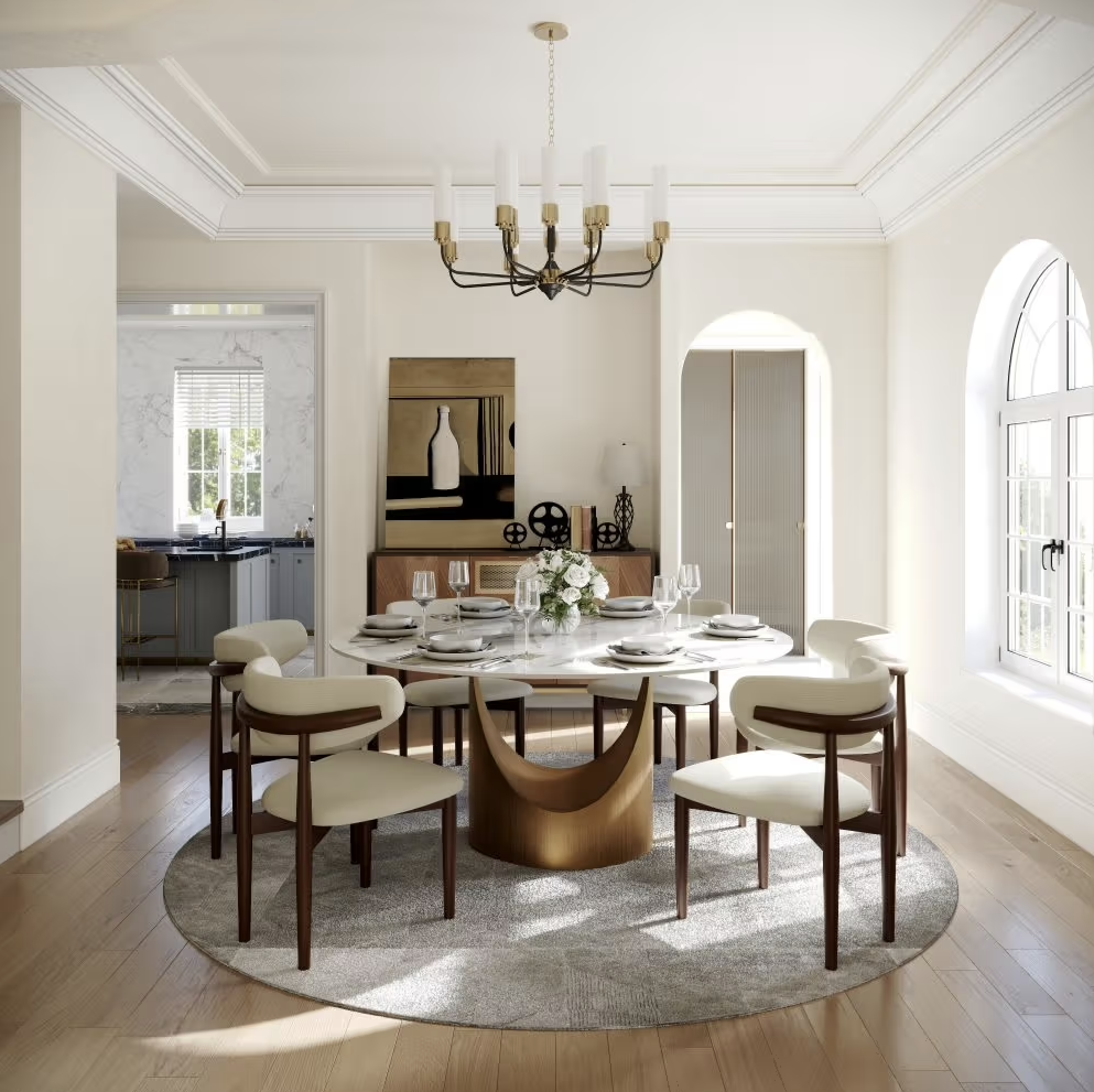
A thoughtfully set dining table, layered with warm light and natural materials, turns an ordinary evening meal into a more meaningful ritual of gathering
Luxury entertaining spaces should support this same feeling. They should be beautiful, certainly, but they should also feel easy. Guests should understand where to sit, where to gather, and how to move through the room. The lighting should flatter faces and food. The acoustics should allow conversation. The table should feel generous but not overly formal.
The most memorable homes are often not the ones with the most objects. They are the ones that make people feel welcome.
Designing for Gathering
November will naturally invite more conversation around gathering, entertaining, and the rituals of shared meals. Yet October is where that transition begins.
As summer schedules begin to settle and evenings become more inviting, people often feel drawn back to the dining table, the terrace, the living room, and the spaces that bring others together.
This is a moment to consider whether your home supports the kind of gathering you want to create.

Thoughtful indoor-outdoor living creates an effortless setting for gathering, allowing conversation and connection to move naturally from the home to the landscape.
A dining room should not feel precious or underused. It should invite people to linger. Comfortable dining chairs, flattering lighting, warm materials, and a clear sense of proportion can transform a room from a formal setting into a place where conversation unfolds naturally.
A kitchen should allow hosts and guests to interact without crowding. A living room should provide enough seating for connection without making every chair face the same direction. Outdoor spaces should offer both openness and intimacy, particularly in the evening.
For luxury home design in Palm Beach, indoor-outdoor living is often central to this experience. A terrace, loggia, patio, courtyard, or poolside seating area can extend the home’s entertaining capacity while providing a direct relationship to the landscape.
As the weather becomes more comfortable, consider how these spaces transition after dark. Outdoor lighting should be warm, gentle, and layered. Lanterns, wall sconces, landscape lighting, and shaded fixtures can make a terrace feel intimate without overpowering the night. Outdoor textiles, cushions, and natural-fiber rugs can make the area feel as considered as the interior rooms.
The goal is continuity. The home should feel cohesive from the dining room to the terrace, from the kitchen to the garden, and from day into evening.

A home designed for wellbeing uses natural light, tactile materials, comfortable scale, and thoughtful layout to support rest, connection, and daily ease.
Wellness Through Sensory Design
Wellness interior design is not a separate aesthetic. It is an approach to design that considers how a space affects the people who use it.
A beautiful room can still feel uncomfortable if the lighting is harsh, the acoustics are poor, the seating lacks support, or the layout creates friction. Conversely, a room can feel deeply luxurious when its details quietly support ease, rest, conversation, and connection.
Neuroaesthetic interior design considers the relationship between our surroundings and our emotional response.
TIP:
While every individual experiences space differently, there are design principles that often contribute to a sense of wellbeing:
Access to natural light and views.
A balanced relationship between openness and enclosure.
Natural materials with visible texture and variation.
Lighting that changes throughout the day.
Comfortable scale and clear circulation.
Softened acoustics.
Color palettes that feel composed rather than overstimulating.
Spaces designed around the activities that happen within them.
The seasonal transition offers an opportunity to revisit these principles.
Do your rooms feel too bright at night? Is there enough soft light for reading, dining, or conversation? Does the bedroom support genuine rest? Is there a place to pause with a morning coffee, enjoy the late-afternoon light, or gather comfortably with family and friends?
These questions are more meaningful than asking whether a room looks current. They focus on whether the home supports the life within it.
At Domaine Luxe, we design for emotional resonance as much as visual impact. A home should feel composed, but never rigid. Elevated, but never cold. Luxurious, but always livable.
Small Changes That Transform a Room
Seasonal living does not require a major renovation or a full redesign. In many cases, the most meaningful changes are the smallest ones.
Consider beginning with one room and one time of day. Notice how it feels in the morning, afternoon, and evening. Then make adjustments that support the experience you want to create.
TIP:
A few thoughtful changes may include:
Replacing a cool-toned bulb with a warmer, dimmable light source.
Adding a table lamp to a dark corner or overlooked console.
Layering a natural-fiber throw over a chair or sofa.
Introducing a handwoven rug or textural accent pillow.
Styling a dining table with a linen runner, ceramic vessel, and sculptural greenery.
Editing surfaces so a room feels calmer and less visually busy.
Bringing in one natural element, such as branches, foliage, or fruit.
Moving a favorite chair toward the most beautiful source of natural light.
Creating a small reading corner with a lamp, side table, and comfortable upholstery.
Refreshing bedding with a more tactile coverlet or throw.
Adding candles to a fireplace surround, dining table, or outdoor seating area.
Considering how scent, sound, and touch contribute to the room’s atmosphere.
The most important step is to choose elements that feel consistent with the home’s larger design language. Seasonal changes should enhance the room, not interrupt it.
A well-designed home does not need to announce the season. It simply feels more attuned to it.
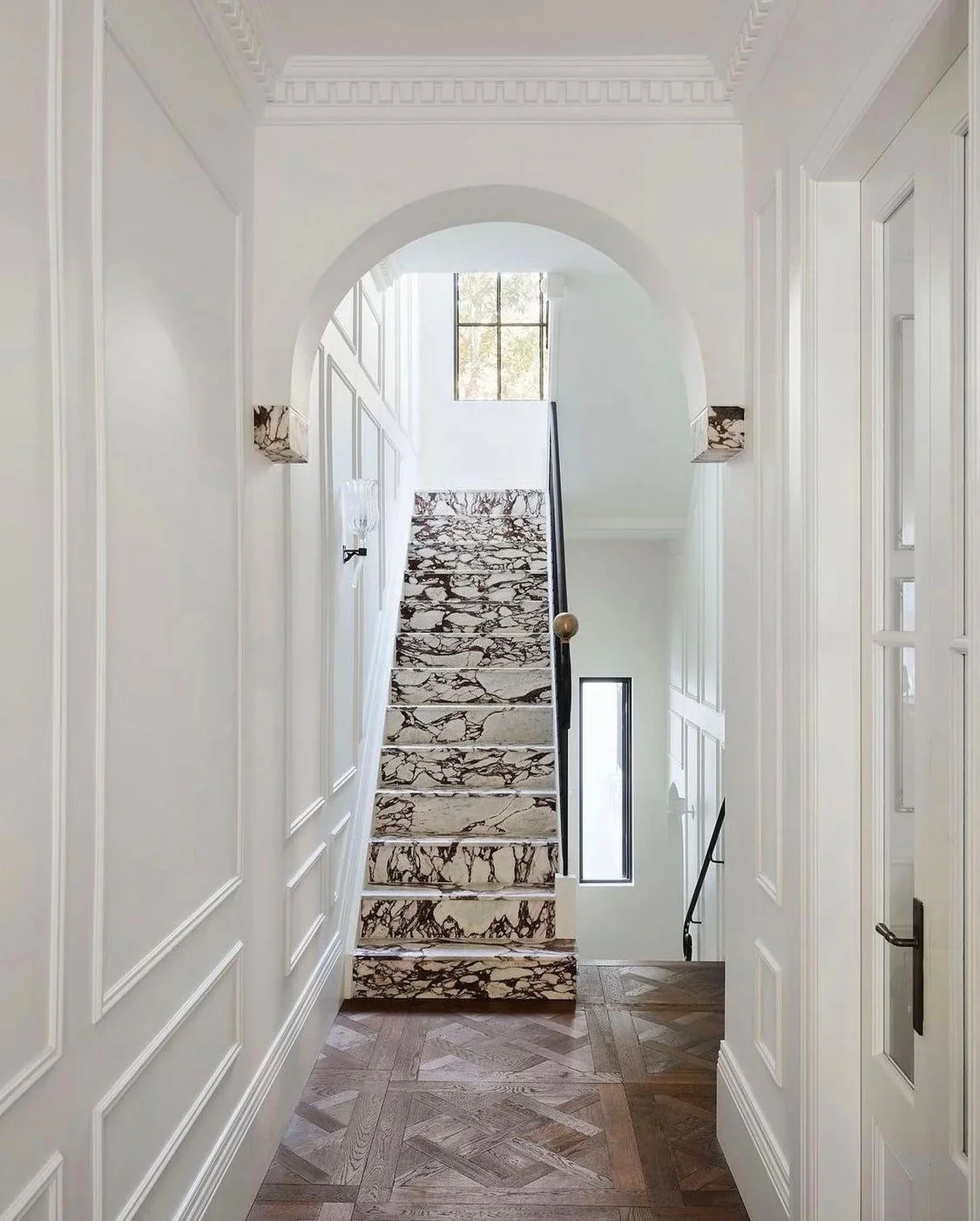
As natural light shifts throughout the day, considered materials and layered illumination allow a home to feel calm, welcoming, and attuned to the season.
From Natural Light to Seasonal Atmosphere
The relationship between natural light, seasonal light, sensory experience, and wellbeing is deeply connected.
Daylight influences how we experience color and material. As daylight changes, layered lighting helps the home remain welcoming and functional. Lighting affects atmosphere. Atmosphere influences our sense of calm, connection, and comfort. Natural materials and tactile elements deepen that experience, grounding the home in a more human and restorative way.
This is the foundation of seasonal living.
It is not about buying more. It is about noticing more.
It is about understanding that the same room can feel entirely different when the sun is lower, the lamps are warmer, the table is set with care, and the materials around you invite touch. It is about creating a home that responds to the season with grace rather than following a prescribed formula.
For Palm Beach residential interior design, this approach feels especially relevant. South Florida offers its own version of seasonal change: softer light, more comfortable evenings, an evolving relationship with outdoor spaces, and a renewed desire for gathering at home.
The response should feel equally specific. Not borrowed from somewhere else, but shaped by the lifestyle, landscape, and natural rhythm of this place.
A Home That Evolves With You
The most enduring interiors are designed to change gracefully.
They allow for fresh branches on the table, a new textile on the sofa, different light in the evening, and a change in the way a room is used. They provide enough structure to feel timeless and enough flexibility to feel personal.
This is the beauty of a layered home. It does not depend on constant reinvention. It becomes more compelling through lived experience, meaningful objects, beautiful materials, and attention to the small rituals that make daily life feel richer.
As Fall begins, consider the atmosphere of your home. Notice the light at different times of day. Pay attention to the rooms where you want to spend more time. Introduce warmth through texture, natural materials, and thoughtfully layered illumination. Allow the landscape outside to inform the details inside.
Seasonal living is ultimately about creating spaces that feel connected to the present moment while remaining timeless by design.
From Paris to Palm Beach, the most beautiful homes are not simply styled for a season. They are designed to be lived in, beautifully considered, and responsive to the life unfolding within them.