The Art of Living Well: Why European Homes Feel Different
Denise Jadd
Spend enough time in Europe and you begin to notice something difficult to quantify. The homes are not necessarily larger. They are not always more elaborate. Yet many feel remarkably comfortable, inviting, and deeply connected to daily life.
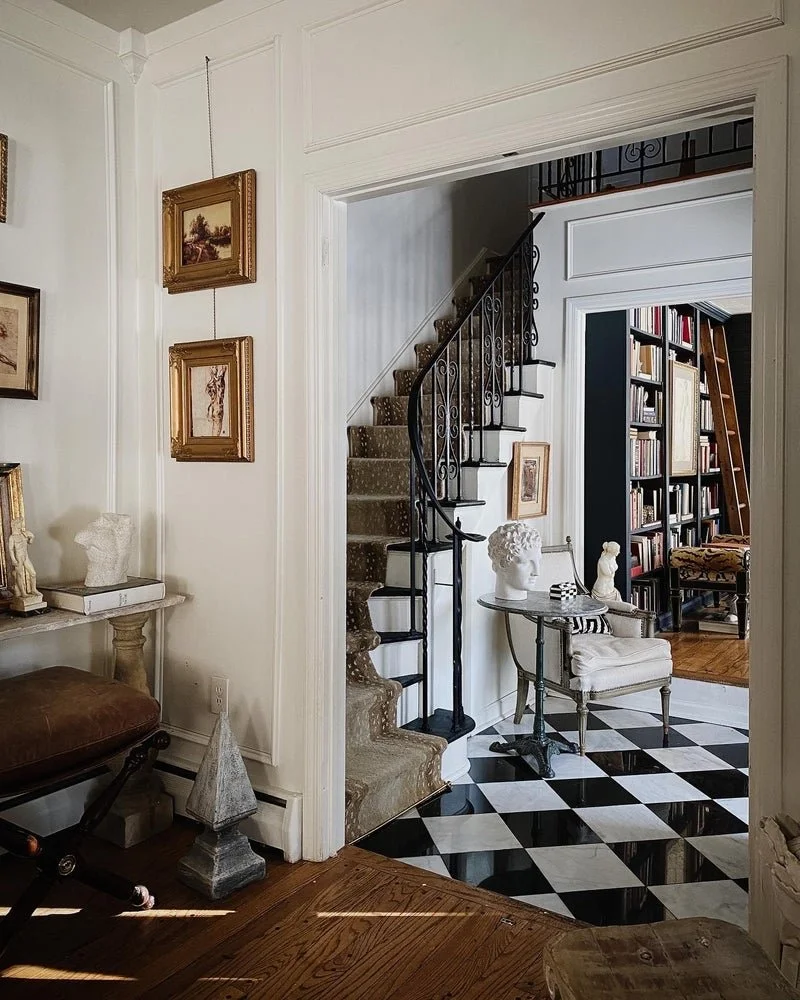
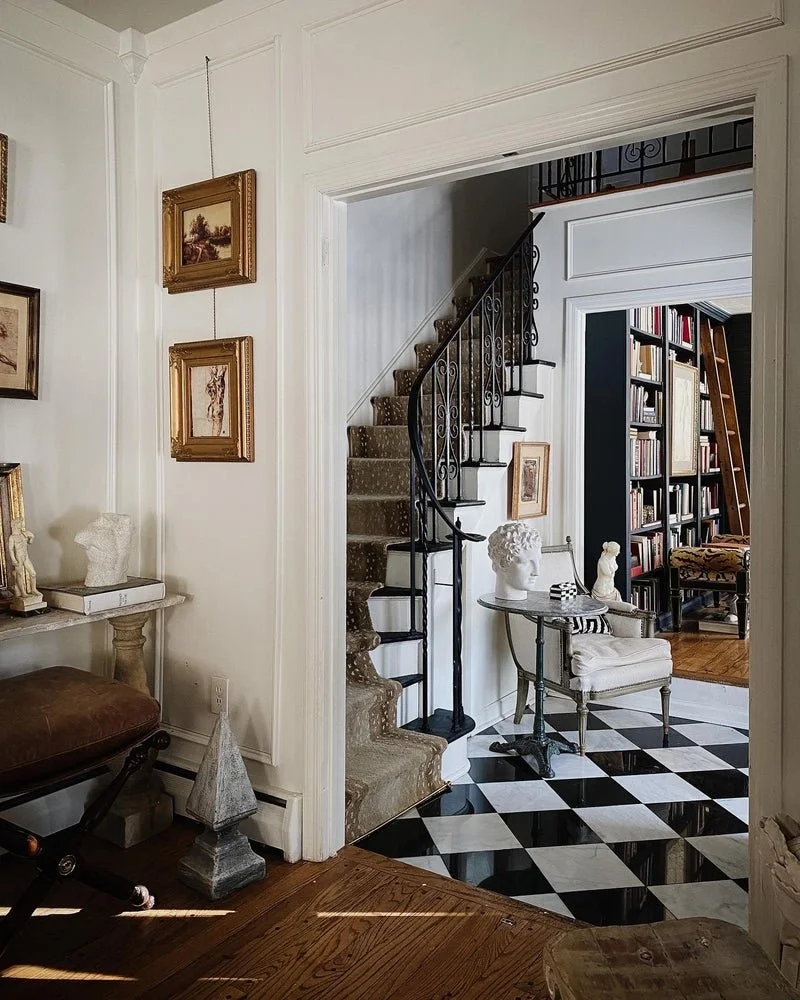
An intimate entry layered with collected art, checkerboard stone, and ironwork staircase distills the essence of European interior design quietly formal, lived-in, and deeply considered.
There is a sense of ease the moment you enter. A natural flow. A calm that does not feel designed for show, but for living.
The difference is not decorating.
The difference is lifestyle design.
Luxury Home Design in Palm Beach Is Not About Decorating - It’s About Lifestyle
This distinction is reshaping the conversation around luxury home design in Palm Beach, where discerning homeowners are moving beyond aesthetics and asking a more meaningful question: How should my home support the way I live?
This shift brings focus to:
Slower living and more intentional daily rhythms
Spaces that support rituals rather than occasional use
Sensory comfort that enhances well-being
A deeper connection between architecture, interiors, and environment
Luxury is no longer about creating a moment. It is about shaping a life.
Luxury Is Measured Differently
In European luxury interiors, value is rarely communicated through scale or excess. Instead, it is revealed gradually - through experience.
Luxury becomes something you notice over time. It reveals itself in the way a door closes softly with precision, the patina of natural materials as they age, the proportion of a room that feels inherently balanced, and the quiet efficiency of a layout that simply works. These are not dramatic gestures, but they are the details that make a home feel enduring and deeply considered. The experience of the space improves the longer you live with it.
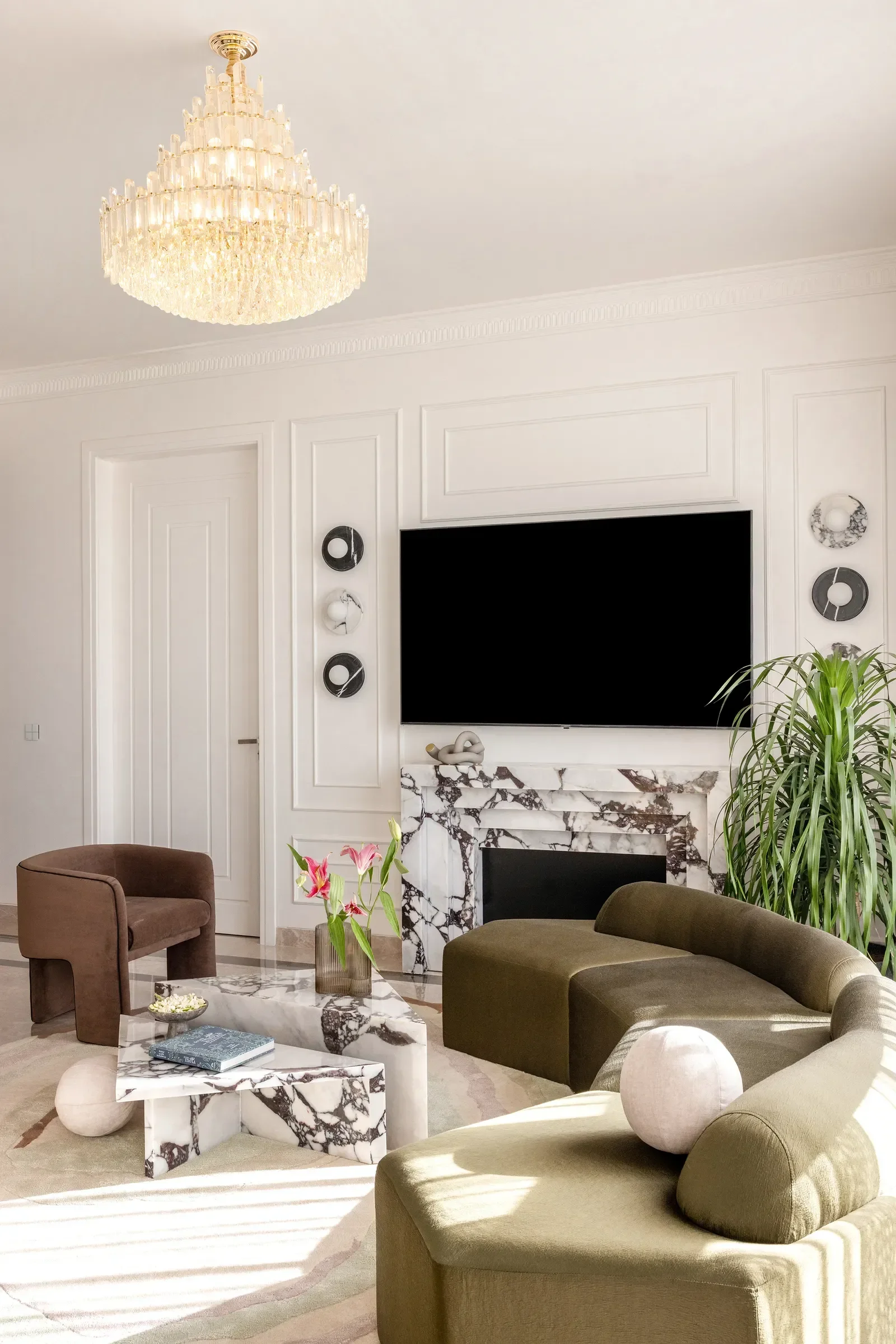
A softly sunlit living room layers European-inspired paneling, marble, and sculptural seating to show how modern Palm Beach luxury can feel both polished and deeply relaxed.
There is an emphasis on permanence rather than immediacy.
Craftsmanship replaces trend.
Materials replace ornamentation.
Function replaces excess.
In European interiors, these choices are not about austerity; they are about longevity, coherence, and ease. The goal is to create rooms that hold up beautifully over time, both visually and functionally. A home gains character through use, not because it was overdecorated from the start.
By contrast, traditional American luxury has often centered on:
Larger square footage.
Statement features.
Visual impact at first glance.
Spaces designed to impress rather than support.
That model can be striking, but it does not always create the best everyday experience. Homes designed primarily for impression can lose their connection to daily life because their most memorable qualities are not always the ones that make living easier, calmer, or more intuitive. European homes offer a different model, one where ease of living becomes the highest form of luxury. In that framework, a successful home is not the one with the most to look at, but the one that quietly supports everything you do in it.
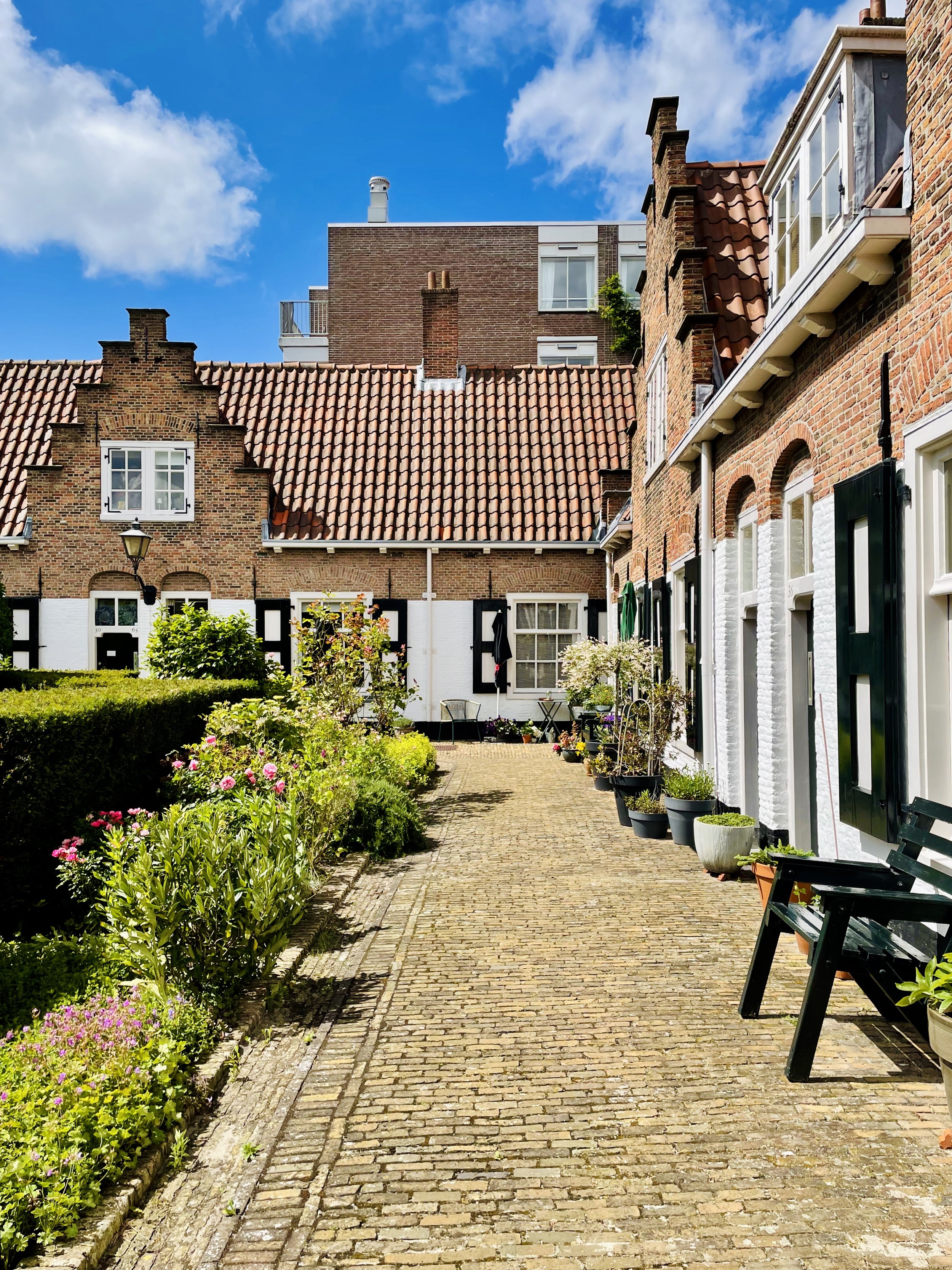
A garden courtyard framed by brick gabled homes captures the kind of everyday European living that inspires Palm Beach’s more intimate approach to luxury living.
This perspective is especially relevant in Palm Beach, where custom homes and renovations present an opportunity to move beyond surface-level design and toward something more enduring. Palm Beach is a setting where climate, lifestyle, and architecture already reward restraint, craftsmanship, and thoughtful planning.
Custom homes can prioritize livability over spectacle.
Renovations can favor timeless materials and better spatial flow.
Design decisions can be shaped around how the home will feel years from now, not just on day one.
That is what makes this approach so compelling in Palm Beach: it creates homes that feel luxurious because they work beautifully, age gracefully, and support real life with elegance.
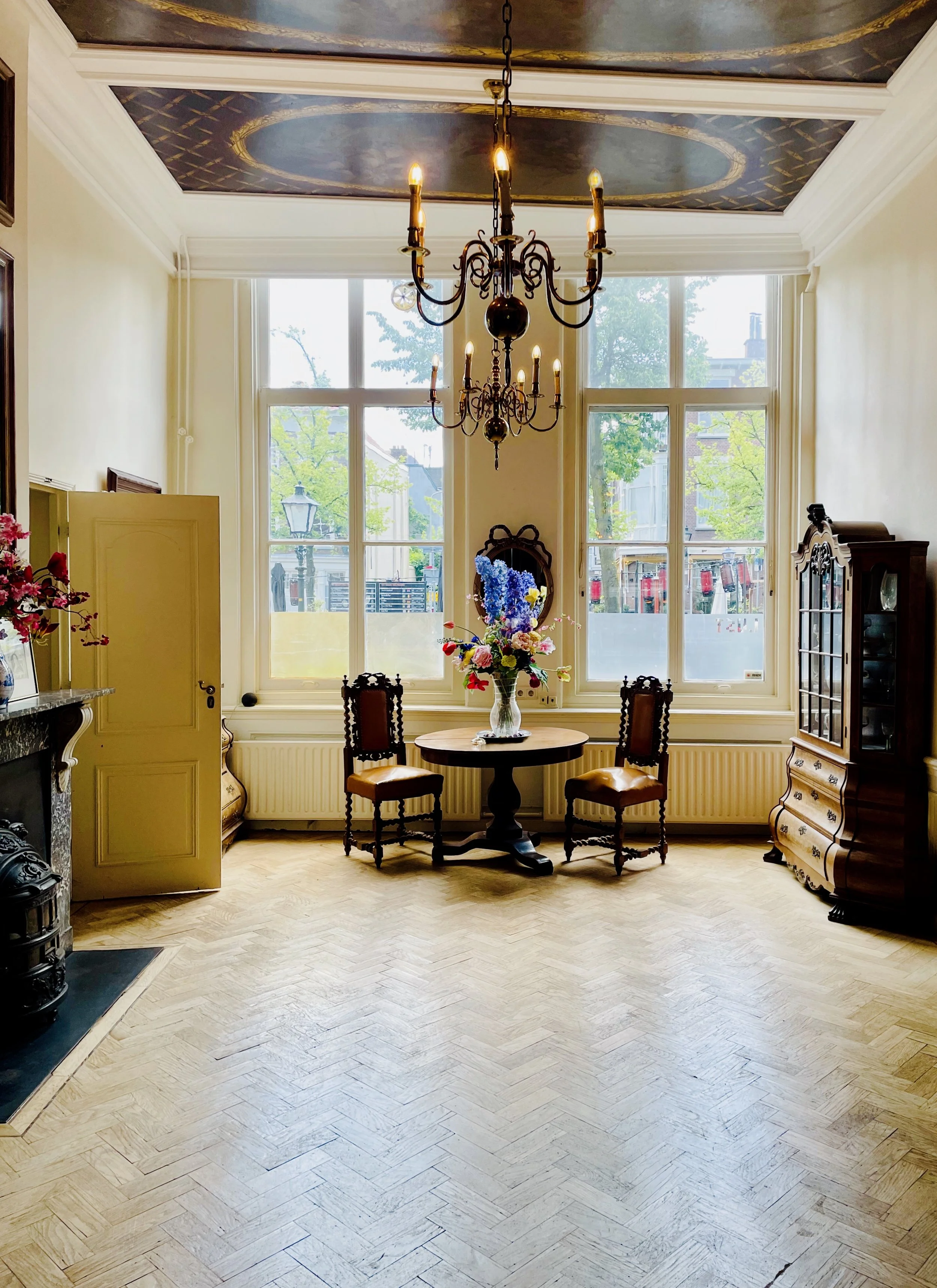
This 1649 Dutch light-filled salon blends a painted, gilded ceiling, antique furnishings, marble fireplace, oak herringbone wood floors, and large open floor space to show how generous proportion and breathing room feel more luxurious than ornament alone. The expansive windows allow light to stream through the to the back of the house, while overlooking the canal in front.
Homes Designed Around Daily Rituals
One of the most profound differences in European interiors is what they prioritize.
They are not designed around rare occasions.
They are designed around repetition, the small, meaningful rituals that define everyday life.
Imagine a home where:
Your morning coffee has a dedicated place, with soft natural light and a view outward
A reading chair is positioned not just for style, but for comfort, quiet, and time
The dining area encourages lingering, not rushing
Circulation paths feel intuitive, allowing the day to unfold naturally
Outdoor spaces are accessed effortlessly, becoming part of daily routine
These choices may seem subtle, but they fundamentally change how a home is experienced.
In many American homes, large portions of square footage are allocated to spaces used infrequently. Formal rooms, oversized entertaining areas, or show kitchens often take priority.
European interiors reverse this logic.
They invest in the everyday.
Because the quality of daily life, not occasional events, is what defines true luxury.
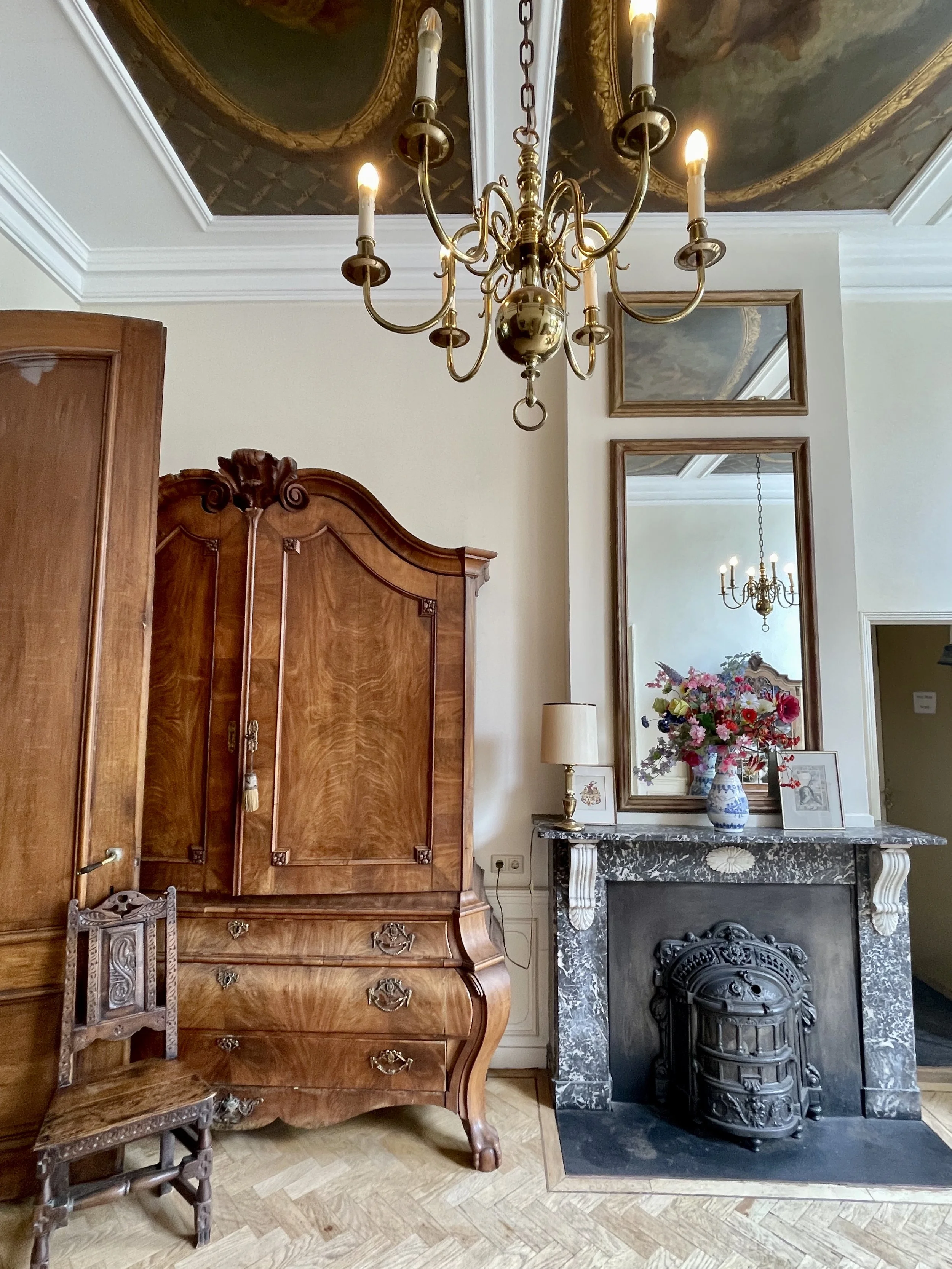
An ornate armoire, marble fireplace, and simple floral arrangement create a balanced mix of gravitas and ease that mirrors the Domaine Luxe approach to Palm Beach living.
The Home as a Framework for Daily Life
A well-designed home does more than contain life - it shapes it.
The placement of a window can influence your mood.
The layout of a kitchen can change how you interact with others.
The presence of a quiet corner can determine whether you take time to pause.
These are not decorative decisions. They are behavioral ones.
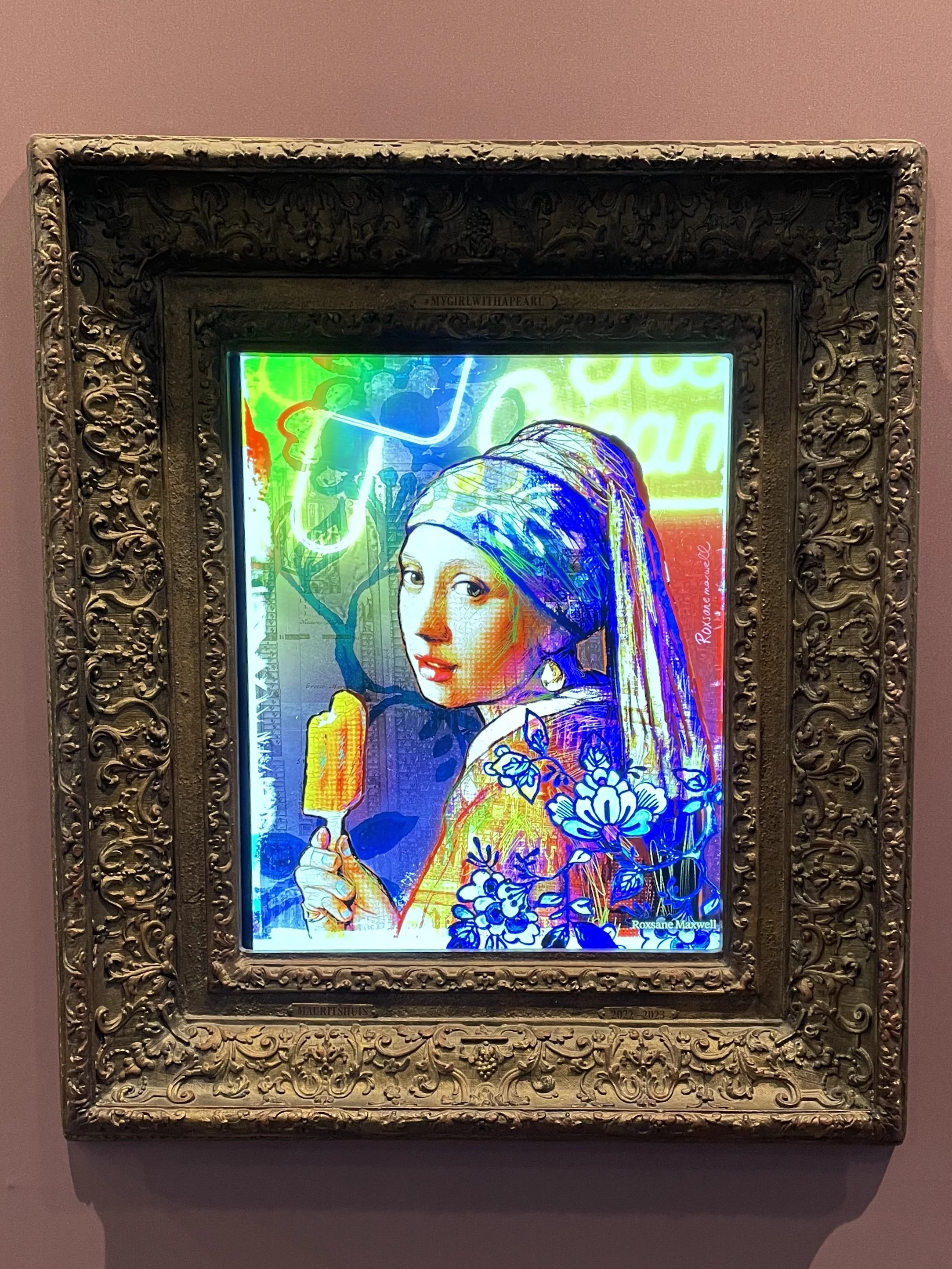
A neon-infused reimagining of “Girl with a Pearl Earring” blends Dutch heritage and modernity, creating the same tension that makes lifestyle-led luxury interiors feel current yet enduring.
This is where lifestyle design becomes essential.
Instead of asking, What should this home look like? the question becomes:
How do you want your mornings to feel?
Where do you naturally gather?
What helps you slow down?
What restores you at the end of the day?
When design is rooted in these questions, the result is a home that feels aligned, intuitive, and deeply personal.
It becomes a space that supports clarity, connection, and well-being - without needing to announce itself.
Why European Homes Feel More Restorative
There is a reason many European interiors feel calming from the moment you enter. They often align, intuitively or intentionally, with principles now studied in wellness interior design and neuroaesthetics, both of which look at how spaces affect mood, attention, stress, and overall well-being. These environments are designed to regulate, not stimulate, which is why they often feel restful rather than visually demanding.
Key elements include:
Natural light that shifts gently throughout the day, supporting circadian rhythm and helping the body stay more in sync with the time of day.
Reduced visual clutter, allowing the mind to rest instead of constantly processing competing details.
Balanced acoustics that soften sound and reduce stress, which supports a calmer, more restorative atmosphere.
Material consistency that creates cohesion and calm, so the eye can move through a space without friction.
Visual and physical access to nature, which is strongly tied to restoration, lower stress, and better attention.
These factors directly affect how the body responds to a space. When a room is overly complex, overly bright, or overly styled, it can create subtle but constant sensory strain that adds up over time. In contrast, restorative environments tend to lower stress levels, improve focus, support relaxation, and encourage presence. That is part of why a beautifully composed room can feel different from one that is simply expensive or decorative.
This is the foundation of wellness interior design, not as a passing trend, but as a practical response to how people actually experience their homes. The goal is not just to make a space look serene, but to make it function as a place of recovery, clarity, and ease. In that sense, wellness-driven design becomes less about style and more about supporting the nervous system, daily rhythm, and long-term comfort.
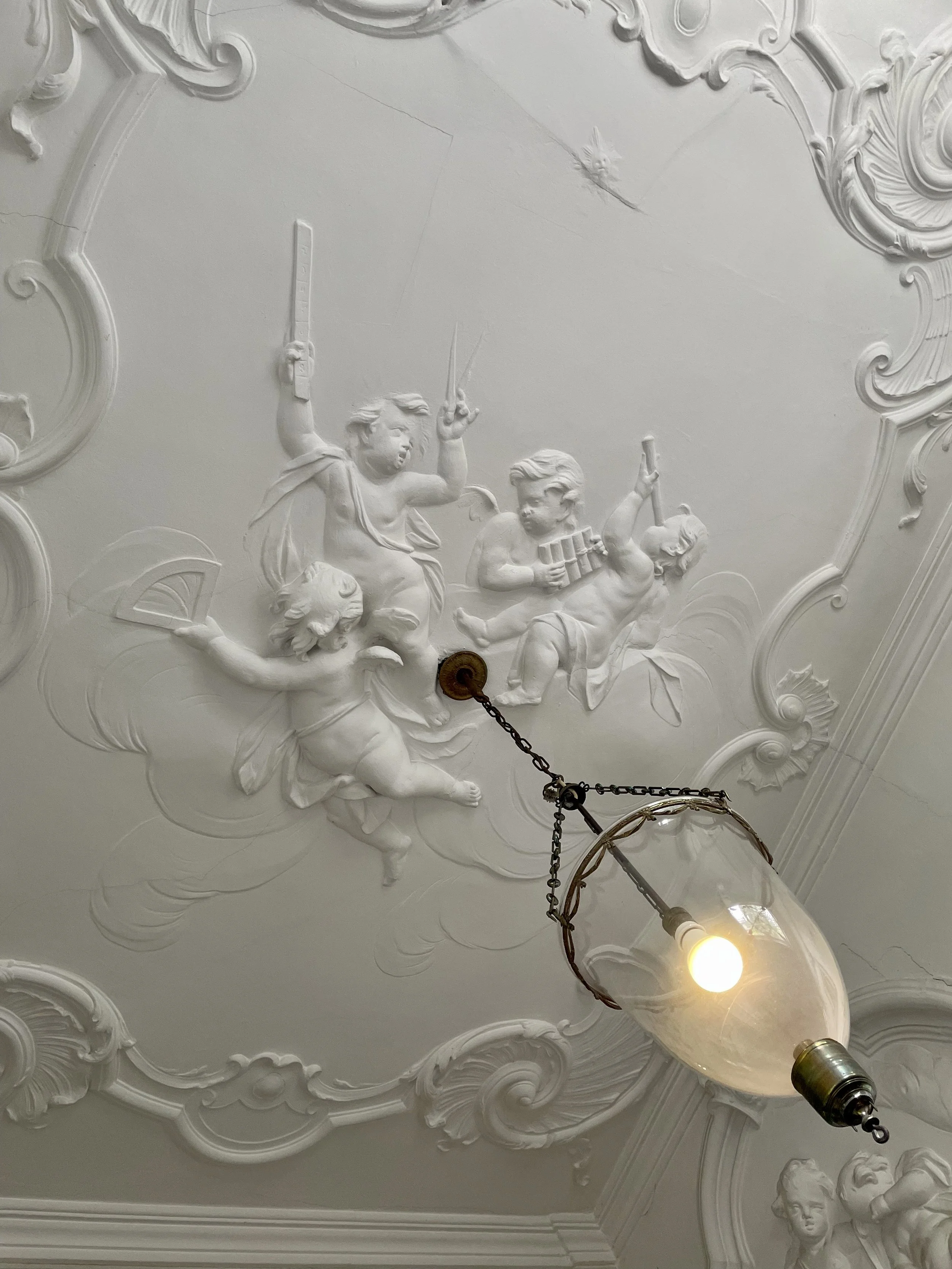
An ornate plasterwork ceiling and classical lantern reveal how craftsmanship and proportion quietly elevate the arrival experience long before any “decorating” begins.
The Beauty of Slower Living
In the Netherlands, this philosophy extends far beyond the home. It is embedded in the structure of everyday life, where design is expected to support how people move, rest, gather, and connect throughout the day. Public parks, gardens, and coastal spaces are not treated as occasional destinations; they are part of the normal rhythm of living. That is what makes Dutch design feel so human-centered: it is not only about how something looks, but about how naturally it fits into daily use.
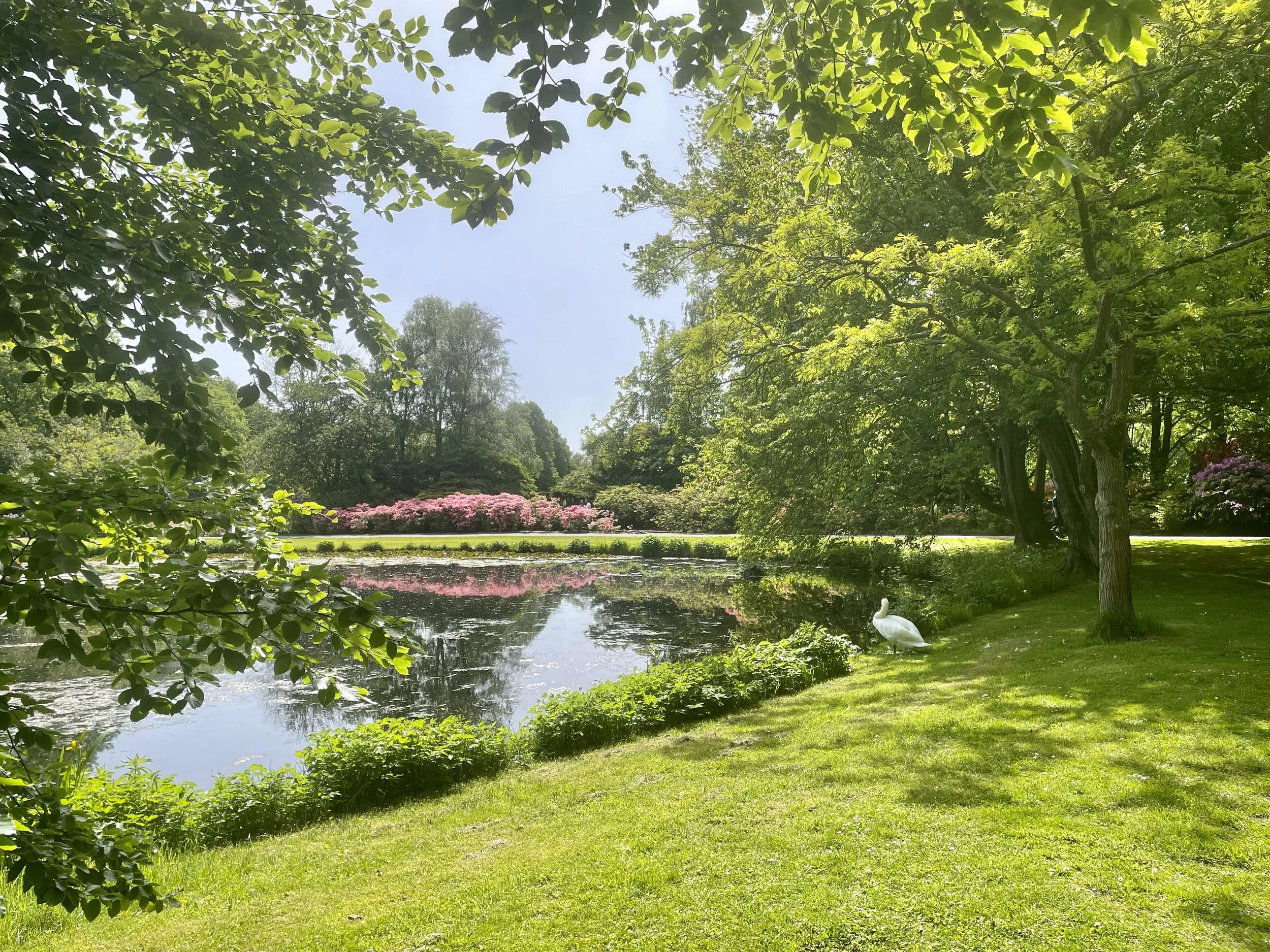
A spring visit to Clingendael is a quiet renewal. Flowering rhododendrons, large trees and manicured borders bloom around the still lake. A swan glides near shore as walkers follow winding paths beneath arching branches. Benches invite a pause to breathe in blossoms and the gentle ripple of water - a timeless calm where curated landscape and nature meet.
Places like Clingendael Estate, Paleistuin, and Westbroekpark Rosarium are not isolated destinations, they are woven into daily routines. Accessible, welcoming, and designed for repeated use, these landscapes invite people to return again and again without needing a special reason. Clingendael in particular reflects this layered approach to landscape, with its historic grounds, reflective water features, garden paths, and public openness shaping a space that feels both refined and approachable. A visit to see the swans, cows, horses and ducks on the land is always pleasurable. That repeated accessibility is part of the appeal: beauty is not reserved for rare occasions, but folded into ordinary life.
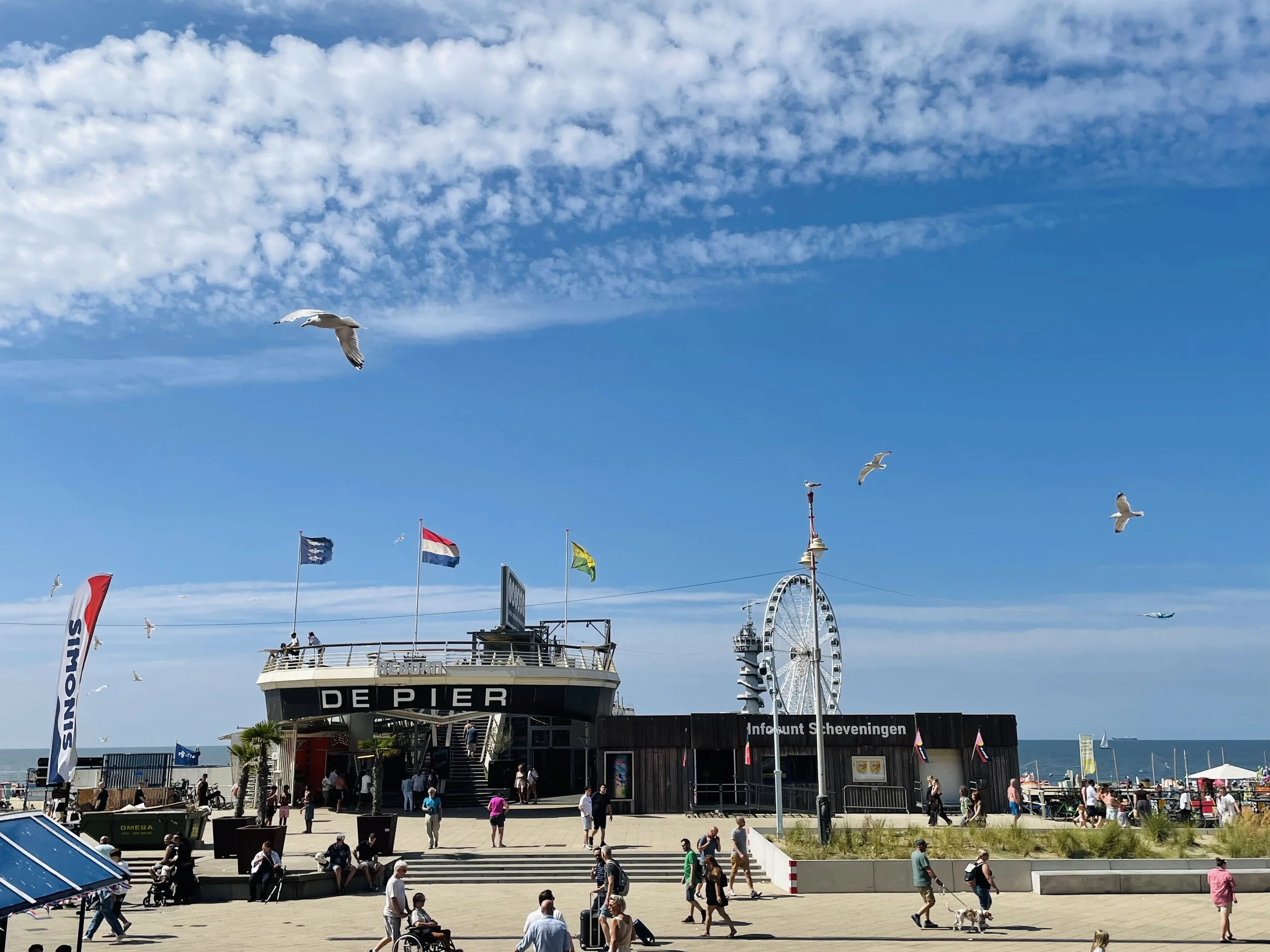
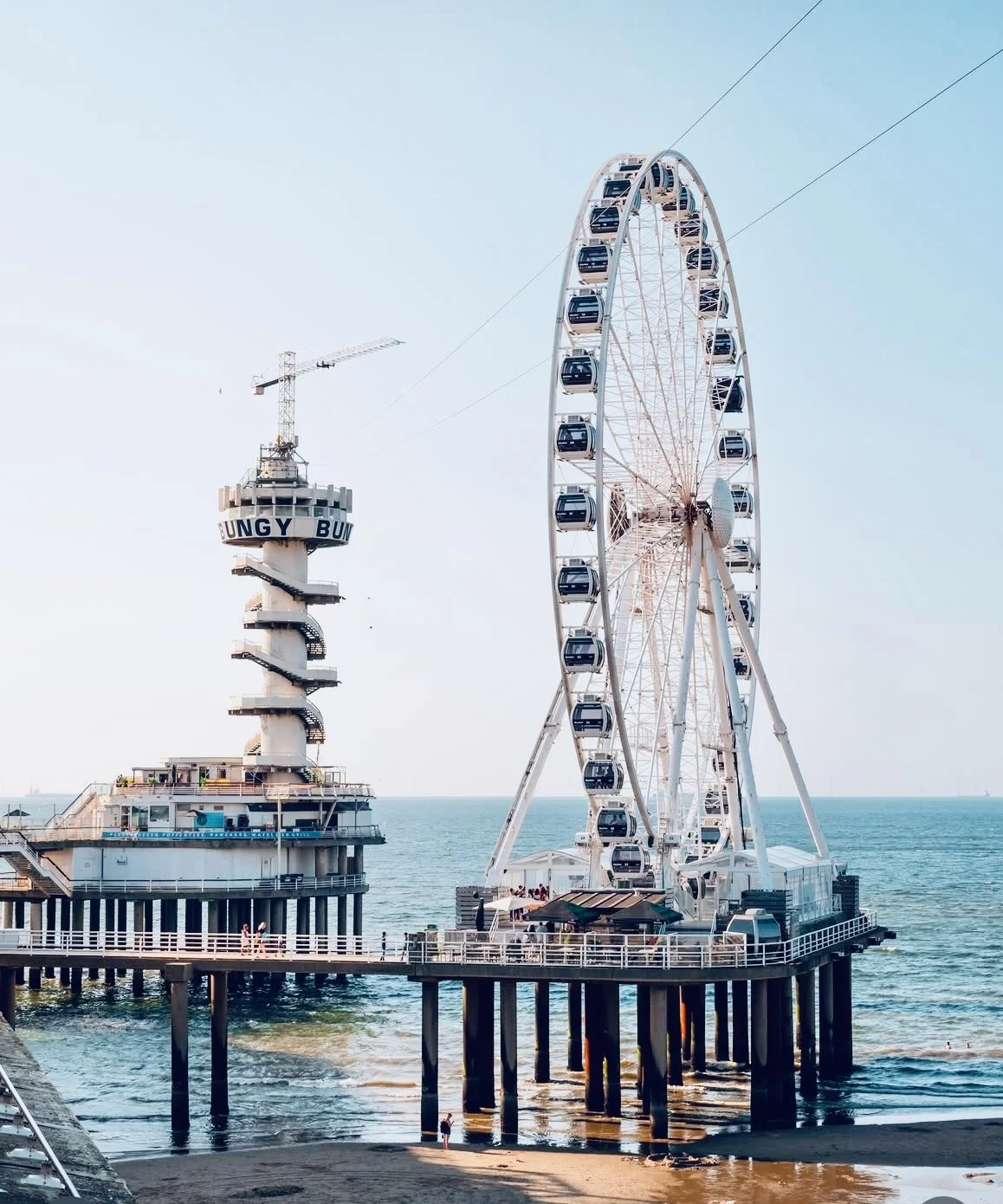
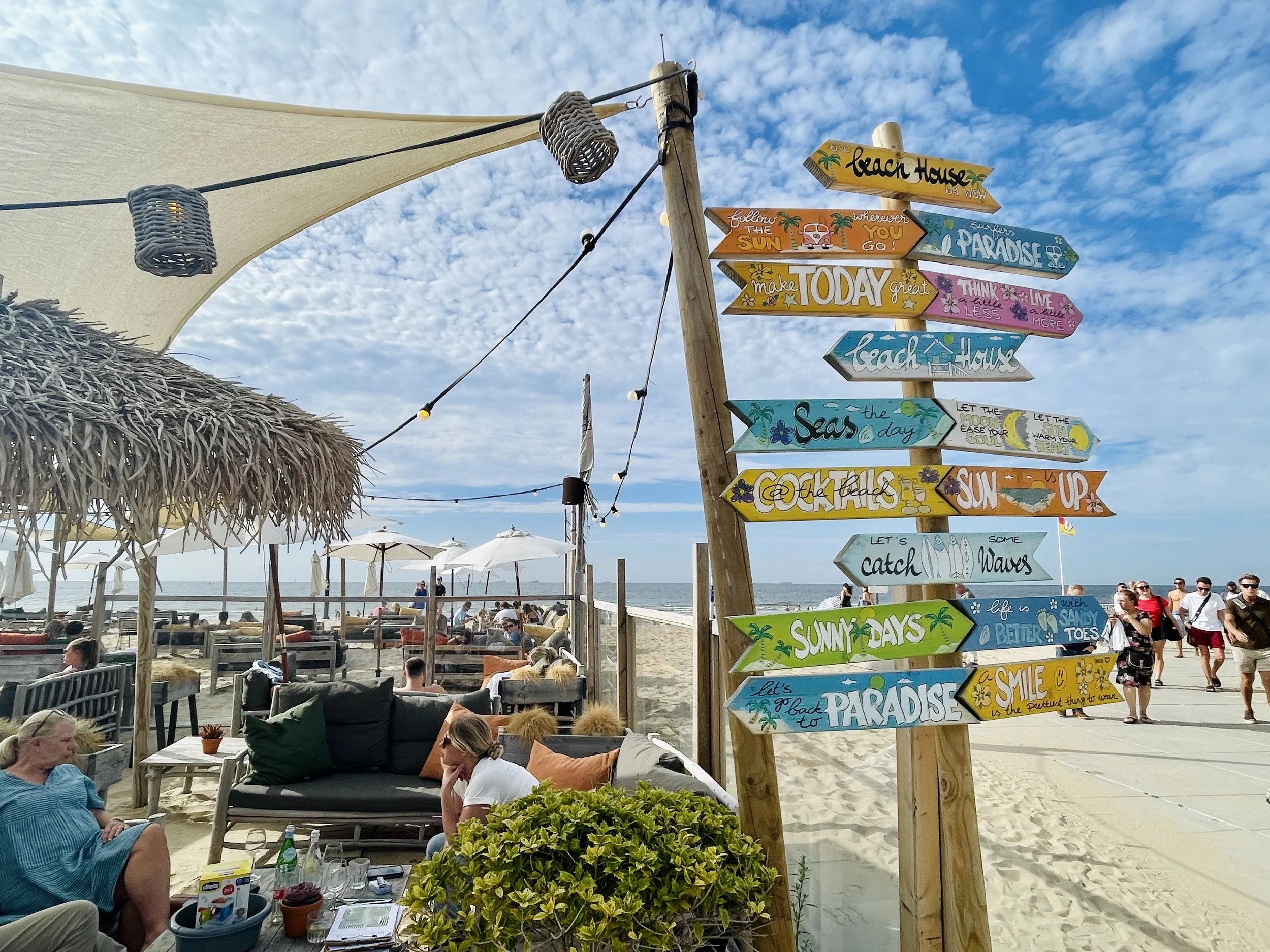
The Scheveningen beachfront offers the same experience. Expansive, calming, and effortlessly integrated into the rhythm of life, it functions as more than a scenic coast it is a lived public realm. Its promenade and waterfront have been shaped to support movement, viewing, gathering, and everyday use, giving the area a sense of continuity rather than interruption. The result is a place where the coastline feels like part of the city’s daily structure, not just a place to visit.
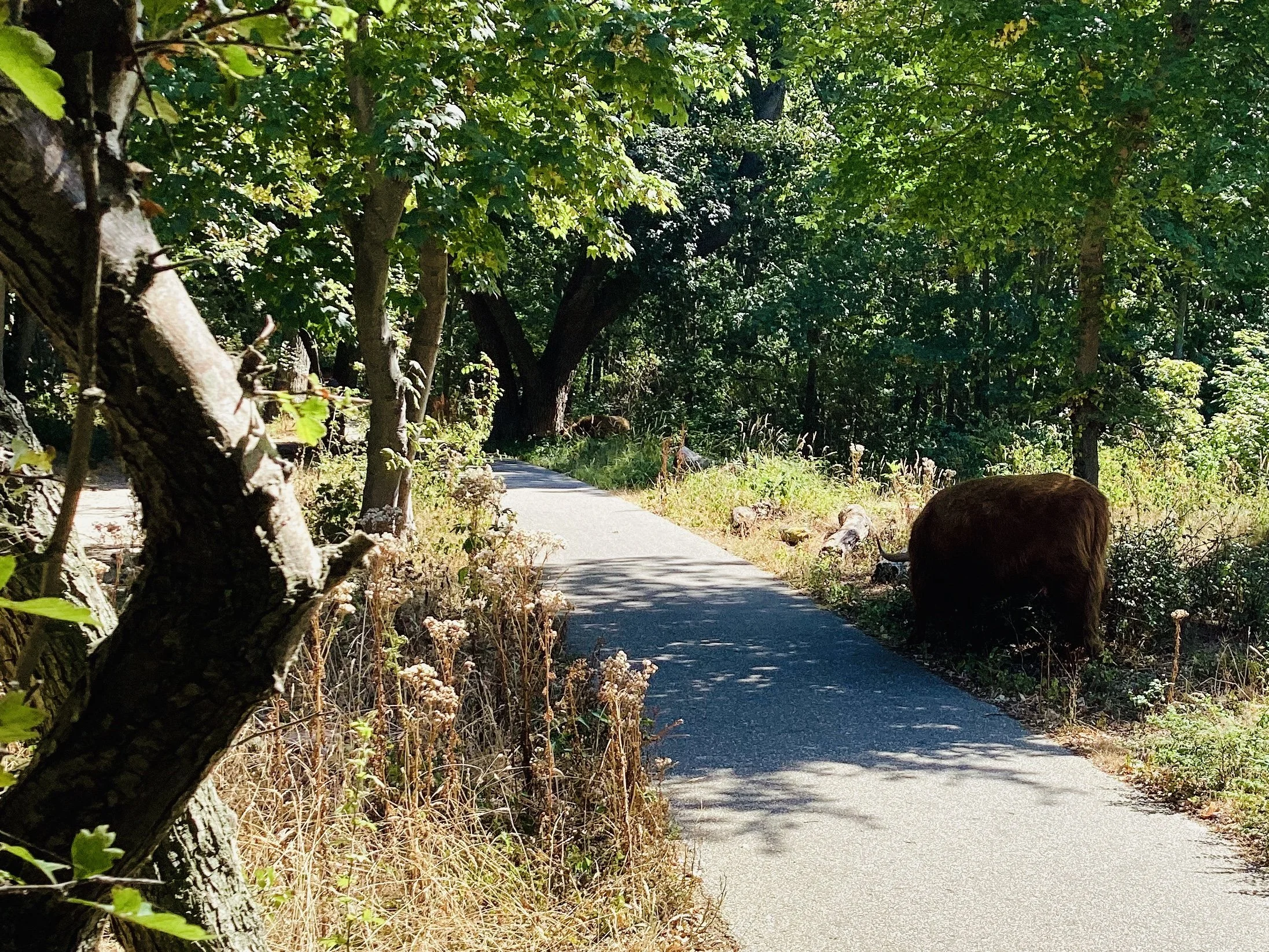
Long-haired cows roam freely along the dunes at Scheveningen Beach, their shaggy coats rippling in the sea breeze as they graze against the backdrop of sand and surf. They are easily spotted on a long hike or bike ride around the dunes.

What makes these environments remarkable is not just their design, but what they encourage without forcing. They create conditions that make slower, more attentive living feel natural instead of aspirational. In these spaces, people are invited to:
Walk instead of rush, because the environment supports a more measured pace.
Cycle as a primary mode of movement, because infrastructure and culture both make it practical.
Sit in public spaces without urgency, because benches, gardens, and waterfronts are designed for lingering.
Share casual, unstructured social interaction, because the spaces feel open rather than overly controlled.
Stay in continuous connection with nature and fresh air, because the landscape remains present throughout daily life.
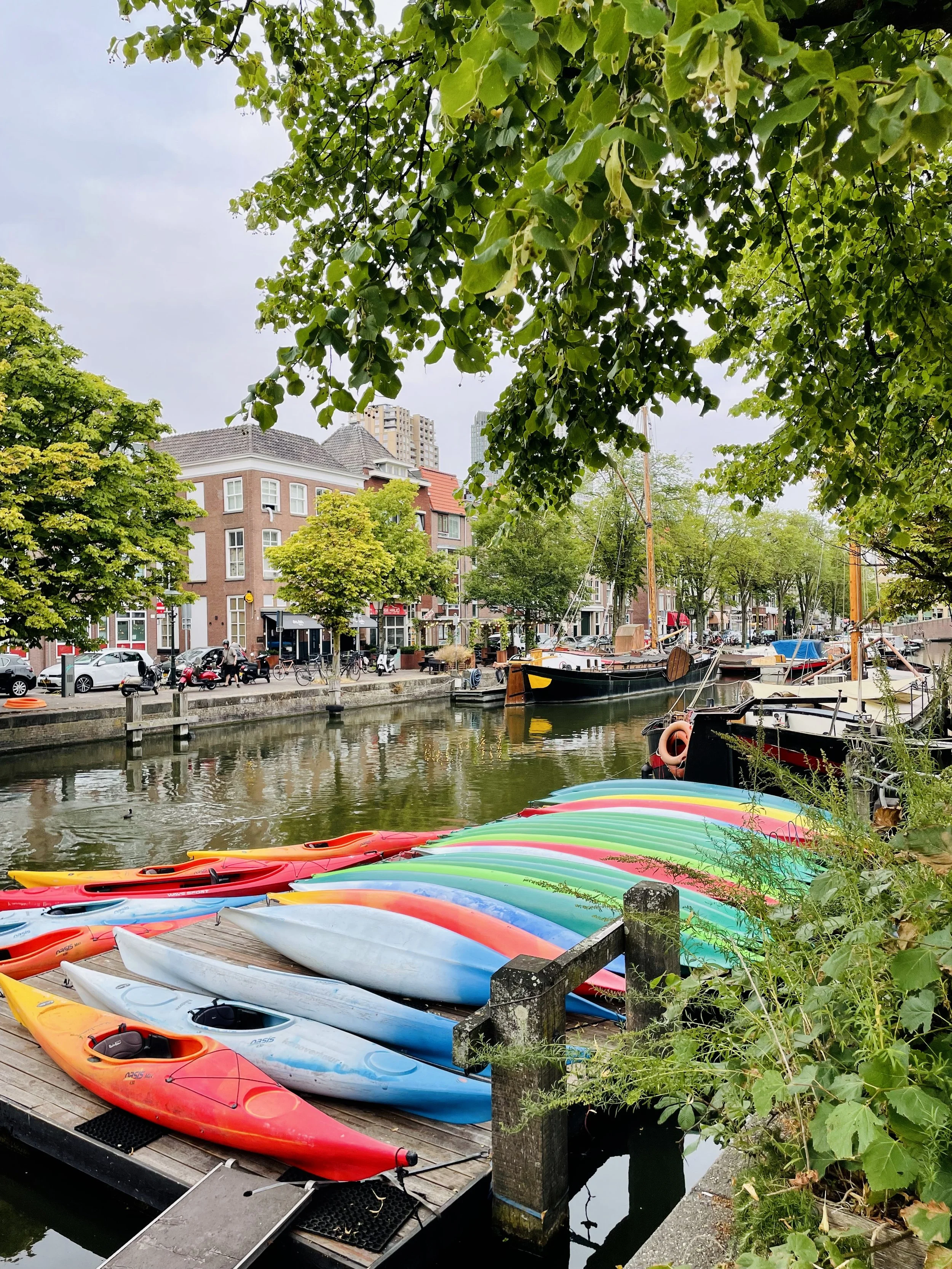
Bright canoes line the Bierkade Canal like a painter’s palette, each vibrant hull coaxing us outdoors to breathe the water-salted air. Living here, the canal becomes an everyday invitation: a casual paddle at dusk, a sunlit morning glide, an impromptu rendezvous with neighbors over a cuppa tea. The boats frame the view from our front door - cheerful, active, and impossible to ignore - turning ordinary comings and goings into moments of ease and natural joy. At Bierkade, Den Haag, Netherlands.
These nearby natural places quietly invite reflection, encourage gentle movement, foster social connection, and heighten sensory engagement - subtly shaping our daily rhythms and overall wellbeing without ever spelling out their intent.
There is a cultural emphasis on presence rather than constant productivity. That mindset gives Dutch public space its distinctive emotional quality: it supports rest, observation, movement, and connection without turning any of them into an event. Instead of asking people to perform in a space, it simply allows them to be in it. That kind of design creates calm because it is structured, but never overbearing.
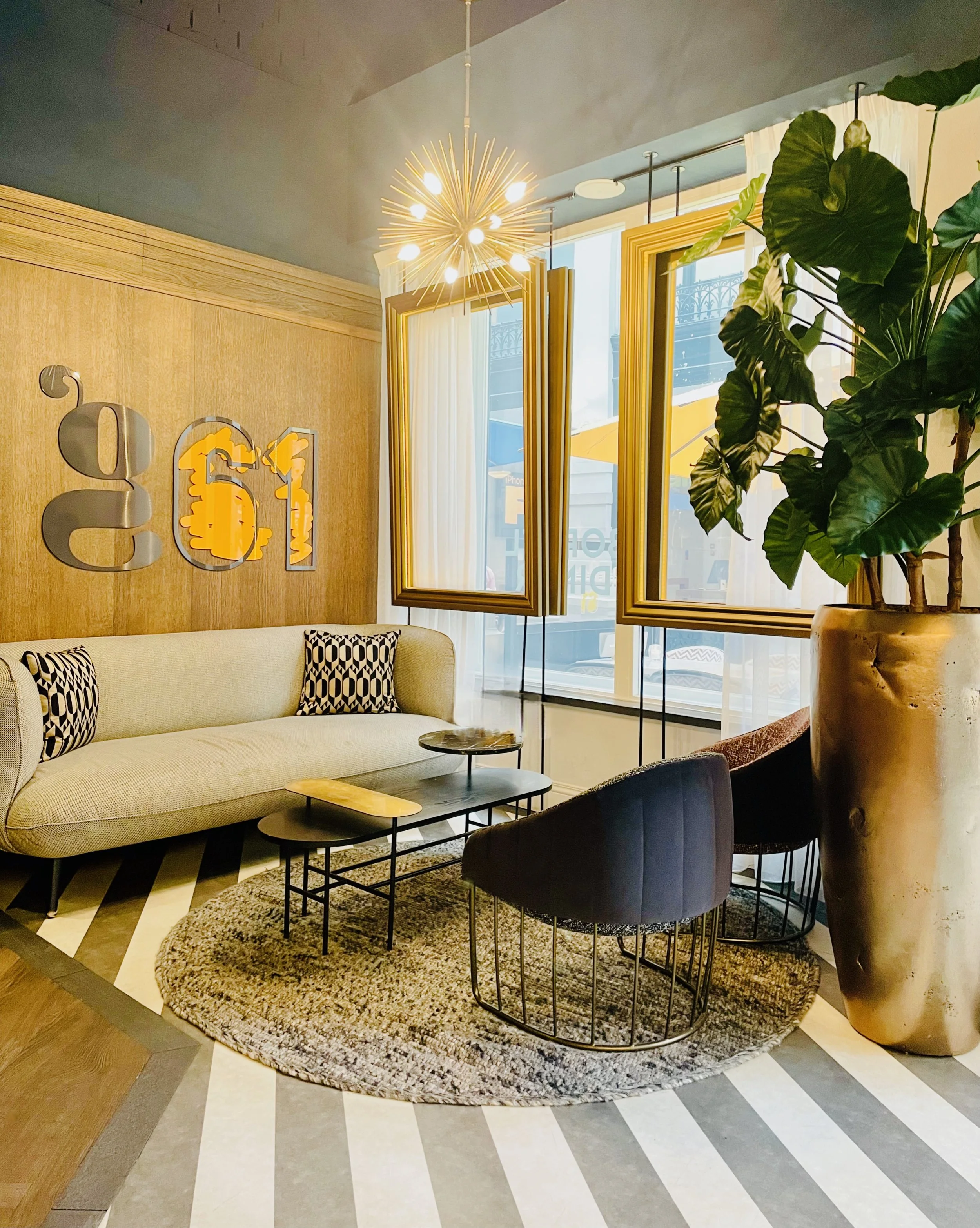
A boutique-style sitting area pairs warm wood, tailored seating, and golden light to demonstrate how considered material choices create a lifestyle-driven sense of ease.
And when this mindset influences residential design, the result is a home that feels like an extension of that rhythm calm, balanced, and restorative. The home becomes less like a display and more like a lived environment that supports ease, clarity, and continuity. Rooms feel more generous when they encourage movement and pause in equal measure, and more comforting when they are connected to light, air, and the outdoors. That is what makes the Dutch influence so powerful in a residential setting: it turns design into a framework for living well.
Designing for the Senses, Not Just the Eyes
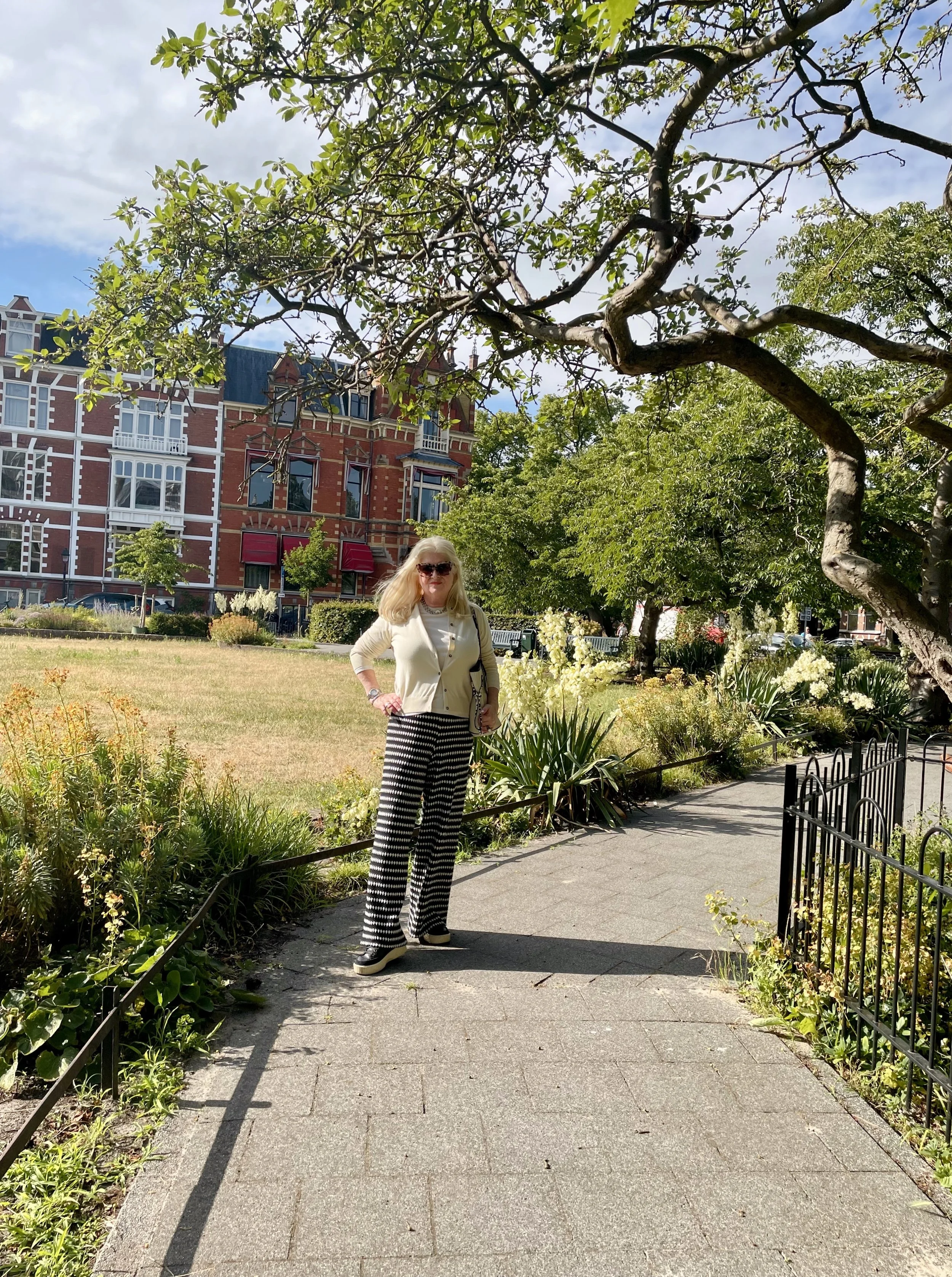
A quiet neighborhood park edged with historic home architecture reflects how European daily life keeps greenery, walking paths, and restored calm at the center of the urban experience in this volunteer garden located in Den Haag.
Many luxury homes are designed to be seen, but fewer are designed to be experienced.
European interiors succeed because they engage all the senses, not just visual aesthetics. That is what makes them feel more immersive, more grounded, and more memorable over time.
Instead of relying on visual spectacle alone, they create a layered atmosphere that meets you through touch, sound, light, scent, and movement. The result is a home that does not simply present well, it lives well.
They consider:
How a material feels under your hand, because tactile quality changes how a space is emotionally received.
How sound travels through a space, because acoustics can make a room feel calm, harsh, intimate, or expansive.
How air moves and circulates, because airflow affects comfort, freshness, and the sense of ease in daily life.
How light softens or sharpens throughout the day, because light defines mood, depth, and the overall atmosphere of the home.
How textures layer to create depth and comfort, because visual and physical softness help a room feel complete rather than overdesigned.
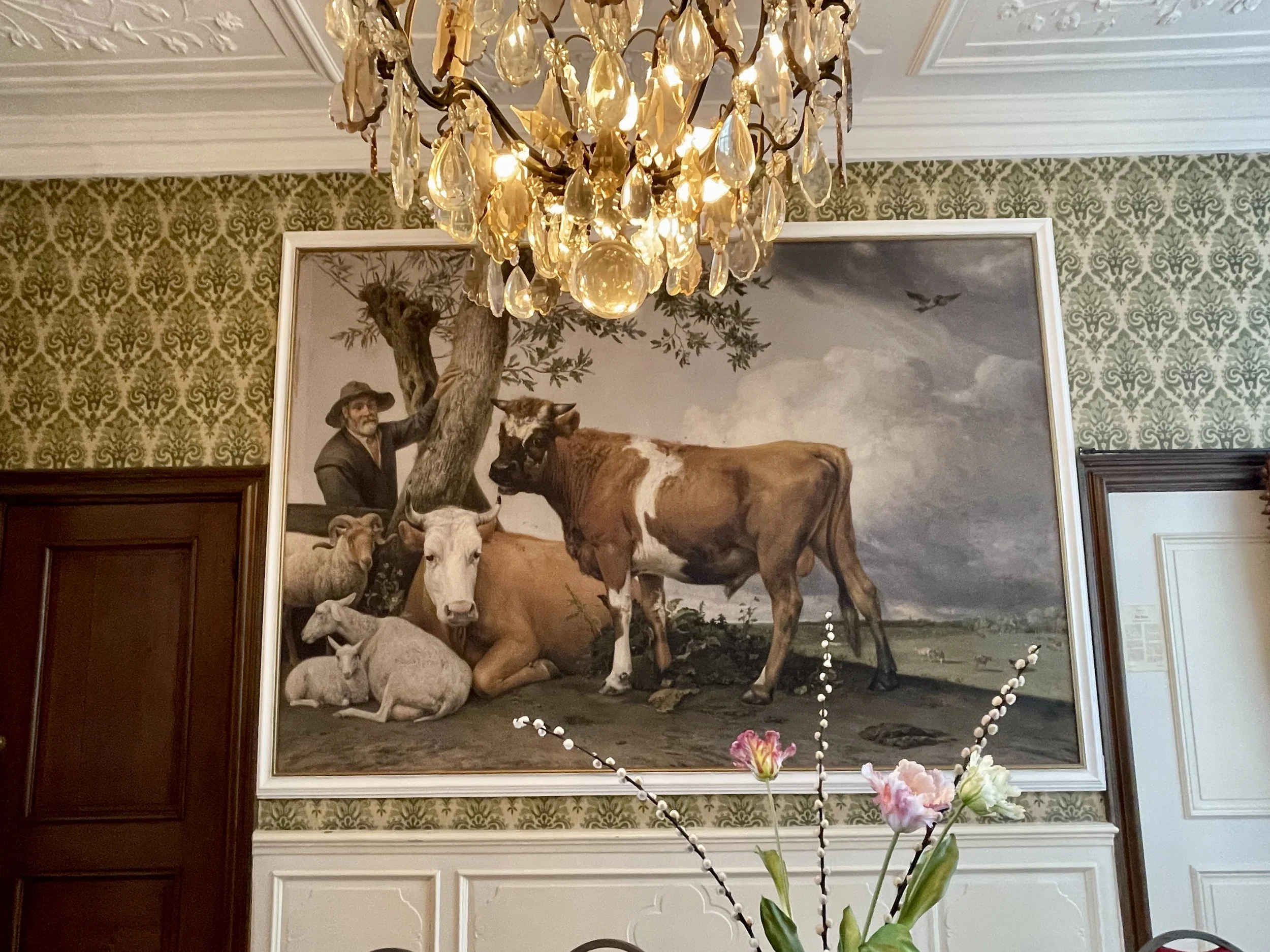
A historic Dutch dining room layers pastoral art of the 16th Century, crystal light, and quiet pattern to show how true luxury lives in atmosphere, not excess.
Examples of this sensory design include:
Linen drapery that moves with natural airflow, adding softness and a sense of natural rhythm to the room.
Natural stone that retains a cool, grounding presence, offering both visual weight and physical comfort.
Plaster walls that diffuse light softly, creating a gentle, luminous finish instead of a flat surface.
Open windows that allow in subtle changes in temperature and scent, making the home feel alive and connected to its environment.
Wood surfaces that age and develop character over time, bringing warmth, permanence, and a sense of lived experience.
These details do more than decorate a room. They shape the emotional tone of the home, influencing whether a space feels serene, grounding, airy, intimate, or restorative. A room with beautiful materials but no sensory softness can feel unfinished, while a room with thoughtful acoustics, natural textures, and layered light can feel instantly welcoming. That is why these elements matter so much in luxury interiors: they create a sense of calm that cannot be achieved through appearance alone. Over time, they make a home feel deeply personal, because the experience of the space becomes tied to daily rituals and repeated comfort.
This is what transforms a home from something that looks complete into something that feels complete. The best interiors do not just impress the eye; they support the body, quiet the mind, and leave a lasting emotional impression. In that way, sensory design becomes one of the clearest expressions of true luxury.
What Palm Beach Homes Can Learn from Europe
Palm Beach offers a rare advantage: a climate and landscape that naturally support many of these principles. The opportunity is not to replicate European design, but to reinterpret its philosophy through a Palm Beach lens.
Create Spaces for Ritual
Design specific areas that support daily habits. Morning rooms with soft light, reading corners with texture and quiet, and outdoor seating that invites daily use can make the home feel more intentional. In Palm Beach, these spaces are especially effective because the climate allows indoor and outdoor moments to blend naturally. Ritual-driven design gives the home rhythm and softness, turning everyday routines into meaningful experiences.
Prioritize Comfort Over Excess
Edit intentionally. Focus on fewer, higher-quality elements that enhance both function and feeling. Comfort is not a compromise; it is often the foundation of a luxurious interior. In a setting like Palm Beach, where light and landscape already bring richness to a space, restraint allows the architecture and materials to speak more clearly. The result is a home that feels refined, calm, and deeply livable.
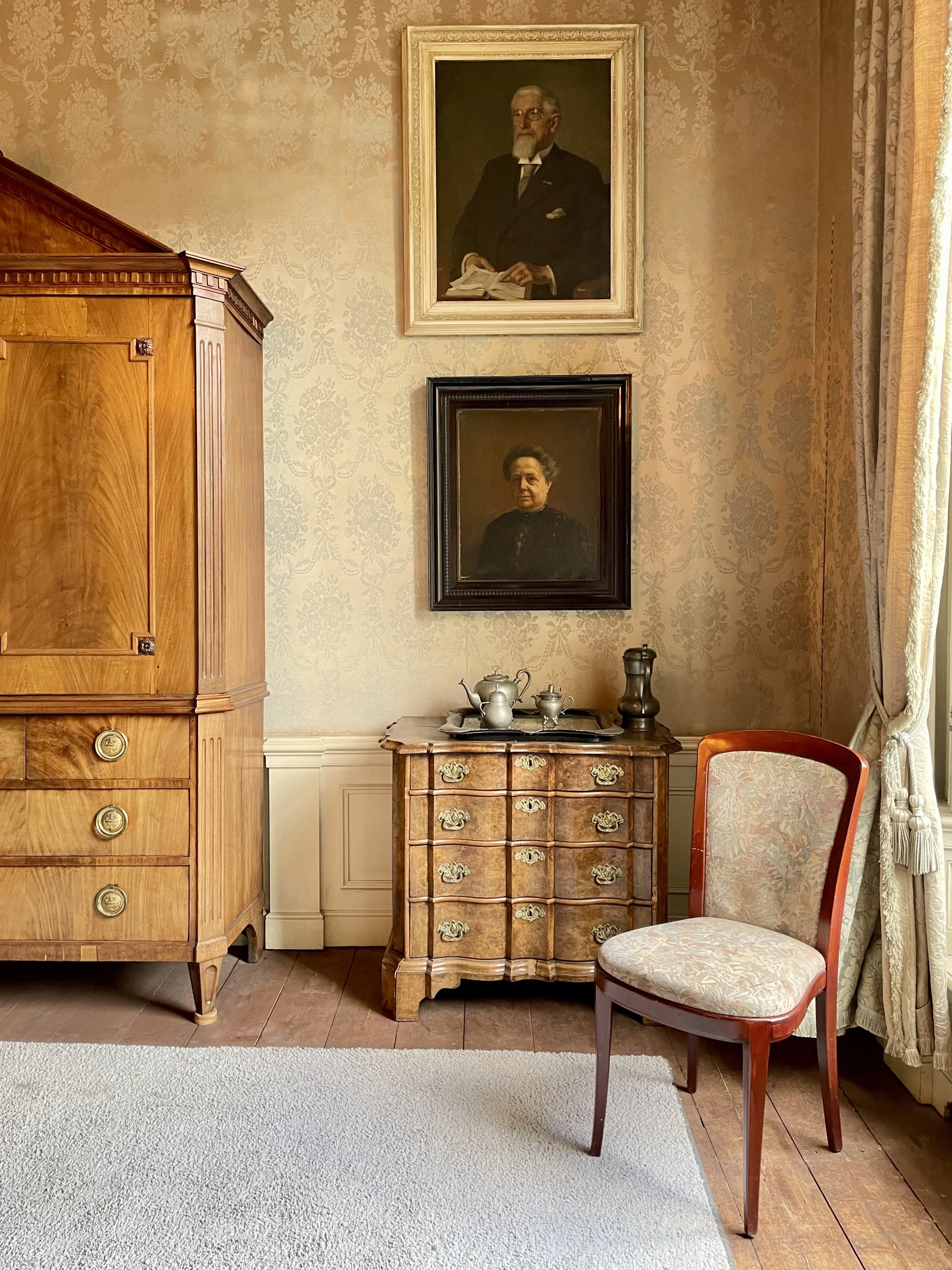
An intimate corner layered with portraits, warm wood, and a single chair feels like a lived vignette—proof that luxury can be quiet, personal, and deeply human.
Strengthen Indoor-Outdoor Living
Use architecture and layout to blur boundaries between interior and exterior. Allow airflow, greenery, and light to become integral to the design. Palm Beach’s climate makes this approach feel natural, and local landscape principles reinforce the importance of environmental quality and architecture in the overall composition. When the home opens gracefully to its surroundings, it feels more expansive and connected.
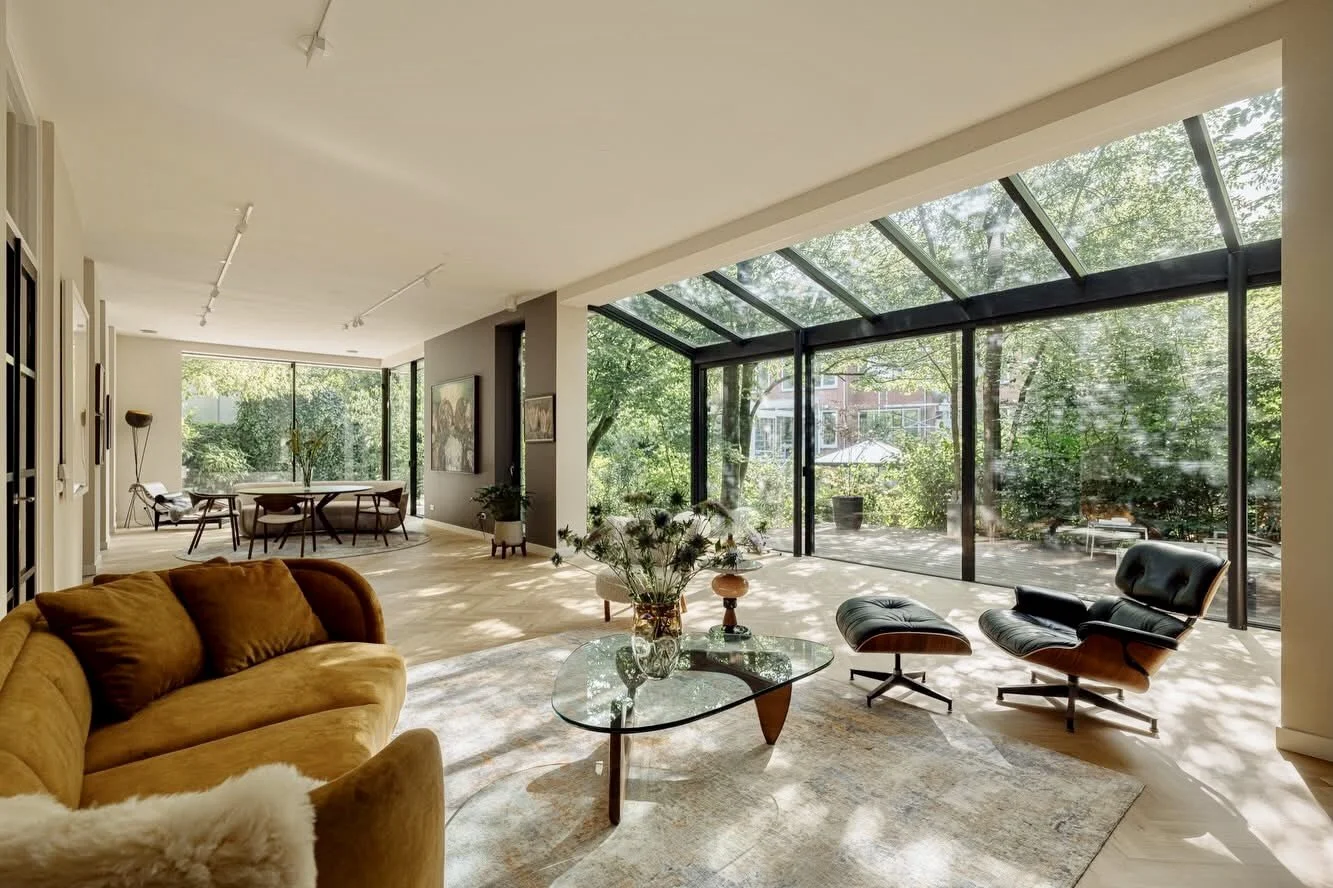
This modern, earth tone neutral living space, with its greenhouse-like extension into the backyard, beautifully exemplifies the seamless blending of indoor and outdoor lines, encouraging a deeper connection with the surrounding natural environment. Classic modern furnishings offer ease and a timeless aesthetic, while the architecture opens to the garden, creating nature as the focal point.
Design for Well-Being
Incorporate light, and natural views first, and acoustics, natural materials, and spatial flow from the earliest design stages, not as finishing touches. A well-designed home should support how the body moves, rests, and restores itself throughout the day. In humid coastal environments, material selection and layout choices also play a practical role in how comfortable a home feels. Designing for well-being creates a space that feels thoughtful, balanced, and enduring.
Support How You Want to Live
Let lifestyle drive decisions. A home should reflect how you actually live, not just how it appears in photographs. This is especially important in Palm Beach, where homes often need to support both entertaining and everyday comfort. When design is shaped around real routines, it becomes more personal and more functional. That is what gives a home lasting value beyond aesthetics.
The Future of Luxury Is Intentional Living
Luxury is evolving into something quieter, more refined, and more personal. Instead of chasing visual noise or overly layered statements, today’s most compelling homes are designed with clarity, restraint, and emotional ease. There is a growing desire for interiors that feel composed rather than crowded, intentional rather than performative, and timeless rather than trend-driven. This is why quiet luxury continues to resonate: it shifts the focus from what a home can display to what it can consistently provide. In that sense, luxury becomes less about accumulation and more about atmosphere, comfort, and enduring relevance.
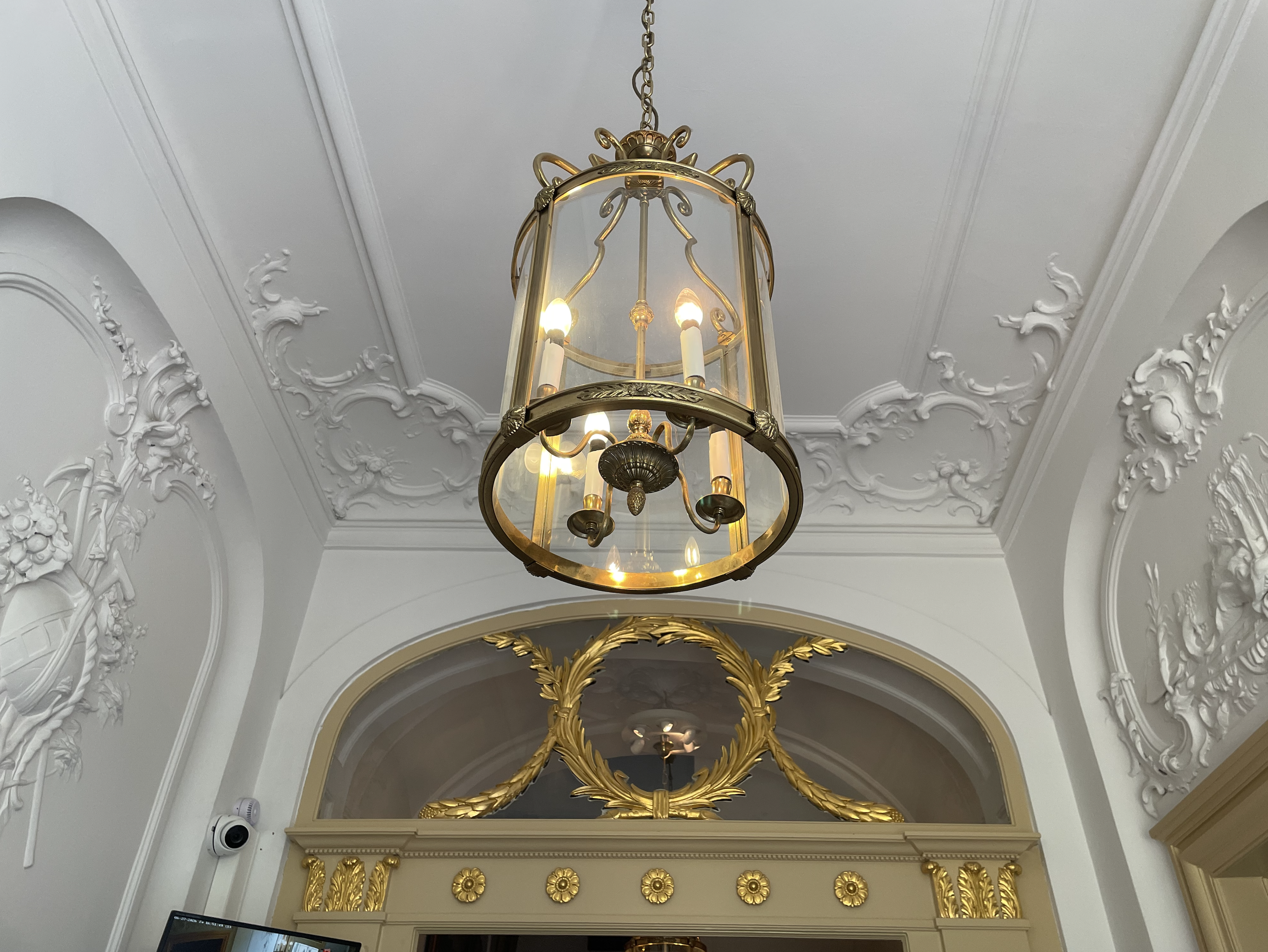
An ornate lantern framed by plaster relief and gilded detailing shows how European entry halls use craftsmanship and light to create a quietly ceremonial moment of arrival.
There is a clear movement toward homes that offer calm instead of complexity, wellness instead of excess, meaning instead of trend-driven design, and experience instead of accumulation. These priorities reflect a broader shift in how people define value in the home: not by volume, but by quality of life. A well-designed space now needs to support rest, routine, beauty, and ease in equal measure. That means choosing materials, layouts, and details that reduce friction and invite a more grounded way of living. The best interiors do not demand attention from the people who live in them; they quietly make life feel better.
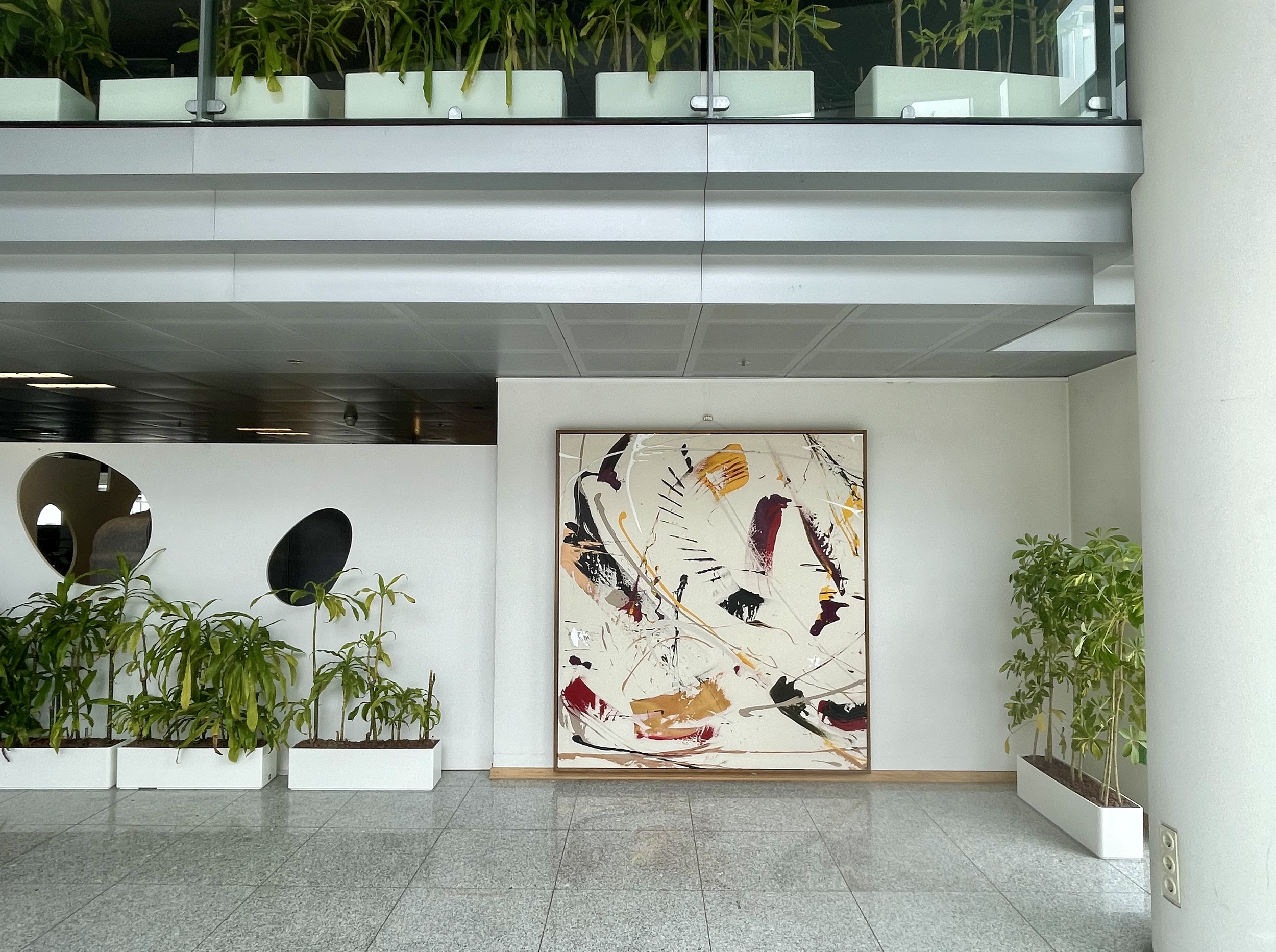
A contemporary cafe corner pairs bold abstract art with clean architecture and greenery, proving that modern minimalism can still feel warm, textural, and deeply luxurious.
This shift is especially evident among those building or renovating custom homes in Palm Beach. The region’s design language already lends itself to restraint, warmth, and elegance, making it an ideal setting for a more thoughtful interpretation of luxury. Rather than leaning into excess, many homeowners are embracing craftsmanship, sensory comfort, and spaces that feel open, breathable, and serene. Palm Beach also has a strong tradition of refined architecture, which makes it natural for new homes to prioritize atmosphere over ornament. In this context, luxury feels less like display and more like discernment.
The focus is no longer on creating something impressive. It is on creating something that feels right. That distinction matters because a truly successful home is not defined by its ability to photograph well, but by its ability to support the rhythms of daily life. When a home feels right, it has meaning - balance, ease, and a sense of belonging - that cannot be manufactured through trend alone.
Calm over complexity.
Wellness over excess.
Experience over possessions.
That is often what makes a space memorable long after the initial reveal.
The most memorable homes are not necessarily the most elaborate. They are the homes that support a life well lived. Through intentional design, sensory comfort, and a deeper connection to everyday rituals, European homes offer a valuable reminder that true luxury is not found in how much a home contains, but in how beautifully it supports the people who live within it.